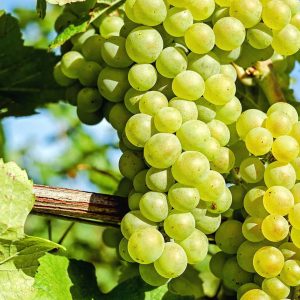
Reliance Grape
$24.95
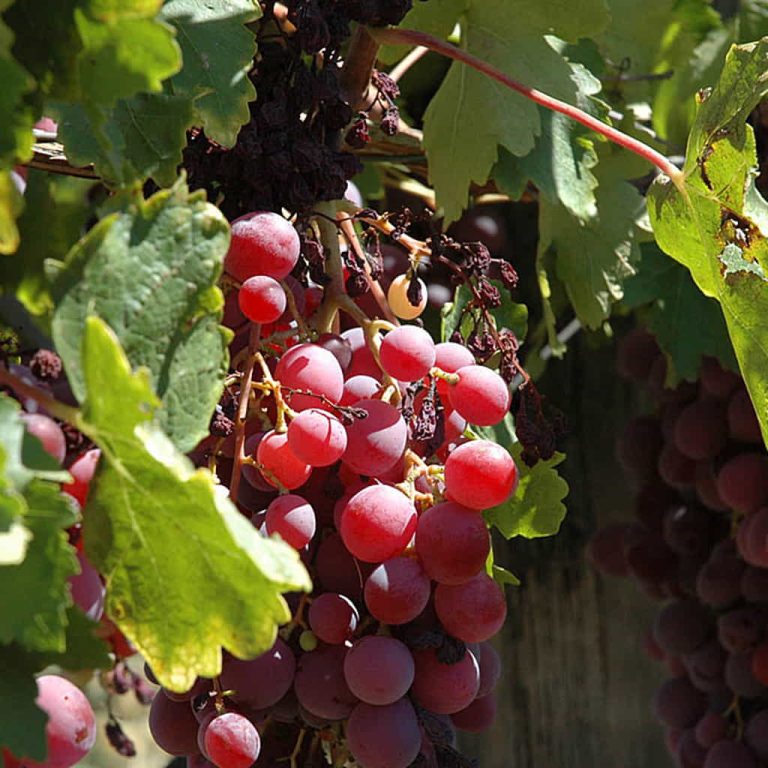
Reliance Grape (Vitis labrusca) is an early-ripening seedless vine bearing pink-red berries with tender, melting flesh and mild fruity flavor, bred at the University of Arkansas for reliable harvests and versatile kitchen use. It grows in USDA hardiness zones 4-8 and AHS heat zones 4-8, needs 200-400 chill hours, and is self-fertile, fruiting reliably without a pollinator partner.
1-2′ Bare Root Vine
Propagation: Own-root
Can’t be shipped to: AK, HI, ID, OR, WA
In stock
Reliance was developed at the University of Arkansas by Dr. James N. Moore, who founded the university’s fruit breeding program in 1964, through a cross of Ontario and Suffolk Red. Ontario contributes cold hardiness derived from its labrusca hybrid background; Suffolk Red — a seedless red table grape — supplies the seedlessness trait and improved berry quality for fresh consumption. The cultivar was released in 1982 and assigned U.S. Plant Patent PP5174, which has since expired, making Reliance freely propagated. Moore’s objective was a pink-red seedless table grape that ripened significantly earlier than Concord and performed reliably in the humid-summer climates of the mid-South and mid-Atlantic, regions underserved by California-bred seedless varieties. Prior to Reliance, home gardeners in Zone 5 through 7 had few options for fresh-eating seedless grapes. Reliance filled that gap and became one of the most widely planted seedless grapes for backyard and small-farm production east of the Rockies, remaining a recommended cultivar in university extension guides across the Southeast, mid-Atlantic, and lower Midwest for decades after its release.
Reliance performs best on a site with full sun and good air circulation — both critical because the variety carries only moderate susceptibility to fungal diseases, and humid, stagnant air dramatically accelerates infection. Soil pH of 5.5 to 6.5 keeps iron and manganese available while discouraging Phytophthora-related root issues; soils above pH 7.0 can induce interveinal chlorosis on younger shoots. Deep, loamy ground with reliable drainage prevents the waterlogged conditions that predispose vines to root decline. Irrigation during the fruit-set window (bloom through veraison) stabilizes cluster size and reduces berry drop, but overhead watering should be avoided entirely — directing water to the root zone keeps foliage dry and cuts Botrytis pressure. Because Reliance needs only 100 to 200 chilling hours, it performs across a wide latitudinal band: growers in Zone 5 get reliable dormancy satisfaction, while those in the warmer reaches of Zone 8 still accumulate enough winter cold for consistent budbreak. Plant spacing of 6 to 10 feet allows adequate airflow between mature vines.
USDA Hardiness Zone: 4-8
AHS Heat Zone: 4-8
Chill Hours: 200-400
Sun Requirements: Full Sun
Soil pH: 5.5-6.5
Soil Type: Deep, loam, humus-rich; tolerates average garden soils
Soil Drainage: Well-drained; does not tolerate waterlogged conditions
Water Requirements: Medium; drought tolerant once established
Drought Tolerance: Moderate; drought tolerant once established
Plant Spacing: 6-10 ft apart
Container Suitability: Not recommended; vigorous climbing vine requires ground planting with substantial support
How to Prune: Prune annually in late winter (December-March) while dormant; cane pruning recommended; remove old wood to maintain 40-60 buds per vine
Reliance produces a vigorous tendril-climbing vine that readily reaches 15 to 20 feet along a trellis or arbor, with a spread of 6 to 12 feet depending on training system. The root system is deep and spreading, which anchors the vine well in loose soils but also means it competes aggressively with shallow-rooted groundcovers — maintain a mulched, weed-free zone at least three feet from the trunk base. Foliage is large and shallowly three-lobed with a medium-green upper surface; fall color transitions to yellow and red before leaf drop, adding seasonal interest to arbors and fence lines. Annual cane pruning in late winter — removing older wood and retaining 40 to 60 buds per vine — is essential to maintain productive shoot density and prevent the vine from channeling energy into excessive vegetative growth at the expense of fruit. Because fruit forms on current-season growth from one-year-old canes, skipping pruning even one season can significantly reduce yields and complicate canopy management in subsequent years.
Mature Height: 15-20 ft tall
Mature Spread: 6-12 ft wide
Growth Habit: Woody, deciduous, tendril-climbing vine
Growth Rate: Fast
Foliage Type: Deciduous
Food Forest Layer: Vine
Leaf Color: Medium green; large, shallowly three-lobed leaves
Fall Foliage Color: Yellow to red fall color
Thorns?: No
Attracts Wildlife: Birds; bees; butterflies
Life Span: vines can produce for 20-40+ years with proper care
Reliance carries perfect (hermaphroditic) flowers that open from mid-May through mid-June, making it fully self-fertile under normal conditions — no cross-pollinator is required for a productive harvest. Pollination occurs via both wind movement through the cluster and incidental insect contact, so open, exposed trellis configurations benefit fruit set more than dense, sheltered planting situations. Although a cross-pollinator is not necessary, planting other labrusca-type grapes nearby can improve cluster fill during seasons with poor weather at bloom. Compatible companions blooming simultaneously include Concord Grape Seeded, Canadice Grape, and Einset Grape. The flowers themselves emit a mildly sweet, musky fragrance that draws bees and other pollinators, which benefits surrounding fruit crops even if Reliance itself does not depend on them for fruit set.
Bloom Season: Very Late
Bloom Window: Mid May - Mid Jun
Pollination Requirements: Self-fertile; no cross-pollinator required
Pollination Mechanism: Wind and insect pollination; perfect (hermaphroditic) flowers
Flower Color: Greenish-yellow
Clusters ripen in late July through early September — earlier than Concord by a meaningful margin — producing pinkish-red to deep red berries measuring roughly 0.6 to 0.8 inch in diameter and averaging about 2.7 grams each, with full clusters approaching 300 grams. The flavor profile is sweet and mildly musky in the classic Labrusca style, with lower acidity than Concord and a fruity aromatic that translates well to fresh eating, juice, and jelly without requiring high sugar additions. Skin is thin and non-adhering to the flesh, giving a tender bite and making the fruit genuinely easy to eat out of hand. Productive vines yield 10 to 15 pounds per vine under good management. Refrigerated storage life runs one to two weeks; clusters hold better when harvested with intact stems and kept cool. Young grape leaves are also edible and used in Mediterranean-style cooking, extending the plant's culinary utility beyond the fruiting season. Birds are drawn strongly to ripe clusters, so netting is advisable in the final two weeks before harvest.
Ripening Season: Early
Harvest Window: Late Jul - Early Sep
Fruit Size: 0.6-0.8 inch
Fruit Weight: 2.7 g per berry; cluster weight 300 g
Flavor: Sweet, mild Labrusca flavor; fruity, slightly musky; excellent fresh-eating quality
Fruit Color: Pinkish-red to deep red at full maturity
Fruit Texture: Tender, melting flesh; non-slip skin
Fruit Skin: Thin, tender; non-adhering to flesh
Bearing Habit: Produces on current season's growth from 1-year-old canes; annual bearer
Years to Bear: 2-3 years
Storage Life: 1-2 weeks refrigerated
Culinary Uses: Fresh eating; juice; jelly; jam; raisins; wine (rose); baking
Reliance shows moderate resistance to Downy Mildew (Plasmopara viticola), Powdery Mildew (Erysiphe necator), and Anthracnose (Elsinoe ampelina), reducing — but not eliminating — the need for a protective spray program. Black Rot (Guignardia bidwellii) is a moderate concern: the pathogen overwinters in mummified berries left in the canopy, so thorough removal of all dried fruit and infected cane material each fall is the single highest-uses control step. Botrytis Bunch Rot (Botrytis cinerea) poses the most acute seasonal risk, particularly in humid climates during harvest; maintaining open canopy geometry through timely leaf-pulling around clusters, avoiding overhead irrigation, and harvesting promptly at maturity all reduce infection. OMRI-listed copper-based fungicides applied at woolly bud and pre-bloom stages provide additional Botrytis and Black Rot coverage. Grape Berry Moth (Paralobesia viteana), Japanese Beetle (Popillia japonica), and Grape Leafhopper (Erythroneura comes) are moderately susceptible pressure points. Pheromone traps for Berry Moth help time intervention; hand-picking and early-morning jar-knocking address Japanese Beetle; reflective mulch beneath vines suppresses Leafhopper movement from the ground. Grape Phylloxera (Daktulosphaira vitifoliae) shows moderate resistance, though own-rooted vines in phylloxera-endemic areas should be monitored annually for foliar galls and root symptoms.
Black Rot: Moderately Susceptible
Downy Mildew: Moderately Resistant
Powdery Mildew: Moderately Resistant
Botrytis Bunch Rot: Susceptible
Anthracnose: Moderately Resistant
Grape Berry Moth: Moderately Susceptible
Japanese Beetle: Moderately Susceptible
Grape Leafhopper: Moderately Susceptible
Grape Phylloxera: Moderately Resistant
- Botrytis Window: Pull leaves from the cluster zone at veraison to open airflow — this alone cuts Botrytis Bunch Rot incidence more than most spray programs applied after infection begins.
- Black Rot Sanitation: Collect and dispose of every mummified berry before bud swell; leaving them on the trellis provides primary inoculum for the following season.
- Cane Pruning Discipline: Retain 40 to 60 buds per vine each late-winter pruning; over-budded vines produce smaller, less-filled clusters and become structurally unmanageable within two seasons.
- Berry Moth Monitoring: Deploy pheromone lures by late April and track adult flight peaks to time any spray applications accurately — spraying without trap data usually misses the first generation entirely.
We ship in late winter or early spring based on your USDA hardiness zone.
We strive to ship orders on the scheduled dates listed in the table below. However, please note that the actual shipping date may be subject to change due to factors like weather conditions and order volume.
The specific date for shipping your order will be determined according to your zipcode at the time of checkout.
Our plants are shipped bare root, packed in moist sawdust, and securely wrapped in plastic to prevent the roots from drying out. We use USPS Ground Advantage for shipping, ensuring that your plants typically arrive within 2-5 days after packaging.
In case you're unable to plant the trees immediately upon arrival, we recommend soaking them in water for a few hours and temporarily heeling them in. Ideally, they should be planted within three days of receipt for optimal health.
See our full shipping policy and map here
| Zone | Ship Date |
|---|---|
| 11 - 8b | March 1st, 2027 |
| 8a - 7b | March 8th, 2027 |
| 7a | March 15th, 2027 |
| 6b | March 22nd, 2027 |
| 6a | March 29th, 2027 |
| 5b - 5a | April 12th, 2027 |
| 4b - 4a | April 26th, 2027 |
| 3b - 1a | May 3rd, 2027 |
Our 365-Day Plant Guarantee: We ensure that our plants are delivered to you alive and healthy. If your plant does not survive its first year, you're eligible for store credit under these conditions:
- Your location falls within the appropriate USDA hardiness zone for the plant variety (refer to our hardiness zone map).
- You maintain the roots' moisture and plant within three days of delivery, following the instructions in our Planting Guide.
If you're concerned about your plant's health, please consult our guide, How to Tell if Your Tree is Dead or Dormant. Remember, our plants are shipped in a dormant state and may leaf out at different times based on their species. To check for plant vital
2 reviews for Reliance Grape
Related products
- SOLD OUT

Marquis Grape
Checking fit - SOLD OUT

Glenora Grape
Checking fit 
Cowart Muscadine Grape
Checking fit
Summit Muscadine Grape
Checking fitRated 5.00 out of 5


Anonymous (verified owner) –
It’s kind of starting to bud.
Dana McMaster (verified owner) –
I accidentally knocked off the new leaves setting up drip irrigation and they grew back almost overnight. Happy healthy plant!