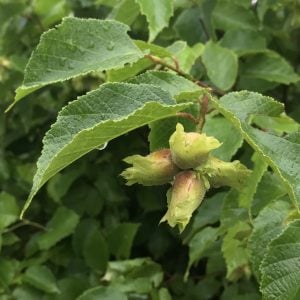
Red Osier Dogwood
$19.95
Red Osier Dogwood (also known as Red Twig Dogwood; Cornus sericea) is a native, suckering North American shrub grown for its brilliant red winter stems, white summer flowers, and fall color in shades of red, orange, and purple, widely used in riparian plantings, rain gardens, and wildlife landscapes. It grows in USDA hardiness zones 2-7 and AHS heat zones 1-6.
1-2′ Bare Root Seedling Tree
Propagation: Seedling (own-root)
In stock
Red Osier Dogwood is a straight wild-type native species, Cornus sericea (synonym Cornus stolonifera), with no cultivated parentage or formal breeding history. The species occurs naturally across most of North America from Alaska south through the Rockies and across the upper Midwest and Northeast, following stream banks and floodplain margins — the broadest native range of any North American Cornus. It was formally described by Friedrich Ehrhart in 1788. Indigenous peoples across its range, including Ojibwe and Cree communities, used the inner bark as a smoking material called kinnikinnick and documented medicinal applications for the bark and roots. European botanical collectors described the species through the late eighteenth and early nineteenth centuries, and it entered ornamental cultivation primarily for its brilliant red winter stems. The botanical synonym Cornus stolonifera reflects the stoloniferous, rhizome-spreading growth that enables the species to colonize and stabilize stream banks.
Red Osier Dogwood performs best where moisture is consistently available — along pond edges, swales, rain garden margins, and stream banks — though established plants tolerate surprising periods of summer drought. The species' tolerance of clay soils and seasonal flooding makes it one of few ornamental shrubs genuinely suited to problem wet areas. Soil pH flexibility is broad, from 5.5 to 7.5, so soil amendment is rarely necessary. Full sun produces the most intense winter stem color and the densest branching structure; partial shade is acceptable but tends to reduce stem coloration and increase open, leggy growth. New growth flushes readily after hard coppicing, so the plant recovers quickly from cutting back. In humid climates, adequate spacing — at least 5 feet between plants — improves airflow and reduces the moisture that fosters fungal leaf diseases. Avoid planting in low-lying frost pockets in cooler temperate regions, where late frosts can damage early spring flower buds even though the shrub itself survives.
USDA Hardiness Zone: 2-7
AHS Heat Zone: 1-6
Sun Requirements: Full Sun to Partial Shade
Soil pH: 5.5-7.5
Soil Type: Adaptable to clay, loam, or sandy soils; tolerates compaction and boggy conditions
Soil Drainage: Wet to well-drained; tolerates flooding and standing water
Water Requirements: Medium to High; tolerates flooding; also drought-tolerant once established
Drought Tolerance: Moderate; drought-tolerant once established but prefers consistently moist soil
Heat Tolerance: Low; stressed by hot, humid summers; performs best in USDA zones 2-7
Plant Spacing: 5-8 ft apart
Container Suitability: Poor; suckering habit and large mature size make container culture impractical
How to Prune: Remove the oldest third of stems at ground level each spring, or coppice all stems to 8 inches every 2-3 years to renew; best stem color occurs on young wood
Red Osier Dogwood spreads 7 to 10 feet wide through vigorous suckering and rises 6 to 9 feet tall, forming dense multi-stemmed colonies over time. The upright-spreading growth habit and fibrous rhizomatous root system make it an effective bank stabilizer along waterways and a functional living hedge when planted in masses. The fast growth rate — frequently 3 to 5 feet of new shoot growth annually on established plants — means the shrub fills in quickly but also requires deliberate management to prevent encroachment on neighboring plantings. Stem coloration follows a predictable pattern: the youngest growth displays the most saturated red, while stems more than two to three years old fade to gray-brown. Renewal pruning is therefore essential for sustained winter interest: remove the oldest third of stems at ground level each spring, or coppice the entire shrub to 8 inches every two to three years. Fall foliage turns red to orange to purple, extending the plant's ornamental season. No thorns, non-toxic to pets, and widely adaptable across a range of soil types and water regimes.
Mature Height: 6-9 ft tall
Mature Spread: 7-10 ft wide
Growth Habit: Upright-spreading, multi-stemmed suckering shrub
Growth Rate: Fast
Foliage Type: Deciduous
Food Forest Layer: Shrub
Permaculture Role: Erosion control, wildlife habitat, living hedge, coppice plant, biomass, riparian buffer
Leaf Color: Medium to dark green (spring/summer); young stems bright red year-round
Fall Foliage Color: Red to orange to purple
Thorns?: No
Attracts Wildlife: Birds (fruit), butterflies (host plant for Spring Azure), bees (flowers), small mammals
Life Span: Perennial; long-lived shrub, typically 20-30+ years with renewal pruning
Red Osier Dogwood is self-fertile and sets fruit reliably without a cross-pollinator. Flowers appear in flat-topped cymes (corymbs) from mid-May through June, with a second flush possible in July to August on vigorous new growth. The small white flowers, individually modest, are produced in large enough clusters to attract bees, butterflies, and other generalist pollinators in meaningful numbers. The Spring Azure butterfly (Celastrina ladon) uses Cornus sericea as a larval host plant, making bloom timing ecologically significant beyond simple pollination. Because the plant relies on insect pollination, planting in locations with good pollinator access — away from heavy pesticide use — improves fruit set and wildlife value. The small white drupes that follow are relished by birds even though they hold limited culinary appeal for humans.
Bloom Season: Mid
Bloom Window: Mid May - Mid Jun | Mid Jul - Mid Aug
Pollination Requirements: Self-fertile; does not require a cross-pollinator
Pollination Mechanism: Insect-pollinated; flowers attract bees and other pollinators
Flower Color: White
Red Osier Dogwood produces small white to pale bluish drupes, roughly 0.3 inches (8 mm) in diameter, ripening from August through September. Fruit is edible but distinctly bitter and mildly purgative in quantity, making it unsuitable for fresh eating. Historically, Ojibwe and other Indigenous communities dried the berries and mixed them with sweeter fruits — particularly Saskatoon serviceberries (Amelanchier alnifolia) — to balance the flavor in pemmican and dried fruit cakes. The seeds contain an oil that was extracted and used in some traditional contexts. From a contemporary landscape standpoint, the primary fruit value is wildlife support: more than 40 species of birds, including robins, cedar waxwings, and grouse, consume the fruit, and the dense thicket structure provides nesting cover. Fruit clusters persist into early winter in the absence of heavy bird pressure, extending the plant's wildlife value through the harshest months. Growers adding Red Osier Dogwood for edible production should do so as a minor supplement to other fruits rather than as a primary crop.
Culinary Uses: Berries dried and mixed with other fruits (historically combined with juneberries by Native Americans); not commonly eaten fresh due to bitterness
Red Osier Dogwood carries a notable advantage over Flowering Dogwood (Cornus florida): genuine resistance to Dogwood Anthracnose (Discula destructiva), the fungal disease that has devastated Cornus florida populations in humid-summer regions since the 1970s. Stem canker diseases caused by Nectria, Botryosphaeria, and Phomopsis fungi are moderately problematic on stressed or poorly spaced plants. Prune out cankered stems well below discolored tissue and sterilize tools with 70% isopropyl alcohol between cuts. Leaf spot diseases (Septoria cornicola, Elsinoe cornii) cause cosmetic defoliation; improving airflow through renewal pruning and avoiding overhead irrigation reduces incidence. Powdery mildew (Erysiphe spp.) appears in late summer on shaded plants — siting in adequate sun and thinning old stems are the most effective controls; OMRI-listed sulfur addresses severe outbreaks. Dogwood Sawfly (Macremphytus testaceus) larvae strip foliage in midsummer. Monitor for skeletonized leaves and hand-pick small colonies; insecticidal soap or spinosad handles larger infestations. Oystershell Scale (Lepidosaphes ulmi) and Leaf Miners cause moderate aesthetic damage; dormant oil in late winter smothers overwintering scale eggs before they hatch. Dogwood Borer (Synanthedon scitula) is less problematic here than on Cornus florida; avoiding mechanical wounds from mowing equipment is the primary preventive measure.
Stem Canker: Moderately Susceptible
Dogwood Anthracnose: Resistant
Leaf Spots: Moderately Susceptible
Powdery Mildew: Moderately Susceptible
Crown Canker / Root Rot: Moderately Resistant
Dogwood Sawfly: Moderately Susceptible
Oystershell Scale: Moderately Susceptible
Dogwood Borer: Moderately Resistant
Leaf Miners: Moderately Susceptible
- Coppice for color: Cut all stems to 8 inches every 2–3 years in early spring to force a flush of new growth — the youngest wood produces the most vivid red winter stem color.
- Stem canker prevention: Sterilize pruning tools between cuts with 70% isopropyl alcohol or a 10% bleach solution, especially when removing cankered wood, to prevent spreading Nectria and Botryosphaeria to healthy stems.
- Sawfly monitoring: Check the undersides of leaves in June and July for Dogwood Sawfly egg masses and early-instar larvae; hand-picking at this stage avoids the defoliation that occurs when populations go unnoticed until August.
- Scale management: Apply dormant horticultural oil in late winter before bud break to smother Oystershell Scale overwintering eggs — far more effective than summer sprays targeting mobile crawlers.
- Rain garden anchor: Plant at the base of rain garden swales or bioswales where it can absorb runoff; the fibrous rhizomatous root system stabilizes banks and flooding tolerance exceeds almost any comparable ornamental shrub.
We ship in late winter or early spring based on your USDA hardiness zone.
We strive to ship orders on the scheduled dates listed in the table below. However, please note that the actual shipping date may be subject to change due to factors like weather conditions and order volume.
The specific date for shipping your order will be determined according to your zipcode at the time of checkout.
Our plants are shipped bare root, packed in moist sawdust, and securely wrapped in plastic to prevent the roots from drying out. We use USPS Ground Advantage for shipping, ensuring that your plants typically arrive within 2-5 days after packaging.
In case you're unable to plant the trees immediately upon arrival, we recommend soaking them in water for a few hours and temporarily heeling them in. Ideally, they should be planted within three days of receipt for optimal health.
See our full shipping policy and map here
| Zone | Ship Date |
|---|---|
| 11 - 8b | March 1st, 2027 |
| 8a - 7b | March 8th, 2027 |
| 7a | March 15th, 2027 |
| 6b | March 22nd, 2027 |
| 6a | March 29th, 2027 |
| 5b - 5a | April 12th, 2027 |
| 4b - 4a | April 26th, 2027 |
| 3b - 1a | May 3rd, 2027 |
Our 365-Day Plant Guarantee: We ensure that our plants are delivered to you alive and healthy. If your plant does not survive its first year, you're eligible for store credit under these conditions:
- Your location falls within the appropriate USDA hardiness zone for the plant variety (refer to our hardiness zone map).
- You maintain the roots' moisture and plant within three days of delivery, following the instructions in our Planting Guide.
If you're concerned about your plant's health, please consult our guide, How to Tell if Your Tree is Dead or Dormant. Remember, our plants are shipped in a dormant state and may leaf out at different times based on their species. To check for plant vital
Related products

White Oak
Checking fitRated 5.00 out of 5
Hackberry
Checking fitRated 4.83 out of 5
Sycamore
Checking fit
American Hazelnut
Checking fitRated 4.57 out of 5


Reviews
There are no reviews yet.