$11.95Original price was: $11.95.$9.56Current price is: $9.56.
Nannyberry (also known as Sheepberry; Viburnum lentago) is a large native shrub or small tree with broad cold hardiness, producing sweet, prune-banana-flavored blue-black drupes that taste best after frost, brilliant orange-red to reddish-purple fall foliage, and creamy white flower clusters that feed dozens of bird and butterfly species. It grows in USDA hardiness zones 2-8 and AHS heat zones 3-7.
1-2′ Bare Root Seedling Plant Propagation: Seedling (own-root)
Nannyberry is the straight native species Viburnum lentago, with no cultivar selection or hybridization behind it. Its native range stretches from Quebec and New Brunswick south to Georgia and west to Manitoba and Colorado — one of the broader distributions in the genus and a reflection of its deep cold hardiness, extending to USDA Zone 2. The species has been in cultivation as an ornamental and wildlife shrub since at least the early 18th century; Eurasian botanical collections from that era include specimens labeled from northeastern North American provenance. Indigenous peoples across its range ate the ripe drupes fresh and dried them for winter provisions; the plant’s multiple common names — sheepberry, cowberry, sweetberry — reflect both regional variation and centuries of human interaction. The species is distinguished from the closely related Blackhaw (V. prunifolium) by a taller, more strongly arching multi-stemmed form and a more pronounced suckering habit that makes it better suited to naturalized and riparian plantings than to formal hedges. Viburnum lentago belongs to Adoxaceae following the molecular-based reclassification of the genus in the early 2000s.
Nannyberry's zone 2–8 rating reflects genuine cold hardiness, making it one of the few large fruiting shrubs dependable in northern prairie climates and Canadian border regions. Fruit production is noticeably heavier in full sun; sites receiving at least six hours of direct light yield the densest clusters, though the shrub performs acceptably in part shade. Soil adaptability is a real asset: nannyberry establishes in loam, clay-loam, and sandy loam across a pH range of 5.5 to 7.5, tolerating both moderately dry conditions once established and periodic wet feet that would stress less adaptable shrubs. Well-drained soil with consistent moisture during the flowering and early fruit-development window in late spring yields the most reliable crops. Avoid planting in standing water—prolonged waterlogging increases susceptibility to Armillaria root rot. A 3–4 inch layer of organic mulch moderates soil moisture, suppresses competing weeds during establishment, and improves soil structure over time. Space plants 8–12 feet apart; root suckers will form a colony if not managed.
USDA Hardiness Zone: 2-8 AHS Heat Zone: 3-7 Sun Requirements: Full Sun to Partial Shade Soil pH: 5.5-7.5 Soil Type: Loam, clay-loam, sandy loam; adaptable to most types Soil Drainage: Well-drained to moist; tolerates occasional wet conditions Water Requirements: Medium; tolerates both drought and wet conditions once established Drought Tolerance: Moderate Heat Tolerance: Moderate; performs well across a broad temperature range Plant Spacing: 8-12 ft apart Container Suitability: Poor; too large for containers How to Prune: Prune immediately after flowering to avoid removing next year's flower buds; remove root suckers to control spread; thin crowded stems every few years for air circulation
Nannyberry grows as an upright, multi-stemmed shrub with arching branches, reaching 10 to 18 feet tall and 6 to 12 feet wide at maturity. Shallow, fibrous roots generate suckers that gradually spread established plants into clonal colonies—advantageous in naturalized plantings and riparian buffers but requiring periodic removal in formal settings. Stems can be trained to a single trunk for a small tree form, opening the crown for better air circulation and easier harvest access. Glossy dark green leaves provide clean summer foliage, and fall color ranges from orange-red to reddish-purple, variable by individual. At medium growth rate, plants reach a mature fruiting structure in three to five years from establishment. Winter structure is worth noting: the arching branch architecture and persistent dried fruit clusters provide visual interest and ongoing wildlife forage through the dormant season. Prune immediately after flowering—flower buds for the following year form on current-season wood, and late-summer or fall cuts remove next year's crop.
Mature Height: 10-18 ft tall Mature Spread: 6-12 ft wide Growth Habit: Upright, multi-stemmed, suckering shrub; arching branches; may be trained as small single-trunk tree Growth Rate: Moderate Foliage Type: Deciduous Food Forest Layer: Shrub Permaculture Role: Food-producing shrub; wildlife habitat; hedge and windbreak; native ecosystem support; riparian buffer Leaf Color: Glossy dark green Fall Foliage Color: Orange-red to reddish-purple; variable Thorns?: No Attracts Wildlife: Birds (many species), butterflies (Spring Azure larval host), native bees, moths (larval host for Pink Prominent, Hummingbird Clearwing, Green Marvel), small mammals Life Span: Long-lived perennial shrub; decades
Nannyberry produces flat-topped clusters (corymbs) of creamy white flowers in mid-May to early June, attracting a wide range of native bees, butterflies, and other insects. The Spring Azure butterfly uses nannyberry as a larval host plant, and several moth species—including the Hummingbird Clearwing and Pink Prominent—also depend on it, giving the flowering period ecological value beyond fruit set. While nannyberry can set some fruit on its own, cross-pollination between two or more genetically distinct individuals consistently improves both fruit quantity and cluster fill. Planting at least two plants—either two nannyberries or a nannyberry paired with a compatible companion such as Arrowwood Viburnum—is the standard recommendation for productive fruiting. Blackhaw (Viburnum prunifolium) blooms in a similar window and may provide cross-compatible pollen as well. Space companion shrubs within 30 to 50 feet to ensure reliable insect transfer of pollen between plants.
Bloom Season: Mid Bloom Window: Mid May - Early Jun Pollination Requirements: Cross-pollination recommended; plant 2 or more shrubs for best fruit set Pollination Mechanism: Insect-pollinated (bees, butterflies, and other insects attracted to flat-topped flower clusters) Flower Color: Creamy white
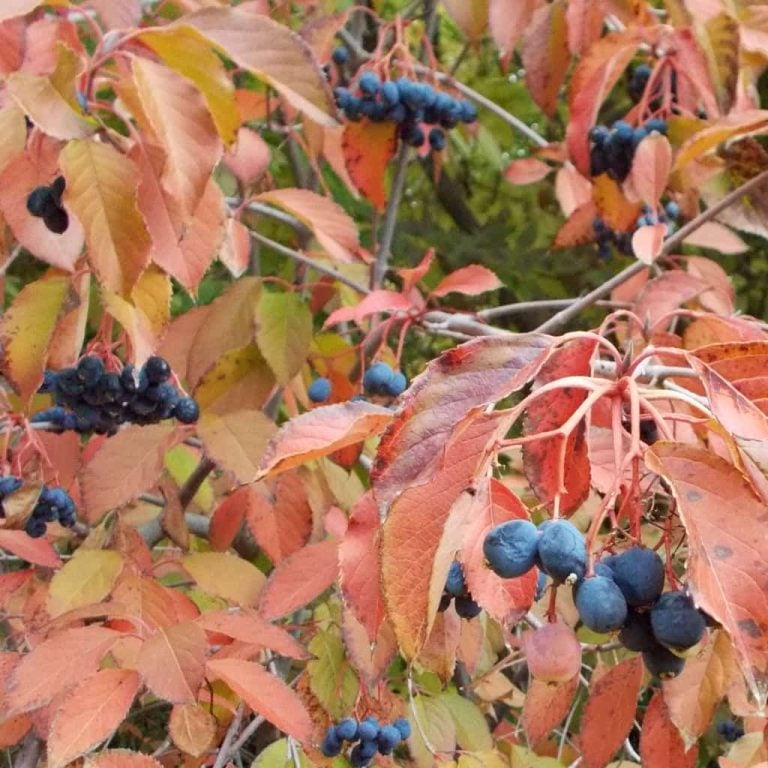
Nannyberry drupes are small—roughly half an inch in diameter—and ripen from late August through October, progressing from green through pink-red to a final blue-black. Flavor is notably sweet with a complex prune-banana character; acidity is low, and the flesh becomes more palatable and sweeter after the first frost softens the skin and concentrates sugars. Each drupe contains a single large flattened stone that makes up a substantial portion of the fruit's interior, so effective yield of edible flesh per cluster is moderate rather than high. Fresh eating straight from the shrub is practical once fully ripe, and the fruit processes well into jams, jellies, preserves, and fruit leather. Beverages and baked goods are traditional uses documented across the plant's native range. Wildlife value rivals the edible value for humans: many bird species consume the ripe and overwintering drupes, making the fruiting clusters a reliable draw for thrushes, bluebirds, waxwings, and other fall migrants. Harvest timing is flexible—drupes hold on the shrub into early winter, providing extended forage for wildlife and harvest flexibility for growers.
Ripening Season: Mid Harvest Window: Late Aug - Mid Oct Fruit Size: 0.5 inch Flavor: Very sweet, juicy; prune-banana flavor; best after frost Fruit Color: Blue-black at maturity; progresses from green to pink/red then blue-black Fruit Texture: Pulpy, somewhat juicy with a large central stone (drupe) Bearing Habit: Annual bearing on previous year's wood Years to Bear: 3-5 years Culinary Uses: Fresh eating, jams, jellies, preserves, fruit leather, beverages, baked goods; best after frost
Nannyberry shows moderate resistance to Powdery Mildew (Erysiphe viburni) and Bacterial Leaf Spot (Pseudomonas viburni)—disease pressure can appear in humid summers but rarely causes plant loss under good cultural management. Thinning crowded stems every few years reduces the interior humidity where powdery mildew sporulates; OMRI-listed potassium bicarbonate applied at first symptom can limit spread. The more serious risks are Armillaria Root Rot (Armillaria mellea) and Crown Gall (Agrobacterium tumefaciens), both of which rate moderately susceptible. For Armillaria, avoid sites with a history of buried infected wood—old orchard ground or areas with stump debris—and maintain good drainage; no curative treatment exists. Crown gall enters through root wounds; inspect bareroot stock before planting, reject any material with irregular gall tissue, and protect established root zones from mower and string-trimmer injury. On the pest side, Viburnum Leaf Beetle (Pyrrhalta viburni), Viburnum Aphid (Aphis viburni), Spider Mites (Oligonychus ilicis), and Scale Insects all rate moderately resistant in nannyberry relative to other viburnum species. Monitor stem tips in October and November for leaf beetle egg masses; prune and destroy affected sections before spring hatch. Aphid colonies on new growth respond to a forceful water spray or, for heavy pressure, OMRI-listed insecticidal soap.
Taste After Frost: Harvest nannyberries after the first frost — cold temperatures convert starches to sugars, significantly improving flavor and texture over pre-frost picking.
Sucker Management: Decide at planting whether you want a colony or a contained shrub, then remove suckers consistently in spring if containment is the goal; letting them develop suits erosion control or riparian buffer plantings.
Crown Gall Inspection: Before planting bareroot stock, inspect roots closely for irregular galls and reject any showing gall tissue. Protect established root zones from mower and string-trimmer contact to eliminate wound entry points.
Leaf Beetle Monitoring: Check stem tips in October and November for small, tan egg masses in bark slits. Pruning and destroying affected sections before egg hatch in spring is the most effective organic control.
We ship in late winter or early spring based on your USDA hardiness zone.
We strive to ship orders on the scheduled dates listed in the table below. However, please note that the actual shipping date may be subject to change due to factors like weather conditions and order volume.
The specific date for shipping your order will be determined according to your zipcode at the time of checkout.
Our plants are shipped bare root, packed in moist sawdust, and securely wrapped in plastic to prevent the roots from drying out. We use USPS Ground Advantage for shipping, ensuring that your plants typically arrive within 2-5 days after packaging.
In case you're unable to plant the trees immediately upon arrival, we recommend soaking them in water for a few hours and temporarily heeling them in. Ideally, they should be planted within three days of receipt for optimal health.
Our 365-Day Plant Guarantee: We ensure that our plants are delivered to you alive and healthy. If your plant does not survive its first year, you're eligible for store credit under these conditions:
You maintain the roots' moisture and plant within three days of delivery, following the instructions in our Planting Guide.
If you're concerned about your plant's health, please consult our guide, How to Tell if Your Tree is Dead or Dormant. Remember, our plants are shipped in a dormant state and may leaf out at different times based on their species. To check for plant vital
Reviews
There are no reviews yet.