$59.95Original price was: $59.95.$47.96Current price is: $47.96.
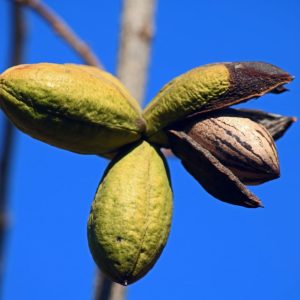
Kiowa Pecan (Carya illinoinensis ‘Kiowa’) is a heritage pecan developed by the USDA-ARS from a Mahan × Desirable cross, bearing very large 1.5–2-inch nuts with rich, sweet flavor on a broad, spreading canopy tree that provides golden fall color and premier mast for deer, turkey, and squirrels. It grows in USDA hardiness zones 6-9 and AHS heat zones 6-10, and needs 300-700 chill hours, and requires cross-pollination with a compatible variety such as Cape Fear Pecan or Desirable Pecan for reliable nut set.
3-4′ Bare Root Grafted Tree Rootstock: Pecan Seedling
Pecan Seedling (Standard): Grafted onto a pecan seedling, so the tree reaches its full natural size on a deep taproot. No dwarfing effect.
• Support: Freestanding; the deep taproot gives excellent anchorage.
Kiowa pecan was developed by USDA-ARS pecan breeder L. D. Romberg at Brownwood, Texas, from a controlled cross made in 1953. Original records listed the cross as Odom x Mahan, but subsequent isozyme and DNA analysis ruled out Odom as the pollen parent; molecular evidence points instead to a Mahan x Desirable cross, placing Kiowa squarely in the lineage of two of the most commercially planted southeastern cultivars. The cross produced a seedling first grafted into a bearing tree in 1954, which fruited in 1958; the cultivar was formally released in 1976. Its name honors the Kiowa people of the Southern Plains, consistent with the USDA program’s tradition of naming pecan releases after Native American nations. Kiowa’s combination of large nut size, precocious bearing in young trees, and good kernel fill made it one of the most widely planted commercial pecans in Texas through the late twentieth century. Though its high management requirements limit appeal for low-input growers, its legacy as a large-nut benchmark cultivar continues to influence southeastern pecan production.
Kiowa thrives in USDA Zones 6 through 9 and AHS Heat Zones 6 through 10. It requires a long, warm growing season to fully mature its large nuts, performing best where first frost falls no earlier than mid-October. Plant in deep, well-drained alluvial or loam soils with a pH between 5.5 and 7.0 — shallow or compacted sites starve roots and worsen alternate bearing. Full sun is non-negotiable; even partial shade degrades kernel fill. Mature trees reach 75 to 100 feet tall with a spread of 40 to 75 feet, so allow at least 60 feet between specimens.
Kiowa has a pronounced overbearing tendency: on heavy crop years, unthinned clusters produce small, poorly filled nuts. Thin to 3 to 4 nuts per cluster by late June to sustain kernel quality. Consistent moisture from June through hull split is critical — deep irrigation every 10 to 14 days during dry spells keeps fill on track. Foliar zinc at bud swell and again 4 to 6 weeks post-pollination prevents the rosette and mouse-ear symptoms common in zinc-deficient soils.
USDA Hardiness Zone: 6-9 AHS Heat Zone: 6-10 Chill Hours: 300-700 Sun Requirements: Full Sun Soil pH: 5.5-7.0 Soil Type: Deep, fertile sandy loam to clay loam; native to bottomland alluvial soils Soil Drainage: Well-drained to moderately well-drained Water Requirements: Medium Drought Tolerance: Moderate Container Suitability: No
Kiowa is a large, long-lived deciduous canopy tree with a broad, spreading crown that provides excellent shade once established. Mature specimens typically stand 75 to 100 feet tall and span 40 to 75 feet wide, forming a dominant presence in any food forest or estate planting. Growth rate is moderate — expect 12 to 18 inches per year in good conditions with adequate water and nutrition. The pinnately compound leaves, typically with 9 to 17 leaflets, emerge in spring after most frost risk has passed and turn golden-yellow in autumn before drop.
Young Kiowa trees are notably precocious, often producing first nuts within 4 to 6 years on grafted stock — earlier than many comparable cultivars of this size class. Alternate bearing is a confirmed trait of mature trees: on-years produce heavy crops while off-years may yield little or nothing. Diligent crop thinning moderates the swing between years and sustains kernel quality on the harvest side. Foliage type is fully deciduous; Care Level is High, reflecting the intensive zinc, irrigation, and pest management attention this cultivar rewards.
Mature Height: 70-100 ft tall Mature Spread: 40-75 ft wide Growth Habit: Upright, broadly oval crown with large spreading limbs Growth Rate: Moderate Foliage Type: Deciduous Food Forest Layer: Canopy Permaculture Role: Canopy/overstory tree; nut crop; wildlife habitat; mast provider; shade Leaf Color: Green Fall Foliage Color: Gold/Yellow Thorns?: No Attracts Wildlife: Squirrels, white-tailed deer, wild turkey, crows, woodpeckers, songbirds, opossums, raccoons Life Span: 100+ years
Kiowa is a Type II (protogynous) pecan, meaning it has receptive female flowers before its own catkins shed pollen. In the current pecan pollination chart, its pollen-shed window is May 3 - May 8 and its receptive window is Apr 25 - May 2. Reliable crops need a compatible cross-pollinizer whose pollen shed overlaps that receptive window. Best matches from the current article matrix: Cape Fear (Type I), Desirable (Type I), Western Schley (Type I). Pecans are wind-pollinated; plant compatible varieties in the same yard, food forest, or orchard block with open airflow rather than relying on an unknown tree several properties away.
Bloom Season: Late Bloom Window: Pollen shed: May 3 - May 8; receptive: Apr 25 - May 2 Pollination Requirements: Cross-pollination required; Type II (protogynous): becomes receptive first, then sheds pollen later; needs a compatible cross-pollinizer whose pollen shed overlaps its receptive window Pollination Mechanism: Wind-pollinated Flower Color: Green (insignificant catkins)
Kiowa produces some of the largest nuts in the cultivated pecan spectrum — approximately 48 nuts per pound and weighing around 9.5 grams each. Kernel content averages 57 to 58 percent, which is on par with premium commercial standards, though kernel color skews slightly darker than Desirable, a cosmetic factor that rarely matters in home or direct-market use. Nuts mature in late October in a temperate climate, placing Kiowa among the later-ripening standard cultivars.
The kernel is rich and buttery with the full, complex flavor characteristic of high-percentage native genetics. Kiowa nuts shell cleanly and hold whole halves well, making them ideal for gift packs, fresh snacking, and baking applications that showcase nut appearance. Wildlife value is high: squirrels, white-tailed deer, wild turkey, woodpeckers, songbirds, crows, raccoons, and opossums all utilize the crop. In permaculture and food forest contexts, Kiowa anchors the uppermost canopy layer while providing a reliable annual nut harvest for both household use and wildlife.
Ripening Season: Very Late Harvest Window: Mid Oct - Early Nov Fruit Size: 1.5-2 inch Fruit Weight: 9.5 g per nut (48 nuts/lb) Flavor: Rich, sweet pecan flavor; good quality in most years Fruit Color: Tan to brown shell with darker streaking; kernel slightly darker than Desirable Fruit Skin: Thin shell Bearing Habit: Overbearing tendency; crop thinning required Years to Bear: 5-6 years Culinary Uses: Fresh eating, baking, confections, pecan pies, snacking
Venturia effusa, the cause of pecan scab, is the single most economically damaging disease in pecan production, and Kiowa's resistance to it is variable. Some trials and growing regions report very good resistance; others document susceptibility approaching that of the highly scab-susceptible Desirable. This variability likely reflects differences in regional scab races. In humid Eastern and Gulf Coast climates, treat Kiowa as moderately susceptible and prioritize cultural controls: sanitation of fallen leaf and shuck debris each autumn, canopy thinning to reduce interior humidity, and timely removal of mummified nuts.
Downy spot, vein spot, zonate leaf spot, and powdery mildew round out the disease profile; none are primary concerns in well-managed orchards with good air circulation. On the pest side, Pecan Weevil is the most damaging late-season threat. Time kaolin clay (Surround WP) applications to coincide with adult emergence in mid-summer, and use pheromone traps to monitor flight activity before spray timing decisions. Pecan Nut Casebearer, Hickory Shuckworm, and Black Pecan Aphid require scouting from nut set through shuck split. Beneficial insect conservation through diverse understory plantings helps suppress aphid populations naturally. Remove and destroy infested nuts and shucks promptly to break pest cycles.
Zinc first, every year: Apply foliar zinc sulfate (36%) at bud swell and repeat 4-6 weeks after pollination to prevent mouse-ear and rosette — the most common Kiowa nutritional failure.
Thin aggressively in overbearing years: Reduce clusters to 3-4 nuts per shoot by late June; unthinned Kiowa produces small, poorly filled nuts that depress market value and exhaust the tree.
Plant a Type I companion: Pawnee, Desirable, or Cape Fear within 150 feet ensures pollen overlap during Kiowa's peak pistil receptivity window.
Weevil kaolin timing: Begin Surround WP applications at water-stage nut development (mid-July) and continue through shuck split to protect against Pecan Weevil.
Deep-irrigate through hull split: Kiowa's large nuts demand consistent soil moisture from June through October — drought stress during this window collapses kernel fill.
We ship in late winter or early spring based on your USDA hardiness zone.
We strive to ship orders on the scheduled dates listed in the table below. However, please note that the actual shipping date may be subject to change due to factors like weather conditions and order volume.
The specific date for shipping your order will be determined according to your zipcode at the time of checkout.
Our plants are shipped bare root, packed in moist sawdust, and securely wrapped in plastic to prevent the roots from drying out. We use USPS Ground Advantage for shipping, ensuring that your plants typically arrive within 2-5 days after packaging.
In case you're unable to plant the trees immediately upon arrival, we recommend soaking them in water for a few hours and temporarily heeling them in. Ideally, they should be planted within three days of receipt for optimal health.
Our 365-Day Plant Guarantee: We ensure that our plants are delivered to you alive and healthy. If your plant does not survive its first year, you're eligible for store credit under these conditions:
You maintain the roots' moisture and plant within three days of delivery, following the instructions in our Planting Guide.
If you're concerned about your plant's health, please consult our guide, How to Tell if Your Tree is Dead or Dormant. Remember, our plants are shipped in a dormant state and may leaf out at different times based on their species. To check for plant vital
Reviews
There are no reviews yet.