Jonkheer Van Tets Currant
$19.95
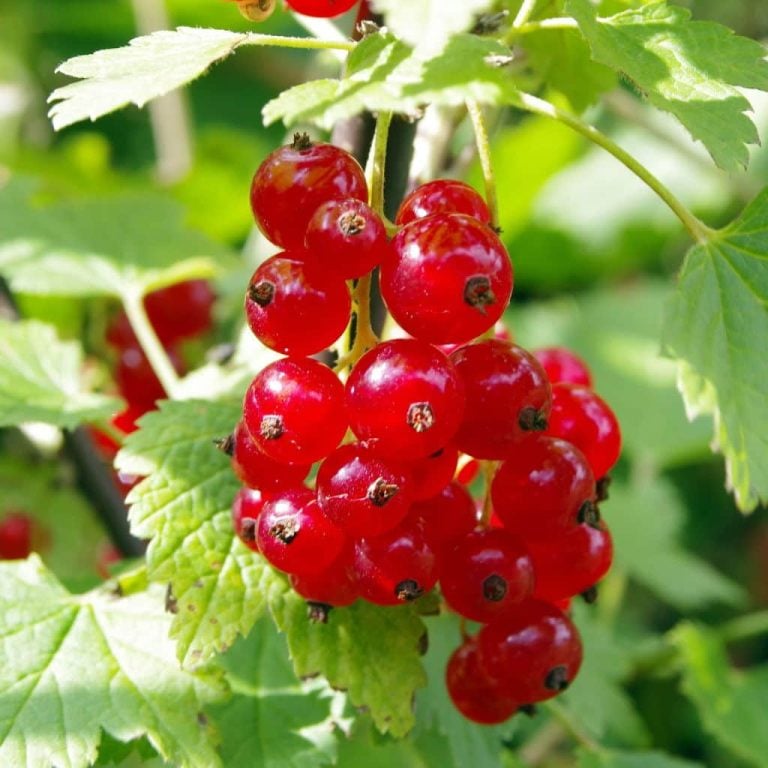
Jonkheer Van Tets Currant (Ribes rubrum ‘Jonkheer Van Tets’) is a Dutch red currant introduced in 1941 and widely regarded as one of the best-flavored cultivars, producing long clusters of deep-red berries with a sweet-tart, richly complex flavor on an erect, upright 3–5 ft shrub. It grows in USDA hardiness zones 3-7 and AHS heat zones 1-7, needs 800-1500 chill hours, and is self-fertile, fruiting reliably without a pollinator partner.
1-2′ Bare Root Plant
Propagation: Own-root
Can’t be shipped to: AK, DE, HI, ME, MA, MI, NJ, NC, RI, VT, WV
Out of stock
Out of stock — back next season
Spring 2027 inventory drops in June. Drop your email and we'll notify you the day this variety is back in stock.
You're on the list. Check your inbox for a confirmation link — click it to lock in your spot. We'll email you the day this variety is back in stock.
Jonkheer van Tets is a red currant cultivar bred in the Netherlands and introduced in 1941. It was developed through the Dutch horticultural research network in Wageningen, which systematically evaluated and selected Ribes rubrum material for commercial performance across northern European growing conditions. The name honors a Dutch nobleman, a naming convention common in Dutch horticultural releases of that era. The variety spread rapidly through European small-fruit production in the postwar decades, valued for its early ripening position at the opening of the red currant season and for consistently high flavor ratings in comparative trials. It reached North American specialty nurseries in the late twentieth century, where it became one of the most widely recommended red currant cultivars for home gardens and small farms. No formal cross parentage has been publicly documented for Jonkheer van Tets; it appears to have been selected from existing Ribes rubrum germplasm rather than from a directed cross with documented parent varieties. It remains a benchmark early-season cultivar in European and North American variety trials.
Jonkheer Van Tets performs best in cool climates with 800 to 1,500 chill hours — conditions common throughout USDA zones 3 through 7. It tolerates partial shade better than most fruiting shrubs, making it adaptable to north-facing slopes or the dappled canopy edge of a food forest. Heat is the primary limiting factor: sustained temperatures above 85°F shorten fruiting windows and reduce berry quality, so afternoon shade becomes genuinely useful in warmer parts of its range. Soil pH of 6.0 to 6.5 supports optimal nutrient uptake; outside this range, chlorosis and reduced vigor become common even in otherwise adequate soils. Consistent moisture of 1 to 2 inches per week through harvest is critical — drought stress during fruit development causes premature drop and poor flavor development. While this variety tolerates clay and sandy soils when amended with organic matter, drainage must remain adequate; standing water around the root zone invites crown rot.
USDA Hardiness Zone: 3-7
AHS Heat Zone: 1-7
Chill Hours: 800-1500
Sun Requirements: Full Sun to Partial Shade
Soil pH: 6.0-6.5
Soil Type: Rich, well-drained loam; tolerates clay and sandy soils with organic matter
Soil Drainage: Well-drained
Water Requirements: Medium; 1-2 inches per week through harvest
Drought Tolerance: Low
Heat Tolerance: Low; damaged by prolonged temperatures above 85°F
Plant Spacing: 3-6 ft apart in rows, 8-10 ft between rows
How to Prune: Remove oldest canes annually during dormancy; maintain 8-10 bearing canes of mixed ages (1-, 2-, and 3-year wood); fruit borne primarily on spurs of 2- and 3-year wood
Jonkheer Van Tets grows as an erect, upright deciduous shrub reaching 3 to 5 feet tall and equally wide — a tidy, manageable scale that fits hedgerow plantings, mixed shrub borders, and food forest understory layers without dominating surrounding plants. The fibrous root system stays relatively shallow, which simplifies transplanting but requires consistent mulching to retain soil moisture and moderate root-zone temperatures. Pruning is the central maintenance task: fruit is borne on spurs of 2- and 3-year-old wood, so the goal is to maintain 8 to 10 canes representing a mix of 1-, 2-, and 3-year growth while removing the oldest canes annually during dormancy. This renewal approach keeps the plant productive and maintains airflow through the canopy — a direct factor in disease management. The growth rate is medium, and established plants remain productive for 10 to 15 years or more with proper cane management.
Mature Height: 3-5 ft tall
Mature Spread: 3-5 ft wide
Growth Habit: Erect, upright deciduous shrub
Growth Rate: Moderate
Foliage Type: Deciduous
Food Forest Layer: Shrub
Attracts Wildlife: Bees, birds, small mammals
Life Span: productive for 10-15+ years
Jonkheer Van Tets is self-fertile and will set a full crop without a companion planting. Flowers open late March through early May depending on location, producing small greenish-yellow clusters attractive to native bees and honeybees before many other fruiting shrubs have leafed out fully. Despite self-fertility, cross-pollination from another red or white currant variety consistently improves both fruit set and cluster length. Red Lake Currant and White Imperial Currant bloom on overlapping schedules and make effective companions. Because currants are also partially wind-pollinated, spacing plants within 15 to 20 feet of each other captures both insect and wind-movement benefits. Early bloom timing means late frost remains a risk in zones 3 and 4; planting on a north-facing slope delays bud break slightly and reduces frost exposure.
Bloom Season: Mid
Bloom Window: Late Mar - Early May
Pollination Requirements: Self-fertile; cross-pollination improves yield
Pollination Mechanism: Insect-pollinated (bees); also partially wind-pollinated
Flower Color: Greenish-yellow
Berries ripen mid-June through early July in temperate climate, hanging in long racemes (strigs) that simplify harvest — picking an entire cluster at once rather than individual berries is the standard method. Individual berries run 0.25 to 0.35 inch in diameter, deep red, with thin translucent skin. Flavor is distinctly sweet-tart with a richness that sets this variety apart from blander red currants; it lacks the sharp acidity that makes some cultivars tiring to eat fresh. Yield runs high, typically 10 to 20 pounds per mature plant. Berries hold on the bush reasonably well past peak ripeness and refrigerate for 1 to 2 weeks. Culinary applications are broad: fresh eating, jams, jellies, juice, syrup, wine, cordials, and savory applications including sauces for game meats. The high pectin content makes jam production reliable without added pectin. Berries also freeze well, retaining flavor and texture for months.
Ripening Season: Very Early
Harvest Window: Mid Jun - Early Jul
Fruit Size: 0.25-0.35 inch
Flavor: Sweet-tart; rich, highly rated flavor; considered by many to be the best-flavored red currant
Fruit Color: Deep red
Bearing Habit: Annual bearer; fruit borne on spurs of 2- and 3-year-old wood on long racemes (strigs)
Years to Bear: 1-2 years
Storage Life: 1-2 weeks refrigerated; berries hold well on the bush
Culinary Uses: Fresh eating, jams, jellies, juice, syrup, wine, cordials, sauces, desserts, fruit leather; pairs well with game meats
Jonkheer Van Tets shows moderate resistance to Anthracnose / Leaf Spot (Drepanopeziza ribis) and White Pine Blister Rust (Cronartium ribicola), with infection less severe than on susceptible varieties under equivalent pressure. Good resistance to Powdery Mildew (Podosphaera mors-uvae) reduces fungicide intervention needs in humid climates. Two diseases warrant active management: Botrytis Fruit Rot (Botrytis cinerea) and Currant Cane Blight (Botryosphaeria ribis), both of which this variety is moderately susceptible to. For Botrytis, the most effective organic strategy is improving airflow through annual cane renewal pruning, harvesting promptly at ripeness, and removing any mummified or overripe fruit. Cane Blight enters through pruning wounds and winter injury; pruning during dry weather and applying compost-tea or copper-based sprays to cut surfaces reduces entry points. Among pests, currant aphids (Cryptomyzus ribis) meet good resistance. Currant Borer (Synanthedon tipuliformis) and Currant Fruit Fly (Epochra canadensis) pose moderate susceptibility — borer damage shows as wilting canes that should be cut below the affected area and destroyed. Fruit fly monitoring with yellow sticky traps starting in late May guides harvest timing. The Imported Currantworm / Currant Sawfly (Nematus ribesii) meets moderate resistance; check leaf undersides weekly from bud break and hand-remove early infestations or apply kaolin clay.
Anthracnose / Leaf Spot: Moderately Resistant
Powdery Mildew: Resistant
White Pine Blister Rust: Moderately Resistant
Botrytis Fruit Rot: Moderately Susceptible
Currant Cane Blight: Moderately Susceptible
Imported Currantworm / Currant Sawfly: Moderately Resistant
Currant Aphid: Resistant
Currant Borer: Moderately Susceptible
Currant Fruit Fly: Moderately Susceptible
- Prioritize early-morning harvests: Pick entire strigs (berry clusters) in the morning while berries are cool — this preserves shelf life and prevents fermentation that begins quickly in afternoon heat.
- Cane age tracking: Mark first-year canes with colored flagging tape at planting time so you always know cane age; this simplifies the annual renewal cut and keeps the 8–10 bearing-cane target on track.
- Botrytis prevention through airflow: Open the shrub's center during dormancy pruning by removing inward-crossing canes, keeping foliage drier during humid summers — important for this moderately susceptible variety.
- Currant Borer vigilance: Inspect canes weekly in June for wilting shoot tips — the entry symptom of currant borer. Cut wilted canes 6 inches below the entry hole and destroy immediately (do not compost) to prevent adult emergence and re-infestation.
- Mulch for root-zone stability: Apply 3 to 4 inches of wood chip mulch to the root zone to moderate soil temperature and hold moisture, especially important during summer heat for this cold-climate species.
We ship in late winter or early spring based on your USDA hardiness zone.
We strive to ship orders on the scheduled dates listed in the table below. However, please note that the actual shipping date may be subject to change due to factors like weather conditions and order volume.
The specific date for shipping your order will be determined according to your zipcode at the time of checkout.
Our plants are shipped bare root, packed in moist sawdust, and securely wrapped in plastic to prevent the roots from drying out. We use USPS Ground Advantage for shipping, ensuring that your plants typically arrive within 2-5 days after packaging.
In case you're unable to plant the trees immediately upon arrival, we recommend soaking them in water for a few hours and temporarily heeling them in. Ideally, they should be planted within three days of receipt for optimal health.
See our full shipping policy and map here
| Zone | Ship Date |
|---|---|
| 11 - 8b | March 1st, 2027 |
| 8a - 7b | March 8th, 2027 |
| 7a | March 15th, 2027 |
| 6b | March 22nd, 2027 |
| 6a | March 29th, 2027 |
| 5b - 5a | April 12th, 2027 |
| 4b - 4a | April 26th, 2027 |
| 3b - 1a | May 3rd, 2027 |
Our 365-Day Plant Guarantee: We ensure that our plants are delivered to you alive and healthy. If your plant does not survive its first year, you're eligible for store credit under these conditions:
- Your location falls within the appropriate USDA hardiness zone for the plant variety (refer to our hardiness zone map).
- You maintain the roots' moisture and plant within three days of delivery, following the instructions in our Planting Guide.
If you're concerned about your plant's health, please consult our guide, How to Tell if Your Tree is Dead or Dormant. Remember, our plants are shipped in a dormant state and may leaf out at different times based on their species. To check for plant vital
Related products

Arapaho Blackberry
Checking fitRated 4.67 out of 5
Elliott Blueberry
Checking fit
Primus White Currant
Checking fitRated 5.00 out of 5
Johns Elderberry
Checking fitRated 5.00 out of 5

Reviews
There are no reviews yet.