Joan J Raspberry
$12.95
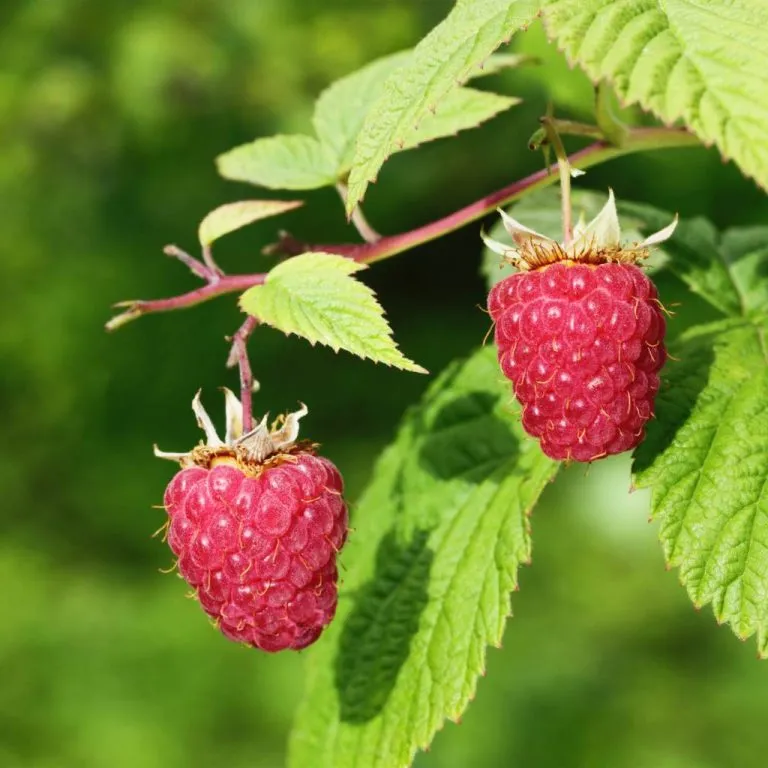
Joan J Raspberry (Rubus idaeus ‘Joan J’) is a thornless everbearing raspberry producing very large deep ruby-red fruit — up to 1.2 inches — with sweet, highly rated fresh-eating flavor and a firm texture that freezes and bakes well. It grows in USDA hardiness zones 4-8 and AHS heat zones 2-7, needs 800-1700 chill hours, and is self-fertile, fruiting reliably without a pollinator partner.
1-2′ Bare Root Plant
Propagation: Own-root
In stock
Joan J was developed at East Malling Research in Maidstone, Kent, England, as part of the station’s commercial fresh-market raspberry improvement program. The breeding cross is Joan Squire × Teri-Louise: Joan Squire (European Plant Breeders Rights No. 5680) was itself a complex hybrid, and Teri-Louise provided the pollen contribution. The resulting cultivar was patented under U.S. Plant Patent PP18,954 (filed 2005) and also holds Canadian PBR No. 3881. East Malling’s objective was to produce a thornless, high-yielding primocane variety whose berry size and firmness would meet commercial pack-out standards — a departure from earlier everbearing selections that prioritized yield volume over post-harvest quality. Joan J met those targets: the spine-free canes reduce handling injury and simplify trellis management, and the variety has found particular traction in North American pick-your-own operations where thornless canes are a meaningful differentiator for customer experience.
Soil preparation is where Joan J's yield potential is either realized or wasted. The variety demands pH in the 5.5–6.5 range, and values toward the lower end of that window favor cane vigor; a simple soil test and targeted sulfur amendment before planting prevents the chlorosis that develops in alkaline soils. Consistent moisture — roughly 1–2 inches per week during the growing season — is especially critical from bloom through harvest: water stress at fruit set causes drupelets to abort unevenly, producing crumbly, unmarketable berries. However, the roots sit shallow and suckering crowns are intolerant of waterlogged soils, so raised beds or ridged rows are worth the setup cost in heavy clay. Plant spacing of 18–24 inches within rows, with rows at least 8 feet apart, keeps the row canopy open enough for air circulation — critical for managing Botrytis in humid climates. USDA zones 4–8 cover most of the continental US, though growers in zones 7–8 should site Joan J in a location with afternoon shade to moderate summer heat stress on the primocane crop.
USDA Hardiness Zone: 4-8
AHS Heat Zone: 2-7
Chill Hours: 800-1700
Sun Requirements: Full Sun
Soil pH: 5.5-6.5
Soil Type: Loam, well-drained, organically rich
Soil Drainage: Well-drained
Water Requirements: Medium; 1-2 inches per week during growing season
Drought Tolerance: Low
Plant Spacing: 18-24 inches in row; rows 8+ ft apart
Container Suitability: Not recommended
How to Prune: For fall-only crop: cut all canes to ground in late fall or early spring. For double crop: leave floricanes standing after fall harvest; they fruit in summer then remove after summer crop finishes.
Joan J produces erect, suckering canes that reach 4–6 feet without any trellis support, though a single-wire support at 3–4 feet helps maintain row definition during heavy primocane fruit loads. The thornless characteristic runs through the entire cane, not just the upper portion — a meaningful distinction from semi-thornless types where basal thorns persist. Growth rate is fast: new canes emerge from the perennial crown each spring and, in the everbearing mode, begin flowering at the cane tip by mid-summer, ripening downward through fall. The fibrous, shallow root system spreads horizontally via suckers, gradually widening the row over time. Annual removal of suckers beyond a 12-inch band keeps the planting contained and prevents the interior crowding that escalates disease pressure. Mature spread per plant is 2–3 feet. With a productive lifespan of 10–15 years from a well-managed crown, pruning discipline in years 1–3 pays dividends in later structural integrity.
Mature Height: 4-6 ft tall
Mature Spread: 2-3 ft wide
Growth Habit: Upright, erect shrub; suckering cane
Growth Rate: Fast
Foliage Type: Deciduous
Food Forest Layer: Shrub
Leaf Color: Green
Thorns?: No (thornless)
Attracts Wildlife: Bees, butterflies, birds
Life Span: productive for 10-15 years
Joan J is fully self-fertile: a single-variety planting sets fruit without any additional cultivar present. Insect pollination — primarily bees — moves pollen within and between flowers, and adequate bee activity is necessary for complete drupelet fill. Sparse pollination produces misshapen fruit rather than outright crop failure. Flowering occurs in two distinct windows: floricanes bloom late May through early June, and the primocane tips flower from late June through late July, progressing downward as canes elongate. Interplanting with Caroline or Heritage provides overlapping bloom periods and can improve drupelet uniformity under variable weather, though yield gains from cross-pollination are modest compared with the baseline self-fertile performance. Growers managing a fall-only system remove all canes after the primocane harvest, eliminating the floricane bloom cycle entirely and simplifying timing to a single late-summer-to-fall harvest.
Bloom Season: Early | Late
Bloom Window: Late May - Early Jun | Late Jun - Late Jul
Pollination Requirements: Self-fertile; no second variety required
Pollination Mechanism: Insect (bee) pollinated; self-fertile
Flower Color: White
Fruit diameter runs 0.9–1.2 inches (approximately 30 mm in length, 25 mm in width), placing Joan J at the large end of the commercial red raspberry spectrum. Average fruit weight is 5–6 grams early in the season, tapering to around 4 grams at mid-season — still competitive with most named varieties. Flavor is sweet with balanced acidity and consistently high fresh-eating scores in sensory evaluations; documented Brix data from commercial trials ranges from 9–11°Brix, typical for the species. Fruit color deepens to a rich ruby-red at full maturity; overripe fruit darkens further and softens quickly, so harvest timing every 2–3 days is necessary to capture the firm-flesh window. Fresh shelf life is 2–5 days under refrigeration. The firm texture makes Joan J one of the better-performing raspberries in commercial freezing — drupelets hold individual structure after thaw rather than collapsing. Culinary range includes fresh eating, jam, jelly, pies, smoothies, and frozen pack; leaves are suitable for herbal tea.
Ripening Season: Early | Late
Harvest Window: Early Jul - Late Jul | Late Jul - Mid Oct
Fruit Size: 0.9-1.2 inch (very large for raspberry; 30mm length x 25mm width)
Fruit Weight: 5-6 g average
Flavor: Sweet, excellent flavor; consistently rated highly for fresh eating
Fruit Color: Deep ruby-red (medium red at maturity; darkens when overripe)
Fruit Texture: Firm, holds size well; small drupelets
Bearing Habit: Everbearing (primocane-fruiting); produces on first-year canes in late summer-fall, and on second-year floricanes in summer if not cut back
Years to Bear: 1-2 years
Storage Life: 2-5 days fresh; excellent for freezing
Culinary Uses: Fresh eating, freezing, jams, jellies, pies, baked goods, smoothies, herbal tea (leaves), vinegar
Botrytis fruit rot (Botrytis cinerea) is Joan J's most consequential disease vulnerability — the variety is moderately susceptible, and humid summer conditions during ripening create high infection pressure. Prune to maintain an open canopy, avoid overhead irrigation during fruit development, and remove mummified fruit or infected cane stubs promptly; picking every 2–3 days prevents overripe fruit from becoming gray mold inoculum. Phytophthora root rot (Phytophthora rubi) is the other moderate susceptibility; raised beds and well-drained soil are the primary defenses, since no cultural practice recovers an already-infected crown. Raspberry mosaic virus complex (aphid-transmitted) is a systemic risk — moderate susceptibility means certified virus-free planting stock is the critical preventive step. Spur blight (Didymella applanata) and cane blight (Leptosphaeria coniothyrium) rate as moderately resistant; standard cane sanitation — removing spent floricanes immediately after harvest — keeps both diseases at subclinical levels in most years. Spotted wing drosophila (Drosophila suzukii) warrants fine mesh row covers during harvest and prompt disposal of dropped fruit. Japanese beetle (Popillia japonica) and raspberry crown borer (Pennisetia marginata) warrant monitoring; hand-remove adult beetles in morning and manage soil mulch to disrupt crown borer pupation. Control large raspberry aphid (Amphorophora agathonica) early with insecticidal soap or neem-based OMRI-listed sprays to reduce mosaic virus transmission.
Botrytis Fruit Rot / Gray Mold: Moderately Susceptible
Phytophthora Root and Crown Rot: Moderately Susceptible
Spur Blight: Moderately Resistant
Cane Blight: Moderately Resistant
Raspberry Mosaic Virus complex: Moderately Susceptible
Spotted Wing Drosophila: Moderately Resistant
Japanese Beetle: Moderately Susceptible
Raspberry Crown Borer: Moderately Susceptible
Large Raspberry Aphid: Moderately Susceptible
- Cut-back system for fall harvest only: Mow or cut all canes to ground level in late fall after primocane harvest — or in early spring before bud break. This concentrates energy into a single, heavy primocane flush that is easier to manage and harvest.
- Botrytis prevention starts at planting time: Space rows at 8+ feet and maintain an 18–24-inch in-row spacing so canopy airflow stays high. Joan J is moderately susceptible to gray mold, and dense plantings in humid climates will show disease pressure within 2–3 seasons without this discipline.
- Water below the foliage: Drip irrigation or soaker hose eliminates the wet-foliage period that triggers Botrytis infection at fruit set. If overhead irrigation is the only option, water in the morning so canes dry before evening.
- Start with certified virus-free stock: Raspberry mosaic virus complex is aphid-transmitted and a moderate concern for Joan J. Certified stock eliminates starting inoculum; monitor aphid populations and treat early with OMRI-listed insecticidal soap to reduce transmission risk.
- Crown borer monitoring in fall: Raspberry crown borer larvae overwinter in the crown. Inspect cane bases in fall for frass or entry holes; remove and destroy affected crowns rather than leaving them as overwintering habitat.
We ship in late winter or early spring based on your USDA hardiness zone.
We strive to ship orders on the scheduled dates listed in the table below. However, please note that the actual shipping date may be subject to change due to factors like weather conditions and order volume.
The specific date for shipping your order will be determined according to your zipcode at the time of checkout.
Our plants are shipped bare root, packed in moist sawdust, and securely wrapped in plastic to prevent the roots from drying out. We use USPS Ground Advantage for shipping, ensuring that your plants typically arrive within 2-5 days after packaging.
In case you're unable to plant the trees immediately upon arrival, we recommend soaking them in water for a few hours and temporarily heeling them in. Ideally, they should be planted within three days of receipt for optimal health.
See our full shipping policy and map here
| Zone | Ship Date |
|---|---|
| 11 - 8b | March 1st, 2027 |
| 8a - 7b | March 8th, 2027 |
| 7a | March 15th, 2027 |
| 6b | March 22nd, 2027 |
| 6a | March 29th, 2027 |
| 5b - 5a | April 12th, 2027 |
| 4b - 4a | April 26th, 2027 |
| 3b - 1a | May 3rd, 2027 |
Our 365-Day Plant Guarantee: We ensure that our plants are delivered to you alive and healthy. If your plant does not survive its first year, you're eligible for store credit under these conditions:
- Your location falls within the appropriate USDA hardiness zone for the plant variety (refer to our hardiness zone map).
- You maintain the roots' moisture and plant within three days of delivery, following the instructions in our Planting Guide.
If you're concerned about your plant's health, please consult our guide, How to Tell if Your Tree is Dead or Dormant. Remember, our plants are shipped in a dormant state and may leaf out at different times based on their species. To check for plant vital
Related products

Cumberland Black Raspberry
Checking fitRated 5.00 out of 5
Black Hawk Raspberry
Checking fit
Glencoe Raspberry
Checking fit
Anne Raspberry
Checking fitRated 4.88 out of 5


Reviews
There are no reviews yet.