Glencoe Raspberry
$14.95
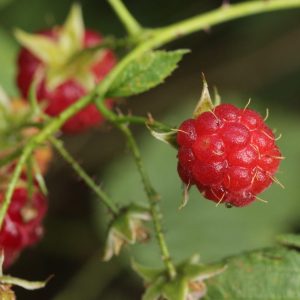
Glencoe Raspberry (also known as Purple Thornless Raspberry; Rubus idaeus x occidentalis) is a thornless purple hybrid of red and black raspberry parentage, bearing dark red-to-purple fruit with rich, sweet-tart flavor that combines the brightness of red raspberry with the intensity of black. It grows in USDA hardiness zones 4-8 and AHS heat zones 3-7, needs 800-1600 chill hours, and is self-fertile, fruiting reliably without a pollinator partner.
1-2′ Bare Root Plant
Propagation: Own-root
In stock
Glencoe is a purple raspberry hybrid raised by the Scottish Crop Research Institute (now the James Hutton Institute) in Scotland as a cross between Glen Prosen — a red raspberry (Rubus idaeus) selection from the same Scottish program — and an unnamed thornless black raspberry (Rubus occidentalis). The red-by-black parentage places it in the purple raspberry class (Rubus × neglectus), and the thornless character is inherited from the black raspberry parent, a trait nearly absent in other named purple selections such as Royalty and Brandywine. Commercial introduction to North American markets followed in the late 1990s and early 2000s. Glencoe is a floricane-bearing cultivar, fruiting on second-year canes in mid-season. The Scottish Crop Research Institute bred extensively in Rubus to serve the British fresh and processing markets, and Glencoe emerged from that program as a specialty selection combining the rich flavor complexity of purple hybrids with the handling ease of thornless canes — traits that make it well suited to home gardens and small pick-your-own operations.
Glencoe's shallow, fibrous root system makes drainage the highest-priority site factor: soil that stays waterlogged for even short periods invites Phytophthora root rot, to which this hybrid shows only moderate tolerance. A raised bed or a slope with rapid drainage reduces that risk considerably. Soil pH between 5.5 and 6.5 keeps iron and manganese available and limits the bicarbonate stress that can push canes toward chlorosis in heavier clay soils. The plant tolerates partial shade — up to four hours of daily shade — though fruit sugar and yield both drop noticeably below full sun exposure. Consistent moisture during cane elongation and fruit sizing (roughly May through July in a temperate climate) supports the 1-quart-per-plant yields the variety is capable of producing. Mulching with wood chips or straw suppresses weeds, conserves moisture, and moderates soil temperature, all of which reduce stress that could amplify susceptibility to Botrytis and spur blight. Avoid overhead irrigation once fruit begins to color; drip or soaker-hose delivery at soil level keeps canopy humidity lower during the most disease-vulnerable stage.
USDA Hardiness Zone: 4-8
AHS Heat Zone: 3-7
Chill Hours: 800-1600
Sun Requirements: Full Sun to Partial Shade
Soil pH: 5.5-6.5
Soil Type: Loam, sandy loam
Soil Drainage: Well-drained
Water Requirements: Medium
Drought Tolerance: Low
Plant Spacing: 2-3 ft between plants, 6-8 ft between rows
Container Suitability: Yes
How to Prune: Tip primocanes at 30 inches to encourage lateral branching; remove floricanes at ground level immediately after fruiting each summer.
Canes grow upright and clumping, reaching 4 to 6 feet in both height and spread, forming a self-supporting column that requires minimal staking when tip-pruned correctly. The thornless surface is genuine throughout the cane length — not just on new growth — which makes summer maintenance far less hazardous than with spined purple types. Glencoe follows a standard floricane (biennial cane) structure: first-year primocanes are vegetative, second-year floricanes carry fruit, then die. Tipping primocanes at 30 inches forces lateral branches that dramatically increase fruiting node count the following season; each lateral then carries clusters of blooms rather than a single terminal cluster. After floricanes fruit out in summer, cutting them at ground level immediately improves airflow through the planting and removes the primary overwintering substrate for spur blight and Botrytis. The fibrous, relatively shallow root system means competition from perennial weeds directly reduces productivity — clean mulched paths between rows matter more here than with deeper-rooted tree fruits. In the food forest context, the 4–6 foot shrub height slots naturally into the shrub layer beneath taller canopy species.
Mature Height: 4-6 ft tall
Mature Spread: 4-6 ft wide
Growth Habit: Upright, Bushy, Clumping
Growth Rate: Moderate to Fast
Foliage Type: Deciduous
Food Forest Layer: Shrub
Thorns?: No
Attracts Wildlife: Bees, Butterflies, Birds
Life Span: 10-20+ years with proper management
Glencoe is fully self-fertile: each flower carries both functional stamens and pistils, and insect movement within a single planting is sufficient to set a complete crop. Blooms open from mid-April through late May in a temperate climate, with small white flowers that are highly attractive to bees and native pollinators. Even without a dedicated cross-pollinator, fruit set is reliable and consistent across seasons. Planting additional raspberry cultivars nearby — particularly other summer-bearers active across the same bloom window — can incrementally increase berry count and size through higher pollen density, but this is an enhancement rather than a requirement. Wind plays a minimal role; Rubus species depend primarily on insect transfer, so maintaining nearby flowering habitat that sustains pollinator populations through the spring bloom period benefits yield more than cultivar pairing does.
Bloom Season: Very Early
Bloom Window: Mid Apr - Late May
Pollination Requirements: Self-Fertile
Pollination Mechanism: Insect (Bees)
Flower Color: White
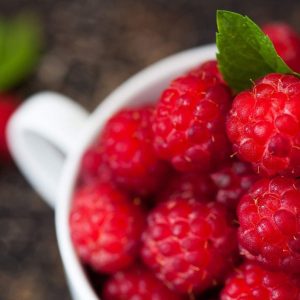
Coloring from red through deep purple at full maturity, berries ripen from late June through late July in a temperate climate. At roughly 0.5 to 0.75 inch in diameter, the drupelets are smaller than many commercial red cultivars but pack a flavor concentration that reflects the black raspberry parentage — a rich, wine-like intensity underneath the familiar raspberry tartness. The taste profile is distinctly sweet-tart with aromatic depth that distinguishes it from straightforward red raspberry sweetness and from the earthier notes in pure black raspberry selections. Yield runs approximately 1 quart per plant per season under good management, with the harvest window spanning roughly four weeks. Fresh shelf life is 1 to 3 days refrigerated, making same-day or next-day use practical for both retail and home growers. Frozen fruit holds quality well for up to 12 months, and the intense flavor carries through in cooked applications: jams, jellies, pies, wine, and sauces all benefit from the purple hybrid's higher pigment and acid balance relative to standard red raspberries.
Ripening Season: Early
Harvest Window: Late Jun - Late Jul
Fruit Size: 0.5-0.75 inch
Flavor: Sweet-tart; combines sweetness of red raspberry with robust black raspberry flavor; rich and intense
Fruit Color: Purple (dark red to purple)
Bearing Habit: Floricane (Summer-Bearing)
Years to Bear: 1-2 years
Storage Life: 1-3 days fresh; up to 12 months frozen
Culinary Uses: Fresh eating, jams, jellies, pies, sauces, wines, preserves, baking
Glencoe carries moderate susceptibility to Botrytis fruit rot (Botrytis cinerea), the gray mold that attacks ripening berries in humid conditions. The most effective organic defense is canopy management: tip primocanes at 30 inches, remove spent floricanes immediately after harvest, and switch to drip irrigation to keep foliage dry. Harvest promptly at full color — overripe berries become prime infection sites. Phytophthora root rot (Phytophthora spp.) is also a moderate concern; preventive site selection with well-drained soil and deep organic mulch to prevent soil splash-back onto lower canes is the reliable organic strategy. Spur blight (Didymella applanata) causes reddish-brown lesions on canes; thin to 4–6 healthy canes per crown and remove affected canes immediately to interrupt the disease cycle. Glencoe shows moderate resistance to anthracnose (Elsinoe veneta) and performs well against Verticillium wilt (Verticillium dahliae) — a practical advantage in soils with prior Solanaceae crops. Spotted wing drosophila (Drosophila suzukii), raspberry crown borer (Pennisetia marginata), Japanese beetle (Popillia japonica), and spider mites (Tetranychus urticae) all warrant monitoring. Begin SWD monitoring with yellow sticky traps at first color change; use exclusion netting or kaolin clay.
Botrytis Fruit Rot: Moderately Susceptible
Phytophthora Root Rot: Moderately Susceptible
Spur Blight: Moderately Susceptible
Anthracnose: Moderately Resistant
Verticillium Wilt: Resistant
Spotted Wing Drosophila: Moderately Susceptible
Raspberry Crown Borer: Moderately Susceptible
Japanese Beetle: Moderately Susceptible
Spider Mites: Moderately Susceptible
- Tip primocanes early: Cutting primocanes back to 30 inches in June or July produces 6–10 fruiting laterals per cane, multiplying fruiting nodes without adding plants.
- Drain first, amend second: Because Glencoe is moderately susceptible to Phytophthora, choose or build your site for rapid drainage before worrying about soil fertility — no amendment compensates for waterlogged roots.
- Remove floricanes at ground level immediately after harvest: Spent canes left standing into fall serve as overwintering habitat for Botrytis spores and spur blight lesions; prompt removal cuts disease pressure for the following season.
- Switch to drip irrigation at fruit set: Overhead watering during June and July keeps canopy humidity high exactly when Botrytis risk peaks; moving to drip delivery is the most cost-effective organic fungal-management step.
- Monitor SWD from first color change: Spotted wing drosophila can infest purple-colored fruit while berries are still firm — begin sticky-trap monitoring at least two weeks before expected peak ripeness and harvest at full color without delay.
We ship in late winter or early spring based on your USDA hardiness zone.
We strive to ship orders on the scheduled dates listed in the table below. However, please note that the actual shipping date may be subject to change due to factors like weather conditions and order volume.
The specific date for shipping your order will be determined according to your zipcode at the time of checkout.
Our plants are shipped bare root, packed in moist sawdust, and securely wrapped in plastic to prevent the roots from drying out. We use USPS Ground Advantage for shipping, ensuring that your plants typically arrive within 2-5 days after packaging.
In case you're unable to plant the trees immediately upon arrival, we recommend soaking them in water for a few hours and temporarily heeling them in. Ideally, they should be planted within three days of receipt for optimal health.
See our full shipping policy and map here
| Zone | Ship Date |
|---|---|
| 11 - 8b | March 1st, 2027 |
| 8a - 7b | March 8th, 2027 |
| 7a | March 15th, 2027 |
| 6b | March 22nd, 2027 |
| 6a | March 29th, 2027 |
| 5b - 5a | April 12th, 2027 |
| 4b - 4a | April 26th, 2027 |
| 3b - 1a | May 3rd, 2027 |
Our 365-Day Plant Guarantee: We ensure that our plants are delivered to you alive and healthy. If your plant does not survive its first year, you're eligible for store credit under these conditions:
- Your location falls within the appropriate USDA hardiness zone for the plant variety (refer to our hardiness zone map).
- You maintain the roots' moisture and plant within three days of delivery, following the instructions in our Planting Guide.
If you're concerned about your plant's health, please consult our guide, How to Tell if Your Tree is Dead or Dormant. Remember, our plants are shipped in a dormant state and may leaf out at different times based on their species. To check for plant vital
Related products

Prelude Raspberry
Checking fit
Latham Raspberry
Checking fitRated 5.00 out of 5
Caroline Raspberry
Checking fitRated 4.71 out of 5
Encore Raspberry
Checking fit


Reviews
There are no reviews yet.