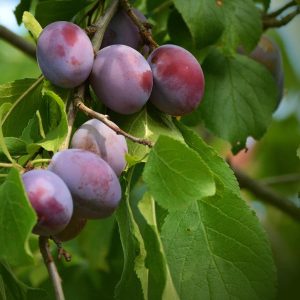
Burbank Plum
$49.95
Burbank Plum (Prunus salicina ‘Burbank’) is a Japanese plum introduced by Luther Burbank in 1888 from the first seedling lot he imported from Japan, offering firm, aromatic red-skinned fruit with distinctively golden-amber flesh and sweet, tangy flavor for fresh eating, jam, and preserves. It grows in USDA hardiness zones 5-9 and AHS heat zones 5-9, needs 400-600 chill hours, and requires cross-pollination with a compatible variety such as Santa Rosa Plum or Methley Plum to set fruit.
4-5′ Bare Root Grafted Tree
Rootstock: Nemaguard
A vigorous peach seedling rootstock resistant to root-knot nematodes, the reason to choose it on sandy southern ground. Less cold hardy than Lovell and susceptible to peach tree short life.
• Support: Freestanding; no staking required.
Can’t be shipped to: AK, CO, HI, MT, OR, WA
Out of stock
Out of stock — back next season
Spring 2027 inventory drops in June. Drop your email and we'll notify you the day this variety is back in stock.
You're on the list. Check your inbox for a confirmation link — click it to lock in your spot. We'll email you the day this variety is back in stock.
Luther Burbank began importing Japanese plum seedlings in 1885, receiving a shipment of twelve plants from Japan on December 20 of that year. Two of those seedlings proved highly productive: one became Burbank (introduced commercially in 1888) and the other became Satsuma. Burbank operated his breeding grounds primarily in Santa Rosa and Sebastopol, California, and the Burbank plum was among his earliest and most commercially successful stone-fruit introductions. Formal parentage was not recorded, consistent with Burbank’s general practice of selecting from open-pollinated seedling populations rather than controlled crosses; the variety carries the characteristic Prunus salicina genetics of its imported Japanese parent stock. Burbank’s plum introductions collectively transformed American stone-fruit horticulture: his 113 named plum cultivars were by far the most numerous of any single breeder’s contribution, and several, including Burbank itself, remain in commercial production more than a century after introduction. The variety is public domain.
Burbank performs across a wide latitude belt — zones 5 through 9 — because its 400-to-600 chill hour requirement occupies a middle range that satisfies winters in most temperate climates without demanding the deep cold of northern zones. In humid summer climates, drainage is critical: standing water around the root zone promotes Phytophthora and Cytospora canker entry points. Choose a slightly elevated planting site or build a raised bed if your soil is slow to drain. Full sun is needed for proper sugar development and fruit coloring — even moderate shading can reduce Brix and increase disease pressure by slowing foliar drying after rain. Soil pH between 6.0 and 7.0 keeps phosphorus and micronutrients available; soils drifting below 5.8 tend to suppress calcium uptake, which weakens cell walls and increases susceptibility to bacterial spot. Consistent soil moisture during fruit sizing (approximately 6 to 8 weeks post-bloom) reduces pit-cracking and fruit drop, but irrigation should taper as harvest approaches to concentrate sugars.
USDA Hardiness Zone: 5-9
AHS Heat Zone: 5-9
Chill Hours: 400-600
Sun Requirements: Full Sun
Soil pH: 6.0-7.0
Soil Type: Loam; well-drained
Soil Drainage: Well-drained
Water Requirements: Medium; consistent moisture during growing season
Plant Spacing: 18-20 ft apart
Burbank develops a broadly spreading, slightly flat-topped crown with branches that arch outward rather than strongly upward — a growth pattern that distinguishes it from the more upright habit of Stanley or Premier-type plums. At maturity the tree typically reaches 12 to 20 feet in both height and spread, depending on rootstock and pruning regime. The shallow plate root system means mechanical cultivation within the drip line risks root damage, which can trigger suckering; a mulched understory managed to the drip line suppresses this problem while retaining soil moisture. The weeping-branch tendency makes the tree useful as a landscape specimen as well as a production tree, and the white spring bloom (early March through mid-April in a temperate climate) is showy and fragrant. The tree is thornless, reducing hazard during pruning and harvest operations. Annual pruning to maintain an open vase shape promotes airflow through the canopy, which directly reduces fungal disease pressure during humid summers.
Mature Height: 12-20 ft tall
Mature Spread: 12-20 ft wide
Growth Habit: Spreading; flat-topped with somewhat weeping branches
Growth Rate: Moderate (13-24 inches per year)
Foliage Type: Deciduous
Food Forest Layer: Canopy, Sub-canopy
Leaf Color: Bright green (lighter green underneath)
Thorns?: No
Attracts Wildlife: Bees; butterflies (Eastern Tiger Swallowtail larval host); birds; small mammals
Life Span: 20-30+ years productive life
Burbank Plum flowers in the early relative window in the Zone 7 Ozarks planning model. Needs cross-pollination; WSU lists Santa Rosa, Shiro, and Satsuma as pollenizers.
Bloom Season: Early
Bloom Window: Late Mar - Early Apr
Pollination Requirements: Needs cross-pollination; WSU lists Santa Rosa, Shiro, and Satsuma as pollenizers.
Pollination Mechanism: Insect (bee)
Flower Color: White
The fruit reaches roughly 1.5 inches in diameter — medium for a Japanese plum — with red to reddish-purple skin that deepens as it ripens toward mid-July through early August in a temperate climate. The defining characteristic is the golden-orange (amber) flesh, which is firm at early ripeness and softens to a juicy texture at peak maturity. Flavor is sweet and aromatic with underlying tang; flavor compounds intensify noticeably if fruit is left on the tree until it gives slightly to thumb pressure rather than picked early. Ripe fruit does not hold on the tree for more than a week before deteriorating. Mature trees in full production regularly yield 50 or more pounds per season, creating a substantial harvest over a compressed 3-to-4-week window. Culinary use spans fresh eating, canning, jam and preserves, and baking; the amber flesh produces preserves with an attractive golden color. Storage life off the tree is short — 2 to 3 weeks refrigerated at most — making Burbank better suited to processing or direct local sale than to long-distance shipping.
Ripening Season: Mid
Harvest Window: Mid Jul - Early Aug
Fruit Size: 1.5 inch
Flavor: Sweet, juicy, aromatic; uniquely flavored with tangy notes
Fruit Color: Red to reddish-purple skin; golden-orange (amber) flesh
Fruit Texture: Firm
Bearing Habit: Annual bearer; heavy crops
Years to Bear: 2-4 years
Yield: 50+ per mature tree
Culinary Uses: Fresh eating; canning; jam and preserves; baking
Burbank carries moderate resistance to black knot (Apiosporina morbosa), reducing but not eliminating gall-forming cankers; prune out any knots in late winter before spore release, disinfecting tools between cuts. Brown rot (Monilinia fructicola / Monilinia laxa) is a moderate susceptibility — thin fruit clusters for airflow, remove mummified fruit before winter, and apply kaolin clay during ripening to reduce spore contact. Bacterial spot (Xanthomonas arboricola pv. pruni) is a notable weakness: the pathogen enters through stomata during warm, wet weather, causing shot-hole foliage lesions and sunken fruit spots. OMRI-listed copper hydroxide at dormant bud swell and petal fall reduces infection pressure. Plum pox virus (Plum pox potyvirus, Sharka) is a susceptibility with no cure — purchase certified virus-indexed stock and remove any tree showing mosaic or chlorotic ring patterns to prevent aphid-vectored spread. Cytospora canker (Leucostoma persoonii) enters through wounds; avoid wet-weather pruning and maintain tree vigor to limit entry points. Plum curculio (Conotrachelus nenuphar), spotted wing drosophila (Drosophila suzukii), and oriental fruit moth (Grapholita molesta) are all susceptibilities; kaolin clay at petal fall and prompt ripe-fruit harvest are the primary organic defenses. San Jose scale (Quadraspidiotus perniciosus) responds to dormant-season horticultural oil.
Brown Rot: Moderately Susceptible
Black Knot: Moderately Resistant
Bacterial Spot: Susceptible
Plum Pox Virus: Susceptible
Cytospora Canker: Moderately Susceptible
Plum Curculio: Susceptible
Spotted Wing Drosophila: Susceptible
Oriental Fruit Moth: Susceptible
San Jose Scale: Moderately Susceptible
- Bacterial spot management: In humid climates, apply OMRI-listed copper hydroxide at dormant bud swell and again at petal fall to suppress bacterial spot; repeat after heavy rain events during shoot growth.
- Plum curculio timing: Monitor for adult curculio emergence when temperatures consistently exceed 60°F after petal fall; kaolin clay applied at petal fall and reapplied after rain provides a physical barrier against egg-laying.
- Plum pox prevention: Purchase only virus-indexed nursery stock with documentation; inspect new trees for mosaic or ring patterns on first-season foliage before planting near established stone fruit.
- Pruning for airflow: Annual dormant pruning to an open vase with 3–5 main scaffolds directly reduces brown rot and bacterial spot severity by speeding canopy drying after rain.
- Pollinator placement: Because Burbank is fully cross-pollination-dependent, ensure the pollinator tree is within 100 feet and blooms in the same window; Methley and Santa Rosa are bloom-synchronized choices.
We ship in late winter or early spring based on your USDA hardiness zone.
We strive to ship orders on the scheduled dates listed in the table below. However, please note that the actual shipping date may be subject to change due to factors like weather conditions and order volume.
The specific date for shipping your order will be determined according to your zipcode at the time of checkout.
Our plants are shipped bare root, packed in moist sawdust, and securely wrapped in plastic to prevent the roots from drying out. We use USPS Ground Advantage for shipping, ensuring that your plants typically arrive within 2-5 days after packaging.
In case you're unable to plant the trees immediately upon arrival, we recommend soaking them in water for a few hours and temporarily heeling them in. Ideally, they should be planted within three days of receipt for optimal health.
See our full shipping policy and map here
| Zone | Ship Date |
|---|---|
| 11 - 8b | March 1st, 2027 |
| 8a - 7b | March 8th, 2027 |
| 7a | March 15th, 2027 |
| 6b | March 22nd, 2027 |
| 6a | March 29th, 2027 |
| 5b - 5a | April 12th, 2027 |
| 4b - 4a | April 26th, 2027 |
| 3b - 1a | May 3rd, 2027 |
Our 365-Day Plant Guarantee: We ensure that our plants are delivered to you alive and healthy. If your plant does not survive its first year, you're eligible for store credit under these conditions:
- Your location falls within the appropriate USDA hardiness zone for the plant variety (refer to our hardiness zone map).
- You maintain the roots' moisture and plant within three days of delivery, following the instructions in our Planting Guide.
If you're concerned about your plant's health, please consult our guide, How to Tell if Your Tree is Dead or Dormant. Remember, our plants are shipped in a dormant state and may leaf out at different times based on their species. To check for plant vital
Related products

Toka Plum
Checking fit
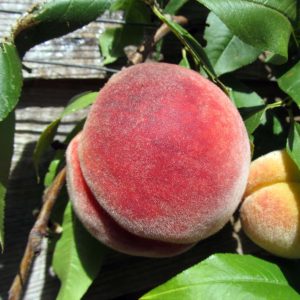
Red Haven Peach
Checking fitRated 5.00 out of 5
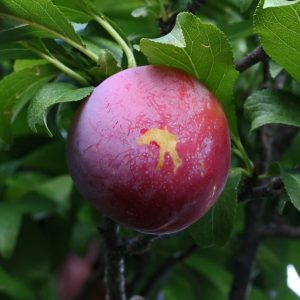
Santa Rosa Plum
Checking fitRated 5.00 out of 5
Elephant Heart Plum
Checking fit

Reviews
There are no reviews yet.