
Au Producer Plum
$49.95
Au Producer Plum (Prunus salicina ‘AU Producer’) is a firm-fleshed Japanese plum released by Auburn University in 1977, bearing dark red to purplish-red 1.5–1.75-inch fruit with mildly sweet, juicy flesh and a refrigerated storage life of two to three weeks after harvest. It grows in USDA hardiness zones 6-9 and AHS heat zones 5-9, needs 700-900 chill hours, and benefits significantly from cross-pollination with compatible varieties such as Methley Plum or Ozark Premier Plum to maximize yields.
4-5′ Bare Root Grafted Tree
Rootstock: Halford – Standard
A peach seedling rootstock giving a full-size, vigorous, well-anchored tree — the workhorse of eastern peach growing. It offers no nematode resistance, so avoid known nematode ground.
• Support: Freestanding; no staking required.
Can’t be shipped to: AK, CO, HI, MT, OR, WA
Out of stock
Out of stock — back next season
Spring 2027 inventory drops in June. Drop your email and we'll notify you the day this variety is back in stock.
You're on the list. Check your inbox for a confirmation link — click it to lock in your spot. We'll email you the day this variety is back in stock.
AU Producer was released in 1977 by the Alabama Agricultural Experiment Station at Auburn University, part of the long-running plum improvement program initiated by Joe Norton in 1955. Norton’s program targeted the warm, humid Southeast, a region where many standard Japanese plum selections failed due to inadequate winter chill accumulation, high disease pressure from bacterial and fungal pathogens, and summer heat that degraded fruit quality before harvest. AU Producer was developed specifically for commercial growers seeking high yields combined with the early-ripening window typical of mid-South production, generally delivering harvest in mid-June ahead of the worst summer heat and disease cycles. The variety carries strong resistance to bacterial fruit spot, bacterial leaf spot, and bacterial canker, traits central to Norton’s selection criteria across the AU series. Specific parentage has not been publicly documented in the available literature, though the variety reflects the Prunus salicina background standard to the Auburn series.
AU Producer's moderate chill requirement of 650 to 700 hours positions it squarely in the mid-South and upper Gulf Coast sweet spot — warm enough to break dormancy reliably most winters, yet far enough from true low-chill territory to avoid bloom timing problems in cold-snap-prone zone 6. The tree requires full sun for tight fruit set and adequate sugar development; shaded positions tend to thin the crop and reduce Brix. Soil drainage is the single most important site factor: Japanese plums on saturated rootzones are highly susceptible to Phytophthora collar rot and Armillaria root rot, so raised beds or gently sloped planting sites in heavy clay areas are worth the extra effort. A soil pH of 6.0 to 7.5 covers most native Southeast soils without amendment. Water consistently during establishment and through the fruit-swell stage in late spring; once established, AU Producer tolerates brief dry spells better than most Japanese plums, though moisture stress during pit hardening reduces final fruit size.
USDA Hardiness Zone: 6-9
AHS Heat Zone: 5-9
Chill Hours: 700-900
Sun Requirements: Full Sun
Soil pH: 6.0-7.5
Soil Type: Sandy loam, loam, or sandy clay; well-drained
Soil Drainage: Well-drained
Water Requirements: Medium; regular moisture during establishment and fruit development; drought-tolerant once established
Plant Spacing: 12-20 ft apart
AU Producer develops a rounded crown with branches that angle upward rather than spreading laterally, which keeps the tree's footprint tighter than its 12-to-15-foot eventual height suggests. The moderate vigor and compact spread of 10 to 12 feet makes it one of the more manageable full-size Japanese plums in a home orchard or food forest canopy layer. Fruiting occurs on both one-year-old wood and short spurs on older branches, so annual pruning should preserve a mix of younger lateral shoots and well-positioned spurs rather than heading back hard to pure scaffold structure. Open-center or modified-central-leader training both work well; the upward branch angle responds readily to spreading ties early in the tree's life if a wider scaffold is preferred. White to light-pink flowers in mid-March to early April give a brief ornamental display before leaves fully emerge, making early-season pollinator forage a secondary benefit.
Mature Height: 12-15 ft tall
Mature Spread: 10-12 ft wide
Growth Habit: Rounded crown with upwardly-reaching branches; compact, moderately vigorous
Growth Rate: Moderate
Foliage Type: Deciduous
Food Forest Layer: Canopy, Sub-canopy
Attracts Wildlife: Bees (pollination), birds, deer (fruit)
Life Span: 20-40 years productive life
Au Producer Plum flowers in the early relative window in the Zone 7 Ozarks planning model. Self-fertility is disputed between Auburn's release and UGA's newer table; plant with an overlapping Japanese plum for reliable crops.
Bloom Season: Early
Bloom Window: Late Mar - Early Apr
Pollination Requirements: Self-fertility is disputed between Auburn's release and UGA's newer table; plant with an overlapping Japanese plum for reliable crops.
Pollination Mechanism: Insect (bee)
Flower Color: White to light pink
Fruit sizes average 1.5 to 1.75 inches in diameter, with firm flesh that holds up through packing and refrigerated storage for two to three weeks — a practical advantage for small commercial operations and farmers market growers. The skin is dark red to purplish-red at full ripeness; flesh color ranges from deep red near the skin to amber-yellow at the pit, giving cut fruit a striking appearance. Flavor is mildly sweet and juicy without the sharp tartness of European-type plums, making it broadly appealing for fresh eating. The moderately low acidity also suits canning, preserves, and jam production, where AU Producer's high yield means an abundant raw material supply from a single tree. Harvest runs mid-June through early July in a temperate climate, arriving ahead of summer's peak heat. The heavy, consistent bearing habit is the defining commercial trait: AU Producer earned its name from genuine productivity rather than aspirational marketing.
Ripening Season: Early
Harvest Window: Mid Jun - Early Jul
Fruit Size: 1.5-1.75 inch
Flavor: Sweet and juicy; mildly sweet
Fruit Color: Dark red to purplish-red skin; dark red to amber-yellow flesh
Fruit Texture: Firm
Bearing Habit: Produces on 1-year-old wood and spurs
Years to Bear: 2-4 years
Storage Life: 2-3 weeks refrigerated; ships and stores well
Culinary Uses: Fresh eating, canning, preserves, jams, pies, desserts, commercial production
AU Producer carries moderate resistance to Brown Rot (Monilinia fructicola), the most damaging stone-fruit disease in humid climates. Moderate resistance does not eliminate risk — sanitation is the most effective organic tool: remove and destroy all mummified fruit from the tree and ground before bloom, as overwintered mummies are the primary inoculum source. Prune to maintain open canopy airflow, which slows the humidity-driven disease cycle. The variety shows good resistance to Bacterial Spot (Xanthomonas arboricola pv. pruni) and Bacterial Canker (Pseudomonas syringae pv. syringae), reducing the likelihood of leaf lesions and branch dieback in seasons with rainy spring weather. Plum Pocket (Taphrina communis), a fungal disease causing distorted, hollow fruit, rates moderately susceptible; affected fruit should be removed early, before spores disperse, and copper-based OMRI-listed sprays applied at early bloom can reduce incidence. On the pest side, Plum Curculio (Conotrachelus nenuphar), Spotted Wing Drosophila (Drosophila suzukii), Apple Maggot (Rhagoletis pomonella), and Oriental Fruit Moth (Grapholita molesta) all rate moderately susceptible. Use kaolin clay applications beginning at petal fall through fruit set for curculio and maggot, and deploy SWD monitoring traps to time interventions during the ripening window. Removing dropped or cracked fruit promptly breaks pest breeding cycles for both SWD and OFM.
Brown Rot: Moderately Resistant
Bacterial Spot: Resistant
Black Knot: Moderately Resistant
Bacterial Canker: Resistant
Plum Pocket: Moderately Susceptible
Plum Curculio: Moderately Susceptible
Spotted Wing Drosophila: Moderately Susceptible
Apple Maggot: Moderately Susceptible
Oriental Fruit Moth: Moderately Susceptible
- Plant two varieties together: AU Producer sets light crops alone; pairing it with Methley or AU Rosa within 50 feet can double or triple fruit set.
- Prioritize drainage above all else: If your site has clay-heavy soil, mound the planting area 8–12 inches above grade or choose a gently sloping position — waterlogged roots invite Armillaria and Phytophthora that no spray program fully corrects.
- Sanitation is your brown rot program: Pick up and destroy every mummified fruit before bloom each spring. Mummies are the overwintering reservoir; removing them cuts inoculum load more reliably than any post-infection spray.
- Deploy kaolin clay at petal fall: A kaolin clay coating on developing fruit from petal fall through early June physically deters plum curculio and apple maggot egg-laying without fungicide residue concerns.
- Set SWD traps before color break: Spotted wing drosophila infests ripening fruit, not overripe drops. Hang apple cider vinegar traps two to three weeks ahead of expected harvest and monitor weekly to calibrate response timing.
We ship in late winter or early spring based on your USDA hardiness zone.
We strive to ship orders on the scheduled dates listed in the table below. However, please note that the actual shipping date may be subject to change due to factors like weather conditions and order volume.
The specific date for shipping your order will be determined according to your zipcode at the time of checkout.
Our plants are shipped bare root, packed in moist sawdust, and securely wrapped in plastic to prevent the roots from drying out. We use USPS Ground Advantage for shipping, ensuring that your plants typically arrive within 2-5 days after packaging.
In case you're unable to plant the trees immediately upon arrival, we recommend soaking them in water for a few hours and temporarily heeling them in. Ideally, they should be planted within three days of receipt for optimal health.
See our full shipping policy and map here
| Zone | Ship Date |
|---|---|
| 11 - 8b | March 1st, 2027 |
| 8a - 7b | March 8th, 2027 |
| 7a | March 15th, 2027 |
| 6b | March 22nd, 2027 |
| 6a | March 29th, 2027 |
| 5b - 5a | April 12th, 2027 |
| 4b - 4a | April 26th, 2027 |
| 3b - 1a | May 3rd, 2027 |
Our 365-Day Plant Guarantee: We ensure that our plants are delivered to you alive and healthy. If your plant does not survive its first year, you're eligible for store credit under these conditions:
- Your location falls within the appropriate USDA hardiness zone for the plant variety (refer to our hardiness zone map).
- You maintain the roots' moisture and plant within three days of delivery, following the instructions in our Planting Guide.
If you're concerned about your plant's health, please consult our guide, How to Tell if Your Tree is Dead or Dormant. Remember, our plants are shipped in a dormant state and may leaf out at different times based on their species. To check for plant vital
Related products

Au Rosa Plum
Checking fit
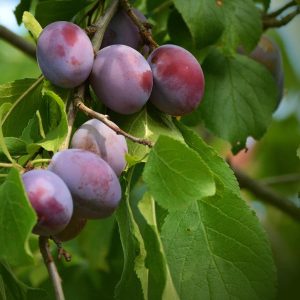
Elephant Heart Plum
Checking fit
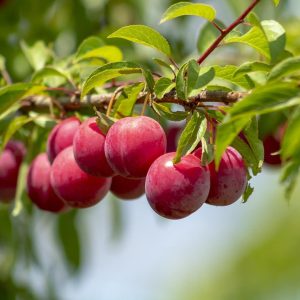
Ozark Premier Plum
Checking fit
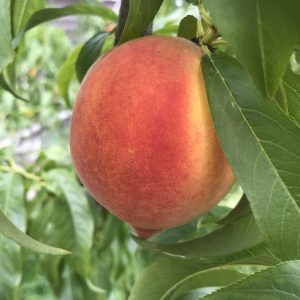
Loring Peach
Checking fitRated 4.50 out of 5

Reviews
There are no reviews yet.