Cresthaven Peach
$49.95
Cresthaven Peach (Prunus persica) is a yellow-flesh freestone peach released by Michigan State University in 1963, the last of the landmark Haven series, bearing 3-inch fruit with sweet, juicy flavor and exceptional late-season firmness that extends storage and shipping life. It grows in USDA hardiness zones 5-8 and AHS heat zones 5-8, needs 800-1000 chill hours, and is self-fertile, fruiting reliably without a pollinator partner.
3-4′ Bare Root Grafted Tree
Rootstock: Halford – Standard
A peach seedling rootstock giving a full-size, vigorous, well-anchored tree — the workhorse of eastern peach growing. It offers no nematode resistance, so avoid known nematode ground.
• Support: Freestanding; no staking required.
Can’t be shipped to: WA
Image: Forest & Kim Starr (CC BY 3.0), cropped
In stock
Cresthaven was released in 1963 by J. Stanley Johnston at the Michigan State University South Haven Experiment Station, the last of eight yellow-fleshed freestone varieties Johnston selected from more than 21,000 cross-bred seedlings over four decades of work. The other seven Haven-series releases — Halehaven, Kalhaven, Redhaven, Fairhaven, Sunhaven, Richhaven, and Glohaven — all preceded it; Cresthaven was Johnston’s capstone, selected specifically for late-season firmness, a trait that distinguished it from the softer freestones that dominated mid-season harvests. The variety is now fully public domain. It quickly became one of the most widely recommended late peaches across the upper Midwest and mid-Atlantic for roadside stand and farmers-market growers who needed fruit that would hold up to handling. Cresthaven’s combination of late harvest timing, excellent shelf life, and the unmistakable Michigan State pedigree of Johnston’s Haven series gave it staying power in commercial and home orchards that persists more than 60 years after its introduction.
Cresthaven performs reliably across Zones 5–8, requiring 800–900 chill hours to break dormancy and set a full crop. Bloom falls in the mid-to-late April window, placing it at moderate late-frost risk in northern sites — row covers or orchard heaters should be on hand where spring temperatures swing. Trees reach 12–15 feet tall on standard rootstock; growers with space constraints should specify a semi-dwarfing rootstock at purchase. Soil pH of 6.0–7.5 suits this variety well, with good internal drainage essential — peaches decline quickly in waterlogged conditions. Annual pruning to an open-center form improves air circulation and light penetration, which directly reduces fungal disease pressure. Heavy fruit thinning to 6–8 inches between fruitlets by late May is non-negotiable: Cresthaven has a biennial tendency when overcropped, and thinned fruit reaches its celebrated 3-inch size. Expect first fruit in 2–4 years from planting; well-managed trees yield around 105 pounds per season at maturity.
USDA Hardiness Zone: 5-8
AHS Heat Zone: 5-8
Chill Hours: 800-1000
Sun Requirements: Full Sun
Soil pH: 6.0-8.0
Soil Type: Loam, well-drained
Soil Drainage: Well-drained
Water Requirements: Normal to moist
Drought Tolerance: Moderate; established trees tolerate short dry periods but benefit from consistent irrigation during fruit development
Heat Tolerance: High
Plant Spacing: 15-20 ft apart
Container Suitability: Yes on dwarfing rootstock; standard rootstock too vigorous for containers
How to Prune: Open vase system; select 4-6 outward-facing scaffold branches; annual dormant heading cuts in late winter; remove water sprouts, crossing branches, and deadwood
Cresthaven is a standard-sized deciduous peach tree with a vigorous, fast growth rate that fills its allotted 12–15-foot spread within a few seasons of establishment. The canopy produces the classic lance-shaped peach foliage with the lightly fragrant spring blossoms that attract early-season pollinators — bees and butterflies visit the flowers reliably, and the fruiting canopy provides nesting and foraging cover for songbirds later in the season. No thorns. The root system is moderately anchoring but shows low wind tolerance; a sheltered site or windbreak planting improves long-term stability. Salt tolerance is negligible, so coastal or roadside planting near treated surfaces is not recommended. Cresthaven is classified as advanced-care: the variety rewards attentive growers with excellent fruit quality but does not shrug off neglect. Deer browse young trees readily; tree tubes or fencing are advisable during the first several seasons.
Mature Height: 12-15 ft tall
Mature Spread: 12-15 ft wide
Growth Habit: Upright spreading
Growth Rate: Fast
Foliage Type: Deciduous
Food Forest Layer: Canopy, Sub-canopy
Permaculture Role: Pollinator support, wildlife food, edible fruit producer
Leaf Color: Green
Fall Foliage Color: Yellow to orange
Thorns?: No
Attracts Wildlife: Bees and butterflies (pollinators); birds and small mammals (fruit)
Life Span: 10-15 years
Cresthaven is fully self-fertile — a single tree sets a commercial-quality crop without a pollination partner. Bloom occurs in the mid-to-late April window in a temperate climate, placing it in the same mid-season flowering cohort as Redhaven, Loring, and Reliance. This overlap makes cross-pollination incidental but not harmful: neighboring peach or nectarine varieties in the same bloom window will contribute additional pollen. Early-season bees are the primary vector. In years with late freezes, flowers at the pink bud stage (not yet fully open) are most cold-hardy — monitor forecasts around bloom and apply overhead irrigation or row covers if temperatures are projected below 28°F. Cresthaven's self-fertility means solitary planting is fully productive, which is a practical advantage for growers with limited orchard space.
Bloom Season: Late
Bloom Window: Late Mar - Mid Apr
Pollination Requirements: Self-fertile
Pollination Mechanism: Insect-pollinated (primarily bees)
Flower Color: Pink
Ploidy: Diploid (2n)
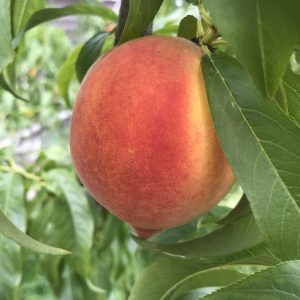
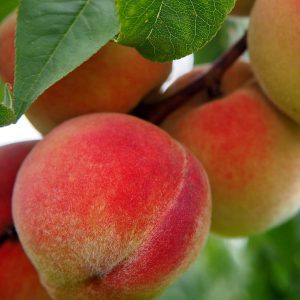
Cresthaven fruit ripens mid-August through mid-September in a temperate climate, placing it firmly in the late-season window when most early freestones have already finished. Fruit reaches approximately 3 inches in diameter with a yellow background skin overlaid by a deep red blush. The yellow melting flesh parts cleanly from the pit at full maturity — a true freestone — and the flavor profile is sweet and juicy with a normal acidic balance that reads as bright rather than cloying. Flesh firmness is Cresthaven's calling card: the variety bruises far less readily than soft-fleshed alternatives, giving it an extended harvest window and superior shelf life of one to two weeks fresh when held cool. That firmness makes it equally suitable for fresh eating, sliced for freezing, jam and preserves, or low-sugar grilling applications. Fruit weight averages around 284 grams on well-thinned trees. The public-domain status of the variety keeps nursery pricing accessible and budwood widely available.
Ripening Season: Late
Harvest Window: Mid Aug - Mid Sep
Fruit Size: 3 inch
Fruit Weight: 284 g
Flavor: Sweet, juicy, tangy with normal acidic balance
Fruit Color: Yellow background with red overcolor/blush; yellow melting flesh; freestone
Fruit Texture: Freestone
Fruit Skin: Fuzzy (characteristic of Prunus persica; nectarines are the smooth-skinned variant)
Bearing Habit: Annual (with thinning to prevent biennial tendency)
Years to Bear: 2-4 years
Storage Life: 1-2 weeks fresh
Culinary Uses: Fresh eating, canning, freezing, cooking, cobblers, ice cream
Growers should approach Cresthaven with a proactive management mindset: the variety carries moderate susceptibility to brown rot (Monilinia fructicola), bacterial spot (Xanthomonas arboricola pv. pruni), peach leaf curl (Taphrina deformans), and peach scab (Cladosporium carpophilum), and shows susceptibility to Cytospora canker (Leucostoma persoonii / Leucostoma cincta). On the pest side, plum curculio (Conotrachelus nenuphar), oriental fruit moth (Grapholita molesta), peachtree borer (Synanthedon exitiosa), and brown marmorated stink bug (Halyomorpha halys) all require active monitoring. Organic management starts with structural decisions: open-center pruning that maximizes airflow cuts fungal pressure at the source. For brown rot, remove and destroy mummified fruit promptly; copper-based sprays at petal fall provide organic-approved protection. Kaolin clay applied before egg-lay deters curculio and stink bug feeding. Beneficial nematodes and trunk guards address peachtree borer. Hanging pheromone traps monitors oriental fruit moth flight and informs timing of intervention. Delayed dormant copper or lime-sulfur sprays before bud swell manage peach leaf curl and scab inoculum; once leaves are out, these applications lose efficacy. Consistent sanitation — removing dropped fruit and pruning out cankers — is the foundation of an organic peach program.
Brown Rot: Moderately Susceptible
Bacterial Spot: Moderately Susceptible
Peach Leaf Curl: Moderately Susceptible
Peach Scab: Moderately Susceptible
Cytospora Canker: Susceptible
Plum Curculio: Susceptible
Oriental Fruit Moth: Susceptible
Peachtree Borer: Susceptible
Brown Marmorated Stink Bug: Susceptible
- Dormant Copper Spray: Apply delayed dormant copper or lime-sulfur just before bud swell each spring — this single application reduces peach leaf curl inoculum and Cytospora canker entry points from winter pruning wounds.
- Thin for Size: Thin aggressively to one fruit every 6–8 inches by late May; Cresthaven's biennial tendency is triggered by overcropping, and thinned fruit reaches the 3-inch size this variety is known for.
- Peachtree Borer Exclusion: Wrap young trunks with hardware cloth to the first scaffold branch to exclude peachtree borer — trunk borers are far easier to prevent than to cure once established.
- Kaolin Clay for Curculio and Stink Bug: Apply kaolin clay beginning at shuck split and reapply after rain to create a physical barrier against plum curculio and stink bug feeding during early fruit development.
- Oriental Fruit Moth Timing: Hang pheromone traps at pink bud stage to track first-generation adult flight; OMRI-listed spinosad applications timed to hatch provide effective organic suppression without disrupting beneficial insects.
We ship in late winter or early spring based on your USDA hardiness zone.
We strive to ship orders on the scheduled dates listed in the table below. However, please note that the actual shipping date may be subject to change due to factors like weather conditions and order volume.
The specific date for shipping your order will be determined according to your zipcode at the time of checkout.
Our plants are shipped bare root, packed in moist sawdust, and securely wrapped in plastic to prevent the roots from drying out. We use USPS Ground Advantage for shipping, ensuring that your plants typically arrive within 2-5 days after packaging.
In case you're unable to plant the trees immediately upon arrival, we recommend soaking them in water for a few hours and temporarily heeling them in. Ideally, they should be planted within three days of receipt for optimal health.
See our full shipping policy and map here
| Zone | Ship Date |
|---|---|
| 11 - 8b | March 1st, 2027 |
| 8a - 7b | March 8th, 2027 |
| 7a | March 15th, 2027 |
| 6b | March 22nd, 2027 |
| 6a | March 29th, 2027 |
| 5b - 5a | April 12th, 2027 |
| 4b - 4a | April 26th, 2027 |
| 3b - 1a | May 3rd, 2027 |
Our 365-Day Plant Guarantee: We ensure that our plants are delivered to you alive and healthy. If your plant does not survive its first year, you're eligible for store credit under these conditions:
- Your location falls within the appropriate USDA hardiness zone for the plant variety (refer to our hardiness zone map).
- You maintain the roots' moisture and plant within three days of delivery, following the instructions in our Planting Guide.
If you're concerned about your plant's health, please consult our guide, How to Tell if Your Tree is Dead or Dormant. Remember, our plants are shipped in a dormant state and may leaf out at different times based on their species. To check for plant vital
Related products

Loring Peach
Checking fitRated 4.50 out of 5- SOLD OUT

Contender Peach
Checking fit 
Red Haven Peach
Checking fitRated 5.00 out of 5
Peppermint Peach
Checking fit


Reviews
There are no reviews yet.