Chicago Hardy Fig
$29.95
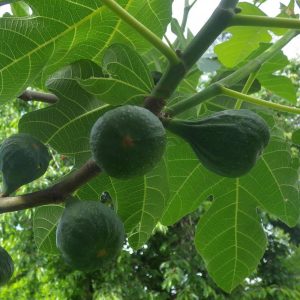
Chicago Hardy Fig (Ficus carica) is an Italian immigrant heirloom belonging to the Mt. Etna group, grown for its exceptional cold hardiness in northern climates and distinctive large dark-green three-fingered leaves. It grows in USDA hardiness zones 6-10 and AHS heat zones 4-9, and is self-fertile, fruiting reliably without a pollinator partner.
2-3′ Bare Root Tree
Propagation: Own-root
In stock
Chicago Hardy is a Ficus carica cultivar belonging to the Mt. Etna group — a category of dark-skinned, red-fleshed figs with roots in Sicilian agricultural tradition, carried to the United States by Italian immigrants in the late nineteenth and early twentieth centuries. The specific tree that gave rise to the named cultivar was found by Fred Born in Chicago, where it had been maintained in a kitchen garden through the city’s cold winters — likely passed through Italian immigrant communities over multiple generations before Born’s discovery. The variety circulated under the name Bensonhurst Purple, referencing the Brooklyn Italian neighborhood where related trees were commonly grown, before the Edible Landscaping nursery in Virginia formalized the Chicago Hardy name after receiving cuttings from Born. The cultivar is thus a folk-preserved selection of uncertain geographic origin within the Mt. Etna group, not a product of institutional plant breeding. It is unpatented and freely propagated from cuttings.
Plant Chicago Hardy in full sun “ at least 8 hours of direct sun daily (8–10 preferred for best fruiting) “ in well-drained soil with pH between 6.0 and 6.5. Mulch the root zone 8 to 12 inches deep before the first hard freeze every fall; that insulation is what allows the crown to survive well below 0°F in zones 5 and 6. In warmer temperate climates, above-ground wood survives most winters without protection and both the breba and main crops develop. In zones 5 and 6, winter kills the previous-season wood that carries breba fruit, so expect only the main-crop harvest from new growth—still a reliable and generous yield each year.
Go easy on nitrogen; excess feeding pushes leafy growth and slows the late-season wood hardening that determines winter survival. Supplement only when foliage yellows or growth stalls. In-ground trees reach 8 to 12 feet tall; container culture keeps them smaller and portable. First fruit appears within 2 to 3 years of planting.
USDA Hardiness Zone: 6-10
AHS Heat Zone: 4-9
Chill Hours: 100-300
Sun Requirements: Full Sun (8+ hours daily for best fruiting)
Soil pH: 6.0-7.5
Soil Type: Well-drained loam with organic matter; tolerates sandy and rocky soils if nematode-free
Soil Drainage: Well-drained
Water Requirements: Medium (1-1.5 inches per week during fruit development; established trees tolerate brief drought)
Drought Tolerance: High
Heat Tolerance: High
Plant Spacing: 10-20 ft apart
Container Suitability: Suitable — grown in large containers moved to greenhouse or cool indoor space (garage) when freezing threatens; protect potted roots from freezing
How to Prune: Cut to 2-3 ft at planting; select 3-4 scaffold branches first dormant season; cut scaffold tips 3 ft from trunk; prune to chest level before winter wrapping in cold zones; stimulate 1+ ft new growth annually
Chicago Hardy grows as a spreading multi-stemmed shrub to small tree, typically reaching 8 to 12 feet tall with a somewhat wider spread when left unpruned in mild climates. In dieback culture—zones 5 and 6—winter kills the top growth each year, and spring regeneration from the crown produces a dense cluster of new canes that function as a large ornamental shrub through summer. That growth habit actually simplifies management: there is no permanent scaffold to maintain, and a single early-spring cleanup removes dead wood cleanly.
The large, deeply lobed fig leaves give the plant a bold tropical appearance through the growing season. For container growers, Chicago Hardy fits naturally into a 15- to 25-gallon pot and stays proportionate when root volume is limited. Move containers to an unheated garage or cellar before hard freezes—pot roots lack the insulation of in-ground soil and are the first casualty in a cold snap. The plant is not thorny, making it easy to work around during harvest.
Mature Height: 8-12 ft tall
Mature Spread: 9-12 ft wide
Growth Habit: Deciduous; produces distinctive large dark green three-fingered leaves
Growth Rate: Moderate
Foliage Type: Deciduous
Food Forest Layer: Sub-canopy
Permaculture Role: Edible fruit producer; wildlife food (birds, mammals); deciduous shade in summer; suckers freely (manage for layering propagation)
Leaf Color: Green
Fall Foliage Color: Yellow
Thorns?: No
Attracts Wildlife: Birds and small mammals (ripe fruit); bees and wasps visit ripe split fruit for sugars
Life Span: 50-100 years
Chicago Hardy is a common fig and sets fruit through parthenocarpy—the fruit develops without fertilization, without fig wasps, and without any companion plant. No pollinator is needed. Plant a single tree and expect a full crop.
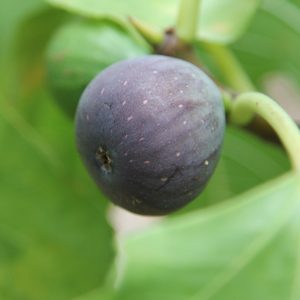
The small ostiole (the opening at the tip of the fruit) on Chicago Hardy is notably tight and semi-closed, which matters beyond pollination biology. That closed eye limits the entry of souring yeasts and fruit-feeding insects, giving the fruit better shelf life and cleaner flavor at full ripeness compared with open-eye varieties. In warmer climates where winters are mild, the tree produces two crops annually: a breba crop on previous-season wood ripening in early summer, followed by the main crop on current-season wood ripening in late summer through early fall. In colder climates where top growth dies back each winter, only the main-season crop develops—but it develops reliably every year.
Pollination Requirements: Self-fertile (parthenocarpic common-type fig) — sets fruit without pollination; no pollinizer or fig wasp needed.
Pollination Mechanism: Parthenocarpic (common-type cultivars set fruit without pollination)
Flower Color: Not applicable — tiny flowers enclosed inside the syconium, not externally visible
Ploidy: Diploid (2n=2x=26)
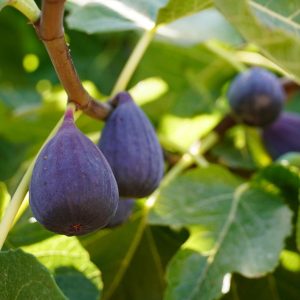
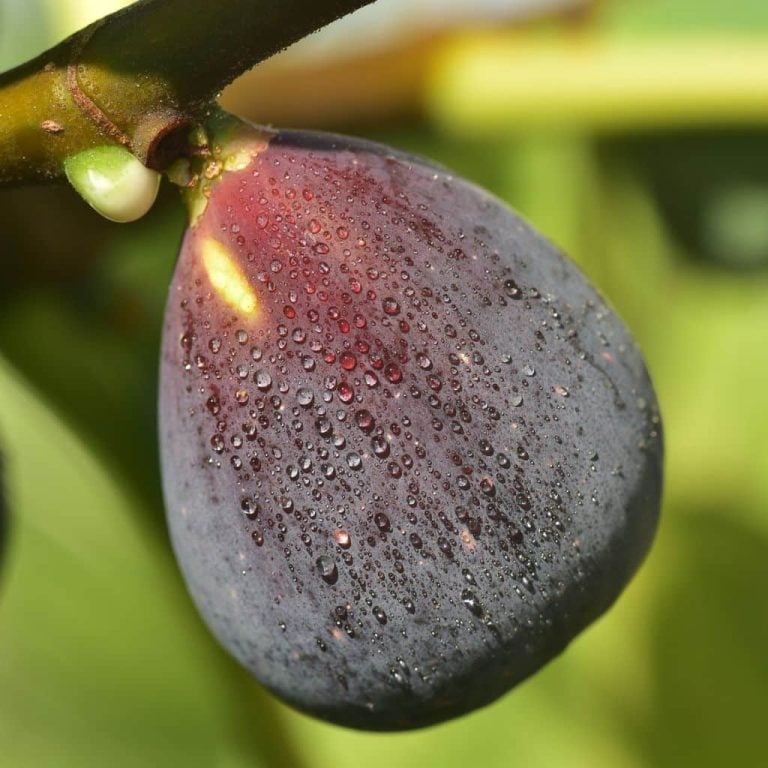
Small to medium in dimension, roughly 1 to 1.5 inches in diameter, the fruit has brown-violet skin and a strawberry-pink interior. The flavor is sweet with mild figgy depth — not as rich as longer-season warm-climate varieties, but clean and pleasant at the sugars that develop in shorter northern summers. The closed ostiole keeps the flesh intact and resists splitting in late-summer rains, a practical advantage over open-eye cultivars in humid climates.
Eat fresh off the tree at peak ripeness, when the skin softens and a small drop of nectar forms at the base. The fruit also dries well on a screen in warm weather and makes good preserves. Because the harvest window is compressed in cooler zones, it helps to check trees every two or three days once color develops — ripe figs do not hold on the tree long and are quickly found by birds and insects. The main crop ripens from mid-August through mid-September in temperate climate conditions, with earlier ripening in warmer regions and later in cooler ones.
Ripening Season: Late
Harvest Window: Mid Aug - Mid Sep
Fruit Size: 1-1.5 inch
Fruit Weight: 18 g
Flavor: Not specified in this source
Fruit Color: Medium purple skin
Fruit Texture: Not specified in this source
Fruit Skin: Thin, smooth skin; light brown to deep purple-violet at maturity
Bearing Habit: Two crops (breba + main crop) — confirmed two-crop producer in Rutgers table
Years to Bear: 2-3 years
Yield: 30-50 per plant
Storage Life: 5-7 days refrigerated; 1-2 days at room temperature
Culinary Uses: Fresh; Preserves
Chicago Hardy's small, tightly closed ostiole is its most practical disease and pest defense. Root-knot nematode (Meloidogyne spp.) is the principal soil threat; the variety rates susceptible, so plant in nematode-free ground or use deep, aged wood-chip mulch to encourage a robust surface root zone away from nematode pressure. Rotating planting sites also reduces nematode buildup.
Fig rust (Cerotelium fici) and fig leaf blight (Pellicularia koleroga) both rate moderately susceptible; keep the canopy open through selective thinning to improve air circulation, remove and compost fallen leaves promptly each fall, and avoid overhead irrigation. Fig mosaic virus (FMV, vectored by the fig mite Aceria ficus) has no cure once present "” buy certified virus-free stock and avoid moving cuttings from symptomatic plants.
The small, tightly closed ostiole gives Chicago Hardy very high resistance to fig souring (the yeast-and-bacterial complex responsible for internal fermentation) "” the sealed eye physically prevents the entry that causes souring in open-eye varieties. That same barrier meaningfully limits access by dried fruit beetle (Carpophilus hemipterus), African fig fly (Zaprionus indianus), and spotted wing drosophila (Drosophila suzukii). Granulate ambrosia beetle (Xylosandrus crassiusculus) attacks stressed wood; maintain tree vigor through consistent moisture and avoid mechanical trunk injuries. Remove and destroy any beetle-bored branches promptly.
Root-Knot Nematode: Susceptible
Fig Rust: Moderately Susceptible
Fig Leaf Blight: Moderately Susceptible
Fig Mosaic Virus: Susceptible
Fig Souring: Very Resistant
Dried Fruit Beetle: Very Resistant
Granulate Ambrosia Beetle: Moderately Susceptible
African Fig Fly: Very Resistant
Spotted Wing Drosophila: Moderately Resistant
- Mulch Deep Before First Freeze: Pile 8 to 12 inches of straw, wood chips, or leaves over the root zone in late fall; that insulation is what lets Chicago Hardy survive below 0°F in zones 5 and 6.
- Accept Dieback Culture in Cold Zones: If top growth dies each winter, cut back cleanly to live wood in early spring and let the crown regrow; the plant reliably bears a main crop on new canes that same season.
- Container Culture: A 15- to 25-gallon pot keeps the tree compact and portable; move it to an unheated garage or basement before hard freezes to protect the root ball.
- Nematode Management: Plant in uninfested soil, maintain a thick organic mulch layer over roots, and avoid replanting figs in ground with a history of Root-Knot Nematode problems.
- Source Certified Virus-Free Stock: Fig Mosaic Virus has no treatment once established — start with clean plant material and never take cuttings from trees showing mottled or mosaic leaf patterns.
We ship in late winter or early spring based on your USDA hardiness zone.
We strive to ship orders on the scheduled dates listed in the table below. However, please note that the actual shipping date may be subject to change due to factors like weather conditions and order volume.
The specific date for shipping your order will be determined according to your zipcode at the time of checkout.
Our plants are shipped bare root, packed in moist sawdust, and securely wrapped in plastic to prevent the roots from drying out. We use USPS Ground Advantage for shipping, ensuring that your plants typically arrive within 2-5 days after packaging.
In case you're unable to plant the trees immediately upon arrival, we recommend soaking them in water for a few hours and temporarily heeling them in. Ideally, they should be planted within three days of receipt for optimal health.
See our full shipping policy and map here
| Zone | Ship Date |
|---|---|
| 11 - 8b | March 1st, 2027 |
| 8a - 7b | March 8th, 2027 |
| 7a | March 15th, 2027 |
| 6b | March 22nd, 2027 |
| 6a | March 29th, 2027 |
| 5b - 5a | April 12th, 2027 |
| 4b - 4a | April 26th, 2027 |
| 3b - 1a | May 3rd, 2027 |
Our 365-Day Plant Guarantee: We ensure that our plants are delivered to you alive and healthy. If your plant does not survive its first year, you're eligible for store credit under these conditions:
- Your location falls within the appropriate USDA hardiness zone for the plant variety (refer to our hardiness zone map).
- You maintain the roots' moisture and plant within three days of delivery, following the instructions in our Planting Guide.
If you're concerned about your plant's health, please consult our guide, How to Tell if Your Tree is Dead or Dormant. Remember, our plants are shipped in a dormant state and may leaf out at different times based on their species. To check for plant vital
10 reviews for Chicago Hardy Fig
Related products

Italian Honey Fig
Checking fitRated 4.67 out of 5
Elberta Peach
Checking fitRated 5.00 out of 5
Violette de Bordeaux Fig
Checking fit
Celeste Fig
Checking fitRated 5.00 out of 5


Vanessa (verified owner) –
Candice S. (verified owner) –
This stalk was at least 1 1/2 to 2 feet tall and at least a nickel in size. Great roots and new growth planted 3 weeks
Candice Shive (verified owner) –
Update, it’s now June and this fig tree is surprisingly full of figs. We were thinking another year or 2 before seeing anything. Growing really well.
Hallie (verified owner) –
Bare root but packaged well and looking healthy!
Ryan G. (verified owner) –
Katherine Knox (verified owner) –
Instructions for planting were very helpful and since planting, the stems grew new leaves/branches quickly. Great quality overall.
Kevin W. (verified owner) –
Happy to see a variety of plants on offer!
Levi R. (verified owner) –
My Chicago Hardy fig seems to be doing okay. It was just a single trunk/stick but had a good quality root system for its size.
Aaron P. (verified owner) –
Purchased two
One is doing fabulous the other has come out of dormancy but hasn’t leafed out like the other. Planted in different locations so I’m sure they will both take off as ground temps rise.
Candice Shive (verified owner) –
Update it has been 2 years since planted and has produced figs every year that are a nice size and sweet. I would recommend this fig tree!