$11.95Original price was: $11.95.$9.56Current price is: $9.56.
Ninebark (Physocarpus opulifolius) is a native deciduous shrub of extreme cold hardiness, with arching multi-stemmed form, clusters of white-to-pale-pink flowers that support native bees, copper-gold fall foliage, and exfoliating bark that gives multi-season interest to hedges, slopes, and rain gardens. It grows in USDA hardiness zones 2-8 and AHS heat zones 1-8.
1-2′ Bare Root Seedling Plant Propagation: Seedling (own-root)
Physocarpus opulifolius, Atlantic ninebark, was formally described by Carl Linnaeus in Species Plantarum (1753) and later reclassified under its current binomial by Karl Maximowicz. The genus name derives from the Greek physa (bladder) and karpos (fruit), referencing the inflated seed capsules; the specific epithet opulifolius alludes to the leaf resemblance to Viburnum opulus, the European guelder rose. The species is native from Quebec and Manitoba south through Virginia to Arkansas and into South Dakota, tracking eastern deciduous forest edges and riparian corridors across a wide north-south arc. The common name ninebark refers to the distinctive exfoliating bark that peels away in multiple thin layers, revealing reddish-brown inner bark beneath. No breeding history applies to this straight-species entry — it is wild-type material grown from seed or selected from wild populations for landscape adaptability, not for the reduced stature or foliage color of cultivars such as Diablo or Coppertina, which are all descended from this genetically diverse species. Nurseries offering P. opulifolius in its unimproved form provide the broadest genetic base for habitat restoration and native landscape planting.
Ninebark's extraordinary soil tolerance — clay, loam, sand, rocky, or compacted — reflects its riparian origins, where roots must grip unstable, variable substrates. That same adaptability makes it one of the few shrubs viable in both rain gardens and dry slopes without amendment. In humid climates with limited airflow, powdery mildew pressure increases; spacing plants 4 to 6 feet apart and avoiding sites with poor circulation reduces incidence. The species performs across full sun to partial shade, but flowering density and seed capsule production are highest in open, sunny exposures. In Zone 7b to 8, afternoon shade extends summer performance and reduces foliar stress. Water needs are low once the fibrous root system is established — typically one to two seasons — after which irrigation is seldom necessary except during prolonged drought. The wide pH tolerance (4.5 to 8.0) means ninebark succeeds without acidification or liming in most eastern soils.
USDA Hardiness Zone: 2-8 AHS Heat Zone: 1-8 Sun Requirements: Full Sun to Partial Shade Soil pH: 4.5-8.0 Soil Type: Clay, loam, or sand; tolerates a wide range including rocky and compacted soils Soil Drainage: Well-drained to moist; tolerates occasional wet and dry conditions Water Requirements: Low to Medium; drought tolerant once established Drought Tolerance: High Heat Tolerance: Moderate to High; appreciates afternoon shade in hottest zones (Zone 7b–8) Plant Spacing: 4-6 ft apart How to Prune: Prune immediately after bloom in late spring. Remove dead, damaged, or crossing branches in early spring. Up to one-third of older stems can be removed annually to improve air circulation. Overgrown shrubs can be rejuvenated by cutting to near ground level in late winter.
Ninebark grows as a multi-stemmed, arching shrub reaching 5 to 8 feet tall and 4 to 6 feet wide at maturity, with a fast growth rate that can produce 2 to 3 feet of new growth per season under good conditions. The most structurally distinctive feature is its exfoliating bark — older stems shed in long, papery strips to reveal layers of cinnamon, gray, and tan beneath, providing genuine winter interest when most deciduous shrubs offer only bare twigs. The fibrous, spreading root system anchors effectively on slopes and streambanks, making this a functional choice wherever erosion control is needed. Pruning strategy follows the one-third rule: remove up to one-third of the oldest stems annually at the base in late winter to stimulate fresh growth and maintain an open canopy. Overgrown specimens respond well to hard rejuvenation cuts near ground level. Thorns are absent. Foliage is green on the straight species, turning yellow to copper-gold in fall.
Mature Height: 5-8 ft tall Mature Spread: 4-6 ft wide Growth Habit: Upright, arching, multi-stemmed, spreading deciduous shrub Growth Rate: Fast Foliage Type: Deciduous Food Forest Layer: Shrub Permaculture Role: Pollinator Plant, Wildlife Habitat, Erosion Control, Windbreak/Hedge Leaf Color: Green (straight species); cultivars range from chartreuse-gold to dark burgundy-purple Fall Foliage Color: Yellow to copper-gold Thorns?: No Attracts Wildlife: Bees (native and honey bees), butterflies, birds, small mammals; larval host for moths including the Io moth Life Span: Perennial (long-lived woody shrub)
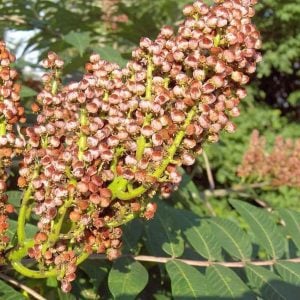
Ninebark is self-fertile and sets seed without a cross-pollinator. Blooms emerge from late May through early July in temperate climates, producing dense, hemispherical clusters of small white to pale pink flowers at branch tips. Each individual flower is simple and open-structured — a five-petaled form that provides easy nectar and pollen access for short-tongued native bees, honeybees, and butterflies. The extended bloom window of roughly five to six weeks makes ninebark a reliable mid-season forage bridge between spring ephemerals and summer-blooming plants. After flowers fade, the reddish papery seed capsules persist through fall and into winter, providing late-season food for birds and small mammals. The species also serves as a larval host for the Io moth and several other Lepidoptera, adding a dimension to its ecological contribution beyond simple pollinator support.
Bloom Season: Mid Bloom Window: Late May - Early Jul Pollination Requirements: Self-fertile; no cross-pollination required Pollination Mechanism: Insect-pollinated (bees, butterflies); flowers produce abundant nectar and pollen Flower Color: White to pale pink
Ninebark produces no edible fruit — the inflated, reddish seed capsules that follow flowering are ornamental and ecologically valuable, not culinary. Each capsule cluster contains multiple small seeds attractive to finches and other seed-eating birds through late fall and winter. The bark has a documented ethnobotanical history among several Native American groups, who prepared inner bark decoctions for medicinal purposes, though the bark contains compounds that cause vomiting and diarrhea in dogs and can be toxic to humans in large doses. The species has no conventional edible use. Its landscape value lies in a four-season structure: spring flowers for pollinators, summer foliage mass for birds to nest in, fall capsules for seed-feeding wildlife, and exfoliating bark for winter interest. Dense multi-stemmed branching provides thermal cover for small songbirds in winter — a function that planted shrub borders specifically engineered for wildlife often underdeliver on.
Powdery mildew (Podosphaera physocarpi) is the most common disease concern on ninebark, and the straight species shows moderate susceptibility where airflow is restricted and humidity is high. Cultural management is the primary tool: avoid overhead irrigation, prune annually to maintain an open canopy, and site plants with adequate spacing (4 to 6 feet between shrubs). OMRI-listed sulfur or potassium bicarbonate sprays can reduce mildew load if cultural practices are insufficient.
Fireblight (Erwinia amylovora) affects ninebark at moderate susceptibility levels, particularly during wet springs. Remove blighted shoots at least 8 to 12 inches below visible discoloration into clean wood, and sterilize pruning tools between cuts with a 10% bleach solution or 70% isopropyl alcohol.
Leaf spot diseases caused by Cercospora and Septoria species can appear in wet summers but rarely threaten plant health. Removing fallen leaf litter in autumn breaks the overwintering disease cycle. Wood rot and stem canker fungi (Nectria and Botryosphaeria species) show moderate resistance; maintain plant vigor through correct pruning and avoid wounding stems.
Aphids (Aphis spp.) colonize new growth in spring; water sprays dislodge most infestations before predator populations build. Spider mites (Tetranychus urticae) are moderately resistant — pressure spikes under drought stress, so mulching and irrigation during dry spells reduces incidence.
Rejuvenation Pruning: Cut all stems to within 6–12 inches of the ground in late winter if the shrub becomes leggy. The fast growth rate produces a full recovered framework within one season.
Mildew Prevention: Plant in a sunny, open site with good air movement — this single siting decision eliminates powdery mildew in most plantings without any spray program.
Aphid Control: Scout new growth in May and early June. A forceful water spray on three consecutive mornings controls most colonization before beneficial insects arrive.
Slope Planting: The fibrous root system establishes quickly on steep banks. Plant in fall or early spring, water through the first summer, and it handles erosion without further intervention.
Wildlife Layering: Pair with native grasses at the base to create stacked habitat — the shrub layer provides cover and seed while the ground layer supports insect foraging below.
We ship in late winter or early spring based on your USDA hardiness zone.
We strive to ship orders on the scheduled dates listed in the table below. However, please note that the actual shipping date may be subject to change due to factors like weather conditions and order volume.
The specific date for shipping your order will be determined according to your zipcode at the time of checkout.
Our plants are shipped bare root, packed in moist sawdust, and securely wrapped in plastic to prevent the roots from drying out. We use USPS Ground Advantage for shipping, ensuring that your plants typically arrive within 2-5 days after packaging.
In case you're unable to plant the trees immediately upon arrival, we recommend soaking them in water for a few hours and temporarily heeling them in. Ideally, they should be planted within three days of receipt for optimal health.
Our 365-Day Plant Guarantee: We ensure that our plants are delivered to you alive and healthy. If your plant does not survive its first year, you're eligible for store credit under these conditions:
You maintain the roots' moisture and plant within three days of delivery, following the instructions in our Planting Guide.
If you're concerned about your plant's health, please consult our guide, How to Tell if Your Tree is Dead or Dormant. Remember, our plants are shipped in a dormant state and may leaf out at different times based on their species. To check for plant vital
3 reviews for Ninebark
Rated 5 out of 5
Phoebe D. (verified owner)–
Rated 5 out of 5
LewEllyn Hallett (verified owner)–
I ordered 5 ninebarks and every one instantly leafed out and is looking great. Why pay so much money for potted nursery plants when these bare root plants do so well and are affordable, too? I think they settle in even quicker, and they’ll catch up to the larger plants. I’m very happy with this nursery’s product.
Rated 5 out of 5
Nicole Hamilton (verified owner)–
Planted a couple of weeks ago and they have leaves now. :) There were two additional teeny tiny baby rooted stems within the roots of the ones I ordered, I planted the babies and they are budding out as well. Bonus! Thank you!
Steve –
I want to buy about 10 shrubs from you next spring. What would be a ballpark shipping cost to zip code 42629.
derekcarter44 –
The shipping cost will be displayed at checkout after you enter your address.



Phoebe D. (verified owner) –
LewEllyn Hallett (verified owner) –
I ordered 5 ninebarks and every one instantly leafed out and is looking great. Why pay so much money for potted nursery plants when these bare root plants do so well and are affordable, too? I think they settle in even quicker, and they’ll catch up to the larger plants. I’m very happy with this nursery’s product.
Nicole Hamilton (verified owner) –
Planted a couple of weeks ago and they have leaves now. :) There were two additional teeny tiny baby rooted stems within the roots of the ones I ordered, I planted the babies and they are budding out as well. Bonus! Thank you!
Steve –
I want to buy about 10 shrubs from you next spring. What would be a ballpark shipping cost to zip code 42629.
derekcarter44 –
The shipping cost will be displayed at checkout after you enter your address.