
Jewel Black Raspberry
$14.95
Jewel Black Raspberry (Rubus occidentalis ‘Jewel’) is a Cornell-bred black raspberry producing high yields of firm, glossy 0.75-inch fruit with a rich, intensely sweet flavor and just a hint of tartness, suited for fresh eating, jams, and freezing. It grows in USDA hardiness zones 4-8 and AHS heat zones 2-7, needs 800-1000 chill hours, and is self-fertile, fruiting reliably without a pollinator partner.
1-2′ Bare Root Plant
Propagation: Own-root
In stock
Jewel was released by Cornell University’s small fruit breeding program at the Geneva, New York station in 1973, from a cross designated [(Bristol × Dundee) × Dundee] made in 1954. The repeated use of Dundee in the pedigree reflects deliberate selection for fruit size and flavor depth, while the Bristol lineage contributed firmness and some tolerance of handling stress. Cornell developed Jewel explicitly as a commercial replacement for Cumberland, the mid-20th-century standard, targeting higher and more consistent yield, larger berry size, and firmer fruit better suited to mechanical harvesting and fresh-market shipping. At release, Jewel met those objectives and quickly displaced Cumberland in commercial plantings across the Mid-Atlantic and Great Lakes states, becoming the dominant black raspberry cultivar for the final decades of the 20th century. Its large, glossy fruit and vigorous cane production gave it lasting traction in both fresh-market and processing channels. Jewel remains widely planted across the native range of Rubus occidentalis from Nova Scotia south to the Appalachians and west through the Great Lakes region. Note: the current cell text attributed Jewel’s parentage to Bristol × New Logan, which is not supported by Cornell’s published records; the confirmed parentage is (Bristol × Dundee) × Dundee.
Jewel performs best in well-drained loam rich in organic matter, with soil pH held between 6.0 and 6.8 — a range where phosphorus and micronutrients remain available without becoming limiting. Because black raspberries are notably sensitive to Verticillium wilt, site history matters: avoid ground previously planted with tomatoes, potatoes, eggplant, or strawberries, all of which can harbor Verticillium dahliae in the soil for years. Raised or slightly sloped planting sites improve drainage and reduce the crown moisture that encourages fungal canker during rainy springs. Full sun is necessary throughout the season; shaded canes produce weaker laterals and smaller fruit. Water demand peaks during fruit set and ripening from late June through July, when consistent moisture at roughly two inches per week supports large, firm berries without causing cane disease pressure. Once established, Jewel shows moderate drought tolerance but will sacrifice yield significantly if stressed during this critical window. Mulching with wood chips or straw conserves moisture, moderates soil temperature, and suppresses competing weeds without creating the wet-crown conditions that favor cane pathogens.
USDA Hardiness Zone: 4-8
AHS Heat Zone: 2-7
Chill Hours: 800-1000
Sun Requirements: Full Sun
Soil pH: 6.0-6.8
Soil Type: Loam, well-drained, rich in organic matter
Soil Drainage: Well-drained
Water Requirements: Medium; 2 inches per week during growing season
Drought Tolerance: Moderate
Heat Tolerance: Moderate
Plant Spacing: 3-4 ft apart in rows; rows 8-10 ft apart
Container Suitability: Poor; not recommended for containers
How to Prune: Remove spent floricanes after harvest; tip primocanes at 3-4 feet to encourage lateral branching; prune laterals to 12-18 inches in early spring
Jewel sends up vigorous primocanes each spring that arch upward to four to six feet, then tip over naturally by mid-summer. Tipping primocanes at three to four feet in early summer — before they arch and touch the ground — is the single most important cultural step for this variety: it forces lateral branching that will carry the following year's fruit crop and prevents cane rooting that spreads the planting beyond its designated row. The root system is fibrous and shallow, anchored at the crown rather than running aggressively, making Jewel manageable in structured rows. Canes are heavily armed with stout thorns that interlock when plants are spaced too close, so the recommended three to four feet in-row and eight to ten feet between rows keeps canopy open for airflow and harvest access. After fruiting, floricanes die back and should be cut flush with the crown in late summer or early fall — leaving stubs invites cane disease entry. The deciduous foliage drops cleanly in autumn, and the crown overwinters reliably through zone 4 winters without additional protection.
Mature Height: 4-6 ft tall
Mature Spread: 3-4 ft wide
Growth Habit: Upright, arching canes; floricane-bearing shrub
Growth Rate: Fast
Foliage Type: Deciduous
Food Forest Layer: Shrub
Leaf Color: Green
Thorns?: Yes
Attracts Wildlife: Bees, butterflies, songbirds, small mammals
Life Span: Perennial; individual canes biennial, crowns persist indefinitely
Jewel is self-fertile, so a single plant will set fruit and produce a full crop without a cross-pollinator. White flowers open from late April through early June, with peak bloom typically in May across temperate growing regions. The flower structure of Rubus occidentalis is accessible to a range of native bees and honeybees, which are the primary pollinators — wind plays a minimal role. While a cross-pollinator is not required, yield studies at Cornell and elsewhere consistently show that pollen transfer between two different black raspberry cultivars increases fruit set and average berry weight by a measurable margin. Planting a companion such as Bristol or Cumberland within two to three rows provides bloom overlap and additional pollinator activity without complicating orchard management. Any other black or red raspberry variety blooming in the same window will serve the same function.
Bloom Season: Early
Bloom Window: Late Apr - Early Jun
Pollination Requirements: Self-fertile
Pollination Mechanism: Insect-pollinated (bees); self-fertile
Flower Color: White
Jewel produces glossy black berries averaging 0.75 inch in diameter with firm flesh that distinguishes this cultivar from softer varieties prone to crumbling on contact. The flavor profile is rich and sweet with a characteristic tartness and the intense aromatic quality that defines Rubus occidentalis — a more complex, darker flavor than red raspberries or blackberries. Fruit holds together well through picking and short transport, which is one reason Jewel remained a commercial standard for so long. Refrigerated shelf life runs three to five days; berries freeze notably well for up to twelve months with minimal degradation of flavor or color. Yield runs high at two to four pounds per established plant across a harvest window from late June through late July. Culinary applications are broad: fresh eating, jams, jellies, pies, cobblers, syrups, ice cream, and wine all benefit from the concentrated flavor. The deep anthocyanin pigment also makes Jewel valuable for natural coloring in value-added products. Young peeled shoots are edible, and leaves can be dried for herbal tea.
Ripening Season: Early
Harvest Window: Late Jun - Late Jul
Fruit Size: 0.75 inch
Flavor: Rich, sweet, intense with slight tartness; classic black raspberry flavor
Fruit Color: Glossy black
Fruit Texture: Firm
Bearing Habit: Floricane (second-year canes); summer-bearing
Years to Bear: 1-2 years
Storage Life: 3-5 days refrigerated; up to 12 months frozen
Culinary Uses: Fresh eating, jams, jellies, pies, cobblers, sauces, syrups, ice cream, wine, freezing
Jewel carries solid resistance to anthracnose (Elsinoe veneta), the most widespread cane disease of black raspberries, reducing the sanitation burden compared to susceptible cultivars. Cane blight (Leptosphaeria coniothyrium) tolerance is moderate — clean cuts at the crown after harvest and removal of spent floricanes keeps it manageable. The critical vulnerabilities are orange rust (Gymnoconia nitens) and Verticillium wilt (Verticillium dahliae). Orange rust is systemic and incurable: remove and destroy any plant showing bright orange spore masses on lower leaf surfaces before sporulation spreads to neighboring rows. Verticillium wilt requires strict site selection — avoid ground with a history of tomatoes, potatoes, eggplant, or strawberries. Botrytis fruit rot (Botrytis cinerea) is managed by maintaining canopy airflow through proper spacing and floricane removal, harvesting promptly, and avoiding overhead irrigation during bloom. Spotted wing drosophila (Drosophila suzukii), raspberry crown borer (Pennisetia marginata), and Japanese beetle (Popillia japonica) all warrant active monitoring. SWD pressure is reduced with fine-mesh row covers during ripening and prompt harvest every two to three days. Crown borer damage manifests as wilting floricanes in midsummer; cut affected canes below soil level. Japanese beetles respond to hand-removal in early morning.
Anthracnose: Resistant
Orange Rust: Very Susceptible
Verticillium Wilt: Susceptible
Cane Blight: Moderately Resistant
Botrytis Fruit Rot: Moderately Susceptible
Spotted Wing Drosophila: Susceptible
Raspberry Crown Borer: Susceptible
Black Raspberry Aphid: Moderately Susceptible
Japanese Beetle: Susceptible
- Avoid solanaceous crop history: Verticillium Wilt persists in soil for years — choose ground free of tomatoes, potatoes, eggplant, and strawberries before planting.
- Orange rust is terminal: If you see bright orange pustules on leaf undersides in spring, remove and destroy the entire plant immediately. There is no recovery, and delay spreads spores to neighboring canes.
- Harvest promptly for SWD: Pick ripe berries every two to three days during the harvest window — Spotted Wing Drosophila larvae develop rapidly inside ripe fruit, and immediate refrigeration slows infestation.
- Monitor for crown borer: Wilting or dying canes in midsummer may signal Raspberry Crown Borer; cut affected canes below soil level and inspect the base for larval galleries.
- Remove floricanes cleanly: Cut spent floricanes flush to the crown immediately after harvest — stubs left in place are the primary entry point for cane blight in humid summer conditions.
We ship in late winter or early spring based on your USDA hardiness zone.
We strive to ship orders on the scheduled dates listed in the table below. However, please note that the actual shipping date may be subject to change due to factors like weather conditions and order volume.
The specific date for shipping your order will be determined according to your zipcode at the time of checkout.
Our plants are shipped bare root, packed in moist sawdust, and securely wrapped in plastic to prevent the roots from drying out. We use USPS Ground Advantage for shipping, ensuring that your plants typically arrive within 2-5 days after packaging.
In case you're unable to plant the trees immediately upon arrival, we recommend soaking them in water for a few hours and temporarily heeling them in. Ideally, they should be planted within three days of receipt for optimal health.
See our full shipping policy and map here
| Zone | Ship Date |
|---|---|
| 11 - 8b | March 1st, 2027 |
| 8a - 7b | March 8th, 2027 |
| 7a | March 15th, 2027 |
| 6b | March 22nd, 2027 |
| 6a | March 29th, 2027 |
| 5b - 5a | April 12th, 2027 |
| 4b - 4a | April 26th, 2027 |
| 3b - 1a | May 3rd, 2027 |
Our 365-Day Plant Guarantee: We ensure that our plants are delivered to you alive and healthy. If your plant does not survive its first year, you're eligible for store credit under these conditions:
- Your location falls within the appropriate USDA hardiness zone for the plant variety (refer to our hardiness zone map).
- You maintain the roots' moisture and plant within three days of delivery, following the instructions in our Planting Guide.
If you're concerned about your plant's health, please consult our guide, How to Tell if Your Tree is Dead or Dormant. Remember, our plants are shipped in a dormant state and may leaf out at different times based on their species. To check for plant vital
5 reviews for Jewel Black Raspberry
Related products

Polana Raspberry
Checking fit
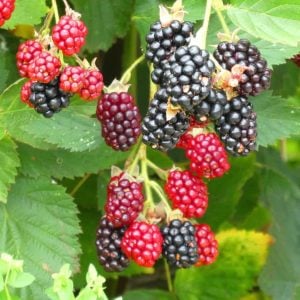
Arapaho Blackberry
Checking fitRated 4.67 out of 5
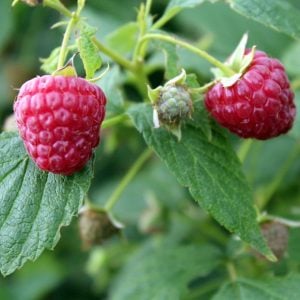
Nova Raspberry
Checking fit
Encore Raspberry
Checking fit

Vanessa M. (verified owner) –
Can’t wait to plant my beautiful Jewel!
Vinnie (verified owner) –
The berries never make it out of the garden.
Jennifer G. (verified owner) –
The plant looks great and I can hardly wait until they are producing fruit.
Deborah Cook (verified owner) –
This hasn’t leafed out yet but the stalk is still green.
Marisa Feathers (verified owner) –
Came in terrific condition, bundled with all our other plants, and it is thriving.