$19.95Original price was: $19.95.$15.96Current price is: $15.96.
Jahns Prairie Gooseberry (Ribes hirtellum) is a prairie-origin American gooseberry selected for resistance to powdery mildew, white pine blister rust, and botrytis, producing reddish-pink fruit of very good eating quality. It grows in USDA hardiness zones 3-7 and AHS heat zones 1-7, needs 1000-1200 chill hours, and is self-fertile, fruiting reliably without a pollinator partner.
1-2′ Bare Root Plant Propagation: Own-root Can’t be shipped to: AK, DE, HI, ME, MA, MI, NJ, NC, RI, VT, WV
Out of stock
🌿 Save when you buy in bulk
10% OFF when you buy 5+
15% OFF when you buy 10+
20% OFF when you buy 25+
Out of stock — back next season
Spring 2027 inventory drops in June. Drop your email and we'll notify you the day this variety is back in stock.
You're on the list. Check your inbox for a confirmation link — click it to lock in your spot. We'll email you the day this variety is back in stock.
Jahns Prairie was selected from wild native gooseberry populations in Alberta, Canada, by Dr. Otto Jahn and introduced in 1996. Though often listed as Ribes hirtellum (American gooseberry), it is more precisely classified as Ribes oxyacanthoides, the native Canadian gooseberry, a distinction that reflects its true prairie origin and underpins its notable cold hardiness. Dr. Jahn’s selection criterion centered on disease resistance — the wild population from which this clone was chosen carried natural tolerance to powdery mildew, white pine blister rust (Cronartium ribicola), leaf spot, stem botrytis, and even aphids and sawflies. No formal institutional breeding program was involved; this is a wild selection elevated to cultivar status on the merit of its disease profile and dessert-quality fruit. Relatively new to the commercial nursery trade, Jahns Prairie filled a gap for northern-climate growers who wanted a disease-clean alternative to older American cultivars lacking blister rust resistance. It remains one of very few cultivars to combine documented resistance across both fungal and insect pressure from a single selection event.
Jahns Prairie performs well in full sun to part shade and tolerates a broad range of well-drained soils. Soil pH of 6.0–7.0 supports healthy growth; amend acidic sites with lime before planting. The shrub reaches 4–5 ft tall with a 4 ft spread, so space plants 4–5 ft apart in rows 8–10 ft apart to allow adequate air circulation. Approximately 1,000 chill hours below 45°F are required to break dormancy reliably — a threshold easily met throughout Zone 3–7 winters. Growth rate is moderate. Annual pruning in late winter removes canes older than three years and opens the canopy to reduce humidity, which helps suppress the diseases this variety already resists. A 2–3 inch organic mulch layer conserves moisture, moderates soil temperature, and suppresses competing weeds through the growing season.
USDA Hardiness Zone: 3-7 AHS Heat Zone: 1-7 Chill Hours: 1000-1200 Sun Requirements: Full Sun to Partial Shade Soil pH: 6.0-7.0 Soil Type: Adaptable (loam, silt, clay) Soil Drainage: Well-drained Water Requirements: Medium Drought Tolerance: Low to Moderate Heat Tolerance: Moderate; prefers afternoon shade in hot climates Plant Spacing: 4-5 ft apart; rows 8-10 ft apart How to Prune: Prune in late winter to early spring while dormant; maintain a balance of 1-, 2-, and 3-year-old canes and remove wood older than 3 years
A compact, multi-stemmed deciduous shrub, Jahns Prairie tops out at 4–5 ft tall with a spread of roughly 4 ft wide, making it well-suited to home gardens, hedgerow plantings, and food forest understory layers. Stems carry the typical Ribes hirtellum thorn structure, so gloves are advisable at harvest. Foliage is deciduous with medium growth rate; the canopy fills in steadily over two to three seasons. The shrub provides meaningful wildlife value — birds, bees, and beneficial insects all utilize the flowers and fruit. Deer find this species palatable, so physical barriers are advisable in browsing-pressure areas. Growth is classified as moderate, and care level is moderate — straightforward for growers familiar with small fruit shrubs. The plant is not salt tolerant and is best sited away from road-salt drift.
Mature Height: 4-5 ft tall Mature Spread: 4 ft wide Growth Habit: Arching, multi-stemmed shrub Growth Rate: Moderate Foliage Type: Deciduous Food Forest Layer: Shrub Permaculture Role: Fruit shrub, wildlife forage Leaf Color: Green Thorns?: Yes Attracts Wildlife: Yes Life Span: 15-20+ years productive life
Jahns Prairie is fully self-fertile: a single plant sets a complete crop without a companion variety. Flowers open in mid-spring, timed to attract native bees and honeybees before most summer pollinators are active. Approximately 1,000 chill hours in winter are required to trigger uniform bloom across all buds, a requirement well within reach for Zone 3–7 temperate climates. Because no cross-pollinator is needed, Jahns Prairie fits easily into small-space plantings where a single shrub must carry the full fruiting load. Growers who want to maximize yield can plant multiple specimens — self-fertile varieties can still benefit from cross-pollination in high-density plantings — but a solo plant will produce a full harvest without additional varieties present. Harvest arrives in early to late July.
Bloom Season: Very Early Bloom Window: Early Apr - Late Apr Pollination Requirements: Self-fertile; no cross-pollinator required Pollination Mechanism: Insect-pollinated Flower Color: Green and pink (inconspicuous)
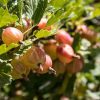
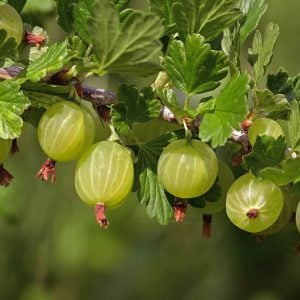
Fruit matures in early to late July as reddish-pink berries with smooth skin and firm texture. Flavor is rated very good eating quality, balancing sweetness and tartness in a way that works fresh off the cane or cooked into preserves, pies, and sauces. The reddish-pink color is attractive for fresh presentation and deepens as the berries fully ripen. Berries can be harvested slightly underripe for jam-making — the natural pectin content is high at this stage — or left to soften for fresh eating and dessert use. Like all gooseberries, Jahns Prairie freezes well: spread berries on a tray to freeze individually, then bag for long-term storage. The shrub also provides wildlife forage; birds will harvest ripe fruit quickly, so netting is recommended if the full crop is needed for home use.
Ripening Season: Mid Harvest Window: Early Jul - Late Jul Fruit Size: 0.5-0.75 inch Flavor: Very good eating quality Fruit Color: Reddish-pink Bearing Habit: Annual bearer; produces on 1-, 2-, and 3-year-old wood Years to Bear: 1-2 years to first fruit; full production by years 4-5 Yield: 4-5+ per mature bush Culinary Uses: Fresh eating; jams; jellies; pies; preserves; juices; wine
Jahns Prairie carries confirmed resistance to three of the most damaging diseases in the Ribes genus. Resistance to powdery mildew (Podosphaera mors-uvae) eliminates the need for repeated preventive sprays that many susceptible varieties require through summer. Resistance to white pine blister rust (Cronartium ribicola) is significant beyond the orchard: because Ribes species serve as an alternate host in the blister rust life cycle, resistant varieties like Jahns Prairie are legally plantable in states and counties where susceptible gooseberries are restricted near five-needle pine stands — always verify current local regulations. Resistance to botrytis gray mold (Botrytis cinerea) reduces post-harvest losses and lessens disease pressure during wet harvest seasons. For the remaining disease and pest pressures — anthracnose, septoria leaf spot, imported currantworm, gooseberry fruitworm, currant borer, and spotted wing drosophila — cultural controls are the first line of defense: maintain open canopy structure through annual pruning, remove and dispose of fallen leaf litter, use row cover during SWD flight periods, and apply OMRI-listed kaolin clay or spinosad for fruitworm and currantworm pressure when monitoring indicates action thresholds have been reached.
Prune for air flow: Remove canes older than three years each late winter — Jahns Prairie's mildew resistance holds best when the canopy stays open and foliage dries quickly after rain.
Check WPBR planting rules: Confirm local regulations before planting near five-needle pines; Jahns Prairie's blister rust resistance makes it broadly compliant, but rules vary by county.
Net before birds arrive: Reddish-pink fruit draws birds the moment it colors up in early July — install netting at first color change to secure the harvest.
We ship in late winter or early spring based on your USDA hardiness zone.
We strive to ship orders on the scheduled dates listed in the table below. However, please note that the actual shipping date may be subject to change due to factors like weather conditions and order volume.
The specific date for shipping your order will be determined according to your zipcode at the time of checkout.
Our plants are shipped bare root, packed in moist sawdust, and securely wrapped in plastic to prevent the roots from drying out. We use USPS Ground Advantage for shipping, ensuring that your plants typically arrive within 2-5 days after packaging.
In case you're unable to plant the trees immediately upon arrival, we recommend soaking them in water for a few hours and temporarily heeling them in. Ideally, they should be planted within three days of receipt for optimal health.
Our 365-Day Plant Guarantee: We ensure that our plants are delivered to you alive and healthy. If your plant does not survive its first year, you're eligible for store credit under these conditions:
You maintain the roots' moisture and plant within three days of delivery, following the instructions in our Planting Guide.
If you're concerned about your plant's health, please consult our guide, How to Tell if Your Tree is Dead or Dormant. Remember, our plants are shipped in a dormant state and may leaf out at different times based on their species. To check for plant vital





Linda (verified owner) –
Healthy plant