Fredonia Grape
$24.95
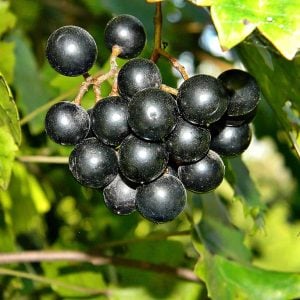
Fredonia Grape (Vitis labrusca ‘Fredonia’) is a vigorous labrusca grape from the Geneva, New York program bearing early-ripening, large blue-black clusters with sweet, spicy slip-skin berries excellent for juice, jelly, and fresh eating. It grows in USDA hardiness zones 4-8 and AHS heat zones 3-8, needs 250-450 chill hours, and is self-fertile, fruiting reliably without a pollinator partner.
1-2′ Bare Root Vine
Propagation: Own-root
Can’t be shipped to: AK, HI, ID, OR, WA
In stock
Fredonia was bred at the New York State Agricultural Experiment Station in Geneva, New York, by F.F. Gladwin. The cross — Champion by Lucille — was made in 1915, and the variety was introduced to growers in 1927, naming it for the town of Fredonia in Chautauqua County, a historic center of early American viticulture in the Finger Lakes region. Both parents are Vitis labrusca-derived American cultivars, placing Fredonia squarely within the American grape tradition that Concord had defined. Its primary distinction over Concord is timing: Fredonia ripens approximately two weeks earlier and produces noticeably larger berries with a spicier edge alongside the familiar labrusca flavor profile. For much of the twentieth century, Fredonia served as the standard early-season blue grape across the Finger Lakes, upper Midwest, and Great Plains, prized by growers who needed productive, reliable yields before Concord reached its peak. Now in the public domain, it has spread widely through regional nursery networks and remains a benchmark for early-season blue grape production.
Fredonia performs best with eight or more hours of direct sun daily; shaded canopies cut fruit sugar accumulation and increase disease pressure. Soil drainage matters more than soil type — the vine tolerates loamy, sandy loam, or moderate clay as long as water does not pool around the root zone. A pH of 5.5 to 7.0 covers the usable range, but the vine responds well to soils in the 6.0 to 6.5 range where nutrient availability is balanced. Consistent moisture during berry sizing (roughly six to eight weeks after flowering) improves cluster fill without excessive vegetative push; reduce irrigation as harvest approaches to concentrate sugars and reduce cracking. In humid continental climates, good air circulation through the canopy is critical — plant on a slope or rise where possible, and orient rows to catch prevailing breezes. Annual dormant pruning keeps the fruiting wood renewal cycle on track and prevents the canopy density that invites fungal disease.
USDA Hardiness Zone: 4-8
AHS Heat Zone: 3-8
Chill Hours: 250-450
Sun Requirements: Full Sun
Soil pH: 5.5-7.0
Soil Type: Deep, loam, humus-rich; tolerates a range of soil types with good drainage
Soil Drainage: Well-drained
Water Requirements: Medium; regular watering until established, drought-tolerant once established
Drought Tolerance: Moderate
Heat Tolerance: Moderate to High; American grape adapted to humid continental summers
Plant Spacing: 8-10 ft apart in rows 8-10 ft wide
Container Suitability: Not recommended; vigorous vine requires ground planting and trellis support
How to Prune: Annual dormant pruning required; Top Wire Cordon or Kniffin training systems; prune to maintain structure and fruiting wood
Fredonia is a vigorous climbing vine that needs a permanent trellis, arbor, or wire system from the start. Left to its own structure, canes reach 15 to 20 feet and will sprawl across adjacent plants or structures. A two-wire Kniffin or top-wire cordon system channels that energy into productive lateral shoots and makes dormant pruning manageable. The root system combines a moderately deep taproot with wide lateral spread, anchoring the vine effectively once established but demanding a planting site free of underground obstructions. Fall foliage shifts to yellow and orange-red before leaf drop, giving the vine modest ornamental value through early November. Because Fredonia produces new fruiting wood annually from one-year-old canes, the pruning objective is always to retain a sufficient number of canes with healthy buds while removing the oldest and most congested wood.
Mature Height: 15-20 ft tall
Mature Spread: 15-20 ft wide
Growth Habit: Climbing vine; vigorous trailing/twining growth requiring trellis or arbor support
Growth Rate: Fast
Foliage Type: Deciduous
Food Forest Layer: Vine
Leaf Color: Medium to dark green
Fall Foliage Color: Yellow to orange-red
Thorns?: No
Attracts Wildlife: Birds, butterflies, bees, wasps; fruit attractive to many mammals and birds
Life Span: 50+ years with proper care; often productive for decades
Fredonia produces perfect (bisexual) flowers and is fully self-fertile, meaning a single vine can set a full crop without a cross-pollinator present. Bloom runs from late May into mid-June in temperate climates, with both wind and bee activity contributing to pollination. Although no companion variety is required, planting a second Vitis labrusca cultivar — such as Concord Grape Seeded or Catawba Grape — with overlapping bloom can modestly improve cluster fill and berry size through cross-pollination. The small, yellowish-green flowers are inconspicuous but fragrant at close range, and they attract native bees and other early-season pollinators that supplement wind activity.
Bloom Season: Very Late
Bloom Window: Late May - Mid Jun
Pollination Requirements: Self-fertile; no pollinator required
Pollination Mechanism: Wind and insect (bees); perfect (bisexual) flowers
Flower Color: Yellowish-green; small and inconspicuous
Fredonia berries reach 0.75 to 1.0 inch in diameter at maturity, placing them at the large end of the American labrusca range — measurably bigger than standard Concord under comparable conditions. Skin color is a deep blue-black with a characteristic powder-blue bloom when fully ripe. The thick slip-skin separates cleanly from the juicy pulp, which carries the classic foxy labrusca aroma alongside a sweet base flavor with a distinctive spicy note absent in many other blue American grapes. Brix levels typically fall in the 16 to 19 range at peak ripeness. The heavy juice yield and high natural sugar make Fredonia well suited to jelly, juice concentrate, and home winemaking — clusters at peak Brix deliver strong color and extraction. Clusters ripen in late August to mid-September, about one to two weeks ahead of Concord, giving growers an early-season harvest window. Refrigerated clusters hold one to two weeks; processing immediately at peak ripeness gives the strongest flavor and color extraction.
Ripening Season: Mid
Harvest Window: Late Aug - Mid Sep
Fruit Size: 0.75-1 inch
Flavor: Sweet with a hint of spiciness; classic labrusca 'foxy' character; good fresh flavor; suitable for juice, jelly, wine
Fruit Color: Blue-black with powder blue bloom when ripe
Fruit Texture: Juicy with slip-skin; firm exterior, tender pulp
Fruit Skin: Thick slip-skin; skin separates easily from pulp
Bearing Habit: Annual bearer; fruits on current season's growth from 1-year-old wood
Years to Bear: 2-4 years
Storage Life: 1-2 weeks refrigerated; best eaten fresh
Culinary Uses: Fresh eating; juice; jelly and preserves; wine (red/rosé); raisins
Fredonia carries moderate susceptibility to black rot (Guignardia bidwellii); late-winter sanitation — removing mummified berries and dead cane stubs before bud break — eliminates the primary inoculum source. Downy mildew (Plasmopara viticola) is the most significant weak point; Fredonia is susceptible, and humid-summer growers must prioritize canopy airflow through shoot positioning and leaf removal around the cluster zone. Powdery mildew (Erysiphe necator) sits at moderate susceptibility; OMRI-listed sulfur or potassium bicarbonate applied preventively during rapid shoot growth helps. Botrytis bunch rot (Botrytis cinerea) is a relative strength — moderate resistance means cluster thinning at pea-size stage is sufficient in most seasons. Crown gall (Agrobacterium vitis) poses a moderately susceptible soil-borne risk; avoid trunk wounds and use clean pruning tools. Grape berry moth (Paralobesia viteana) is moderately susceptible — kaolin clay or Bacillus thuringiensis timed to degree-day models reduces larval damage. Japanese beetle (Popillia japonica) is the most problematic pest; exclusion netting over clusters during peak July flight provides direct protection. Grape flea beetle (Altica chalybea) and grape root borer (Vitacea polistiformis) are at moderate susceptibility; pheromone traps and beneficial nematodes support borer management.
Black Rot: Moderately Susceptible
Downy Mildew: Susceptible
Powdery Mildew: Moderately Susceptible
Botrytis Bunch Rot: Moderately Resistant
Crown Gall: Moderately Susceptible
Grape Berry Moth: Moderately Susceptible
Japanese Beetle: Susceptible
Grape Flea Beetle: Moderately Susceptible
Grape Root Borer: Moderately Susceptible
- Prune hard each dormant season: Fredonia fruits only on current-season growth from last year's wood. Too many retained canes dilute cluster quality and promote disease.
- Manage canopy for downy mildew: Shoot positioning and selective leaf removal inside the cluster zone improve spray penetration and airflow — both critical in humid summers where downy mildew pressure is high.
- Time harvest by taste, not calendar: Sugar development continues one to two weeks after full color. Sample from the bottom of the cluster — the last berries to ripen — before picking.
- Protect against japanese beetle: Lightweight exclusion netting over clusters during peak summer flight provides direct protection without chemical inputs.
- Site for air circulation: Downy and powdery mildew pressure drops substantially on sites with consistent air movement. Avoid low-lying areas with morning fog.
We ship in late winter or early spring based on your USDA hardiness zone.
We strive to ship orders on the scheduled dates listed in the table below. However, please note that the actual shipping date may be subject to change due to factors like weather conditions and order volume.
The specific date for shipping your order will be determined according to your zipcode at the time of checkout.
Our plants are shipped bare root, packed in moist sawdust, and securely wrapped in plastic to prevent the roots from drying out. We use USPS Ground Advantage for shipping, ensuring that your plants typically arrive within 2-5 days after packaging.
In case you're unable to plant the trees immediately upon arrival, we recommend soaking them in water for a few hours and temporarily heeling them in. Ideally, they should be planted within three days of receipt for optimal health.
See our full shipping policy and map here
| Zone | Ship Date |
|---|---|
| 11 - 8b | March 1st, 2027 |
| 8a - 7b | March 8th, 2027 |
| 7a | March 15th, 2027 |
| 6b | March 22nd, 2027 |
| 6a | March 29th, 2027 |
| 5b - 5a | April 12th, 2027 |
| 4b - 4a | April 26th, 2027 |
| 3b - 1a | May 3rd, 2027 |
Our 365-Day Plant Guarantee: We ensure that our plants are delivered to you alive and healthy. If your plant does not survive its first year, you're eligible for store credit under these conditions:
- Your location falls within the appropriate USDA hardiness zone for the plant variety (refer to our hardiness zone map).
- You maintain the roots' moisture and plant within three days of delivery, following the instructions in our Planting Guide.
If you're concerned about your plant's health, please consult our guide, How to Tell if Your Tree is Dead or Dormant. Remember, our plants are shipped in a dormant state and may leaf out at different times based on their species. To check for plant vital
Related products

Noble Muscadine Grape
Checking fitRated 5.00 out of 5- SOLD OUT

Blanc du Bois Grape
Checking fit 
Reliance Grape
Checking fitRated 4.50 out of 5- SOLD OUT

Flame Seedless Grape
Checking fit


Reviews
There are no reviews yet.