Fall Gold Yellow Raspberry
$12.95
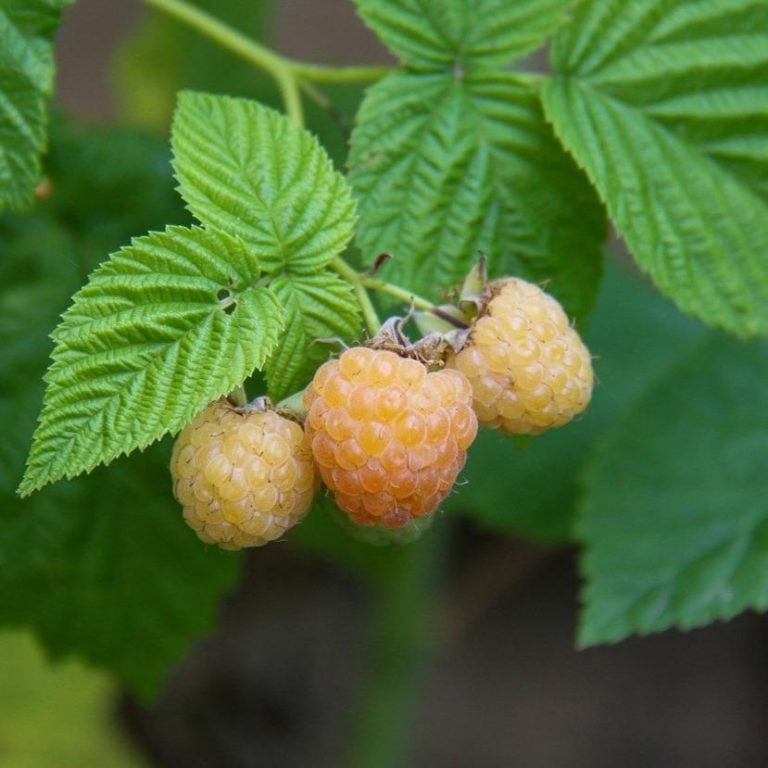
Fall Gold Yellow Raspberry (also known as Fallgold Raspberry; Rubus idaeus ‘Fallgold’) is a University of New Hampshire everbearing raspberry producing large, golden-yellow berries with very sweet, honeyed flavor on upright, suckering canes across two seasons. It grows in USDA hardiness zones 3-8 and AHS heat zones 2-6, needs 800-1000 chill hours, and is self-fertile, fruiting reliably without a pollinator partner.
1-2′ Bare Root Plant
Propagation: Own-root
Out of stock
Out of stock — back next season
Spring 2027 inventory drops in June. Drop your email and we'll notify you the day this variety is back in stock.
You're on the list. Check your inbox for a confirmation link — click it to lock in your spot. We'll email you the day this variety is back in stock.
Fallgold was developed by Elwyn Meader at the New Hampshire Agricultural Experiment Station, University of New Hampshire, and introduced in 1967 or 1968 (tested under the designation NH 64-2). It carries no plant patent and entered the public domain upon release. Parentage traces to a complex cross involving the Taylor raspberry, a selection from Meader’s NH breeding program, and Rubus pungens var. oldhamii — a wild raspberry species Meader collected from the mountains of Korea — which contributes notably to the variety’s flavor intensity and the yellow-gold coloration. The yellow fruit color results from a loss-of-function in the anthocyanidin synthesis pathway rather than from a distinct Rubus species; otherwise the cane architecture sits squarely within the everbearing Rubus idaeus lineage. Meader’s stated goal was cold hardiness combined with robust flavor, and despite the variety predating modern commercial breeding by decades, Fallgold remains a benchmark for flavor among yellow everbearers and is among the sweetest raspberries in pomology literature.
Fall Gold performs best in well-drained, loamy soil with a pH between 6.0 and 6.8; outside that range, iron and manganese uptake suffers and canes show interveinal chlorosis even when soil nutrients are adequate. The variety needs roughly 800 to 1,000 chill hours, placing it squarely in mid-belt cold-climate territory—well suited to humid continental zones but marginal in mild-winter coastal climates. Consistent moisture matters most during fruit set, particularly for the fall primocane crop: drought stress in late July through August causes small, seedy berries with diminished sweetness. Avoid heavy clay or any site where water stands after rain; Phytophthora root rot escalates rapidly in saturated conditions, and even a partially resistant variety is at risk under prolonged saturation. Full sun maximizes both crop size and the signature golden color; plants in partial shade produce acceptable yields but fruit can remain pale and under-sweet. Incorporating 3–4 inches of organic mulch around the root zone conserves moisture, moderates soil temperature, and suppresses competing grasses that otherwise host disease inoculum.
USDA Hardiness Zone: 3-8
AHS Heat Zone: 2-6
Chill Hours: 800-1000
Sun Requirements: Full Sun to Partial Shade
Soil pH: 6.0-6.8
Soil Type: Loam, organically rich; well-drained
Soil Drainage: Well-drained; does not tolerate wet soils
Water Requirements: Medium; consistent moisture, moist but well-drained
Plant Spacing: 2-3 ft apart in rows 8-10 ft apart
How to Prune: Mow or cut all canes to ground after fall harvest for primocane-only (single crop) management; or remove only floricanes after summer fruiting and tip primocanes in fall for double-crop system
Canes reach 5 to 6 feet at maturity and grow in an upright, clumping form with moderate lateral spread of 2 to 3 feet per established crown. Like all Rubus idaeus cultivars, Fall Gold maintains a biennial cane architecture: first-year primocanes fruit at the tips in fall, then overwinter and produce a summer floricane crop the following year before dying. The root system is fibrous and shallow, spreading by suckers and rhizomes that can colonize adjacent soil if not managed with a spade or mowing along row edges. Thorns are present but finer than many red raspberry cultivars, making harvest less abrasive. The suckering habit also means the planting fills in over 2–3 seasons, creating a dense productive hedge that doubles as a wildlife corridor for nesting birds. Pruning approach hinges on management system: growers seeking a single fall crop can mow all canes to ground level after harvest, dramatically reducing disease carryover on dead floricane wood.
Mature Height: 5-6 ft tall
Mature Spread: 2-3 ft wide
Growth Habit: Upright, suckering shrub; biennial canes
Foliage Type: Deciduous
Food Forest Layer: Shrub
Permaculture Role: Fruit-bearing shrub; understory pioneer; wildlife habitat; insectary plant
Thorns?: Yes
Attracts Wildlife: Birds, bees, butterflies
Life Span: Perennial (rootstock); individual canes biennial
Fall Gold is self-fertile and sets fruit without a cross-pollinator present, with insect activity—primarily bees—improving set and berry size rather than being required for production. Bloom runs from April through June, with primocanes reflowering at their tips from mid-summer onward to produce the fall crop; the two bloom periods can overlap in mild years, extending the window for pollinators. Planting nearby everbearing companions such as Anne Raspberry or Heritage Raspberry sustains pollinator traffic across the full season and tends to lift yields on all varieties in the planting. Because Fall Gold blooms across an extended window, it benefits from a diverse pollinator community rather than dependence on a single bee species; planting insectary flowers nearby supports this.
Bloom Season: Early
Bloom Window: Mid Apr - Mid Jun
Pollination Requirements: Self-fertile
Pollination Mechanism: Insect-pollinated (bees); self-fertile
Flower Color: White
Ploidy: Diploid (2n=14)
Berries ripen to a consistent golden yellow with a soft texture and average large size for the species. The flavor leans strongly sweet with low perceptible acidity, sometimes described as having a mild honey or apricot undertone absent from red-fruited everbearers at comparable ripeness. Brix measurements from trial plots typically land in the 9–11 range, slightly above Heritage under the same conditions. Shelf life is short—1 to 3 days fresh—because the soft texture bruises easily and the yellow pigment masks overripeness cues that growers rely on with red varieties; picking every other day at the peak is advisable. For longer storage, freezing extends usability to about 12 months with minimal flavor loss; frozen berries work well in smoothies, sauces, and baked goods where texture is less critical. Culinary applications include fresh eating, jams, jellies, and juice; the low acid makes it blend well with higher-acid fruit in mixed preserves without added citric acid adjustments.
Ripening Season: Very Early | Late
Harvest Window: Late Jun - Early Jul | Mid Aug - Mid Oct
Fruit Size: Large
Flavor: Very sweet, mild; similar to red raspberry but with a softer, honeyed quality
Fruit Color: Golden yellow
Fruit Texture: Soft
Bearing Habit: Everbearing (primocane-fruiting); produces fall crop on first-year canes and optional summer crop on second-year floricanes
Years to Bear: 1-2 years
Yield: 2+ per plant per season
Storage Life: 1-3 days fresh; up to 12 months frozen
Culinary Uses: Fresh eating, jams, jellies, preserves, baking, freezing, juicing
Fall Gold carries moderate susceptibility to cane and fruit diseases requiring active cultural management. Botrytis fruit rot (Botrytis cinerea) poses the greatest harvest-season risk under humid conditions: pick ripe fruit every 1–2 days, remove rotting berries immediately, and ensure 18–24 inches of cleared space at cane bases for airflow. Spur blight (Didymella applanata) and cane blight (Leptosphaeria coniothyrium) overwinter on dead floricane stubs; removing floricanes after the summer crop—or adopting the single-fall-crop mow-down system—cuts primary inoculum substantially. Phytophthora root rot (Phytophthora fragariae var. rubi) is where Fall Gold shows genuine resistance, tolerating wet periods better than many cultivars; still, avoid low spots where water pools. Anthracnose (Elsinoe veneta) responds well to wider row spacing and thinning dense plantings. Spotted wing drosophila (Drosophila suzukii) is the most serious pest: flies lay eggs in ripening fruit, with soft yellow raspberries particularly attractive. Monitor with vinegar traps from mid-summer; kaolin clay before peak ripening reduces infestation. Japanese beetle (Popillia japonica) and raspberry crown borer (Pennisetia marginata) are managed by hand-picking beetles and applying beneficial nematodes around crowns. Raspberry aphid (Amphorophora idaei) is moderately tolerated; encourage lacewings and lady beetles by avoiding broad-spectrum sprays.
Botrytis Fruit Rot: Moderately Susceptible
Spur Blight: Moderately Susceptible
Cane Blight: Moderately Susceptible
Phytophthora Root Rot: Resistant
Anthracnose: Moderately Resistant
Spotted Wing Drosophila: Susceptible
Japanese Beetle: Moderately Susceptible
Raspberry Crown Borer: Moderately Susceptible
Raspberry Aphid: Moderately Susceptible
- Mow for Disease Control: Adopting a primocane-only management system — mowing all canes to ground level immediately after the fall harvest — removes overwintering inoculum for spur blight and cane blight while simplifying the pruning calendar.
- Harvest Every Other Day: Yellow skin masks ripeness cues more than red pigment does; berries that look golden-yellow one day can be overripe and splitting two days later. Daily or every-other-day picking preserves quality and cuts botrytis infection points.
- SWD Monitoring Starts Mid-Summer: Begin spotted wing drosophila trap checks no later than late July — several weeks before the fall crop ripens. Catching the first adult flights early gives time to tighten harvest frequency and apply kaolin before populations spike.
- Row Spacing Determines Disease Pressure: Keep rows 8–10 feet apart and thin canes to 4–6 per linear foot within the row; crowded plantings retain humidity at cane level and accelerate botrytis and anthracnose spread.
We ship in late winter or early spring based on your USDA hardiness zone.
We strive to ship orders on the scheduled dates listed in the table below. However, please note that the actual shipping date may be subject to change due to factors like weather conditions and order volume.
The specific date for shipping your order will be determined according to your zipcode at the time of checkout.
Our plants are shipped bare root, packed in moist sawdust, and securely wrapped in plastic to prevent the roots from drying out. We use USPS Ground Advantage for shipping, ensuring that your plants typically arrive within 2-5 days after packaging.
In case you're unable to plant the trees immediately upon arrival, we recommend soaking them in water for a few hours and temporarily heeling them in. Ideally, they should be planted within three days of receipt for optimal health.
See our full shipping policy and map here
| Zone | Ship Date |
|---|---|
| 11 - 8b | March 1st, 2027 |
| 8a - 7b | March 8th, 2027 |
| 7a | March 15th, 2027 |
| 6b | March 22nd, 2027 |
| 6a | March 29th, 2027 |
| 5b - 5a | April 12th, 2027 |
| 4b - 4a | April 26th, 2027 |
| 3b - 1a | May 3rd, 2027 |
Our 365-Day Plant Guarantee: We ensure that our plants are delivered to you alive and healthy. If your plant does not survive its first year, you're eligible for store credit under these conditions:
- Your location falls within the appropriate USDA hardiness zone for the plant variety (refer to our hardiness zone map).
- You maintain the roots' moisture and plant within three days of delivery, following the instructions in our Planting Guide.
If you're concerned about your plant's health, please consult our guide, How to Tell if Your Tree is Dead or Dormant. Remember, our plants are shipped in a dormant state and may leaf out at different times based on their species. To check for plant vital
7 reviews for Fall Gold Yellow Raspberry
Related products

Jewel Black Raspberry
Checking fitRated 4.60 out of 5
Anne Raspberry
Checking fitRated 4.88 out of 5
Encore Raspberry
Checking fit
Royalty Purple Raspberry
Checking fitRated 4.86 out of 5

David Muns (verified owner) –
They arrived in excellent condition! Planted and happy.
Marcus schroeder –
Nice healthyplants order came two days before shipping date nice roots and nice package
James (verified owner) –
Bare roots arrived in excellent condition and were intact and strong looking. Roots were soaked for a few hours per the instructions and planted the same day. After a couple weeks, the leaves are already popping out! I recommend preparing your holes prior to the arrival of your bare roots so that it’s not overwhelming receiving, soaking, digging and planting in one day. I cant wait for these raspberries to fruit!
Kyle Johnson (verified owner) –
Awake
Phred Linn (verified owner) –
Perfect!
Dana McMaster (verified owner) –
These look great and are growing fast!
Brittaney N. (verified owner) –
Both plants are growing well and one already flowered and has berries!