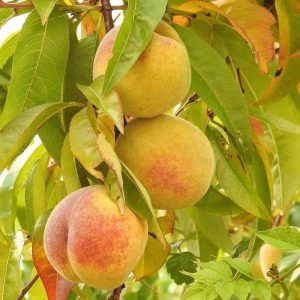
China Pearl Peach
$49.95
China Pearl Peach (Prunus persica) is a very early white-flesh freestone peach bred at NC State from a Contender × Chinese accession cross, producing large 3-inch fruit with mild, low-acid sweetness and 50–60% red overcolor on a willowy, semi-upright tree. It grows in USDA hardiness zones 5-8 and AHS heat zones 3-8, needs 900-1100 chill hours, and is self-fertile, fruiting reliably without a pollinator partner.
3-4′ Bare Root Grafted Tree
Rootstock: Halford – Standard
A peach seedling rootstock giving a full-size, vigorous, well-anchored tree — the workhorse of eastern peach growing. It offers no nematode resistance, so avoid known nematode ground.
• Support: Freestanding; no staking required.
Can’t be shipped to: WA
Image: Forest & Kim Starr (CC BY 3.0), cropped
Out of stock
Out of stock — back next season
Spring 2027 inventory drops in June. Drop your email and we'll notify you the day this variety is back in stock.
You're on the list. Check your inbox for a confirmation link — click it to lock in your spot. We'll email you the day this variety is back in stock.
China Pearl was developed at the Sandhills Research Station in Jackson Springs, North Carolina, by Dennis Werner, Steve Worthington, and Layne Snelling of the NC State University breeding program. The original cross — Contender x Plant Introduction 134401 — was made by hand in 1988. PI 134401 is an unnamed Chinese accession introduced into the United States in 1927; its low-acid, white-fleshed character is the defining inheritance China Pearl draws on. The cross first bore fruit in 1991, and selection NC-C5S-005 was retained for its large size, low acidity, moderate bacterial spot resistance, and notably late flowering habit — a trait that reduces spring frost exposure. A plant patent was filed and the variety formally introduced in 2001. China Pearl carries the same late-blooming cold-tolerance that made Contender (its pollen parent) widely adopted across the mid-Atlantic and upper South, combined with the mildly sweet, low-acid flavor profile of its Chinese parent. The result is a white-fleshed early variety with high-chill adaptation well suited to northern growing regions.
China Pearl performs well in Zones 4–8, provided it receives its full 1,000–1,100 chill hours each winter. Site it on slightly elevated ground or a gentle slope to reduce the risk of late-spring frost intercepting the late-April to early-May bloom window. Mature trees reach 8–10 ft tall and 8–13 ft wide; space them 15–20 ft apart so canopies never crowd and airflow stays strong. A soil pH of 6.0–8.0 suits the variety, though the 6.0–6.8 range with good drainage delivers best growth. Fast growth means annual dormant pruning is non-negotiable: open-center training keeps light distributed through the canopy and limits fungal pressure. The bearing habit trends toward biennial cropping if left unthinned; thin fruit to 6–8 inch spacings shortly after natural drop to maintain annual yields near the 50 lb per tree benchmark. Adequate irrigation during fruit development directly affects final size in hotter climates.
USDA Hardiness Zone: 5-8
AHS Heat Zone: 3-8
Chill Hours: 900-1100
Sun Requirements: Full Sun
Soil pH: 6.0-8.0
Soil Type: Loam, silt; well-drained
Soil Drainage: Well-drained
Water Requirements: Medium
Drought Tolerance: Moderate; established trees tolerate short dry periods but benefit from consistent irrigation during fruit development
Heat Tolerance: High
Plant Spacing: 15-20 ft apart
Container Suitability: Yes on dwarfing rootstock; standard rootstock too vigorous for containers
How to Prune: Open vase system; select 4-6 outward-facing scaffold branches; annual dormant heading cuts in late winter; remove water sprouts, crossing branches, and deadwood
China Pearl is a fast-growing, deciduous tree in the Rosaceae family, reaching 8–10 ft tall and 8–13 ft wide at maturity — a compact profile that suits smaller orchards and backyard plantings alike. The upright-spreading habit responds well to open-center pruning, which is recommended both for light interception and for reducing stagnant air pockets that encourage disease. Foliage is a medium-to-deep green through the growing season before dropping cleanly in autumn. Fragrant blossoms open late April to early May, offering a brief but pronounced floral display that attracts native bees and honeybees as well as butterflies. The tree has no thorns, making harvest and pruning straightforward without protective gear. Growth habit is salt-intolerant and wind-sensitive — windbreak plantings or sheltered positions improve fruit set and reduce branch damage during storm events. In suitable climates, first fruit typically appears within 2–4 years of planting.
Mature Height: 8-10 ft tall
Mature Spread: 8-13 ft wide
Growth Habit: Semi-upright with willowy branches
Growth Rate: Fast
Foliage Type: Deciduous
Food Forest Layer: Canopy, Sub-canopy
Permaculture Role: Pollinator support, wildlife food, edible fruit producer
Leaf Color: Green
Fall Foliage Color: Yellow to orange
Thorns?: No
Attracts Wildlife: Bees and butterflies (pollinators); birds and small mammals (fruit)
Life Span: 10-15 years
China Pearl is self-fertile and sets a full commercial crop without a pollination partner, making it a practical choice for single-tree planting situations. Bloom falls in the late-April to early-May window — later than many peach cultivars — which reduces, though does not eliminate, frost risk during the critical pollination period in cold climates. Native solitary bees, bumblebees, and honeybees work the fragrant blossoms readily when temperatures stay above 55°F during peak flower. Where a second peach tree is desired for higher yields or for orchard diversification, compatible zone-matched varieties on the property include Contender (PCH-C60), Elberta (PCH-E60), and Reliance (PCH-R47). No specific pollinizer is required, and no incompatibility groups affect this cultivar.
Bloom Season: Late
Bloom Window: Late Mar - Mid Apr
Pollination Requirements: Self-fertile
Pollination Mechanism: Insect-pollinated (primarily bees)
Flower Color: Pink
Ploidy: Diploid (2n)
Fruit ripens in the very-early window — late June to early July in a temperate climate — placing China Pearl among the first peaches ready for harvest each season. Mature fruit averages 3 inches in diameter and roughly 283 g per fruit, an above-average size for an early-ripening cultivar. The skin carries a showy 50–60% red blush over a yellow ground color; beneath it, the flesh is greenish-white, firm at picking, and softens to a silky texture as it ripens fully. The low-acid profile (0.27% malic acid) and moderate sugar content (13.5–14% soluble solids) give the fruit a mild sweetness that appeals to fresh-eating and charcuterie use rather than the bright-tart quality preferred for jam and preserve making. As a clean freestone, the pit releases easily from fully ripe flesh, which suits slicing for fruit plates, smoothies, and light preserves. Storage life runs 1–2 weeks fresh under refrigeration. The fruit also freezes well; blanch and peel before freezing to preserve texture.
Ripening Season: Early
Harvest Window: Late Jun - Early Jul
Fruit Size: 3 inch
Fruit Weight: 283 g
Flavor: Low-acid (0.27 malic), 13.5-14% soluble solids; mild, sweet
Fruit Color: 50-60% red overcolor on yellow ground; greenish-white flesh; freestone
Fruit Texture: Freestone
Fruit Skin: Fuzzy (characteristic of Prunus persica; nectarines are the smooth-skinned variant)
Bearing Habit: Annual (with thinning to prevent biennial tendency)
Years to Bear: 2-4 years
Storage Life: 1-2 weeks fresh
Culinary Uses: Fresh eating, canning, cooking, baking, jam, jelly, freezing
China Pearl carries moderate susceptibility to brown rot (Monilinia fructicola), bacterial spot (Xanthomonas arboricola pv. pruni), peach leaf curl (Taphrina deformans), and peach scab (Cladosporium carpophilum), and susceptibility to Cytospora canker (Leucostoma persoonii / Leucostoma cincta). On the pest side, the variety is susceptible to plum curculio (Conotrachelus nenuphar), oriental fruit moth (Grapholita molesta), peachtree borer (Synanthedon exitiosa), and brown marmorated stink bug (Halyomorpha halys). This resistance profile means China Pearl demands a proactive, integrated management program. For brown rot, remove all mummified fruit promptly after harvest and thin the canopy to maximize airflow; organic options include copper-based sprays and OMRI-listed sulfur applied at petal fall and during wet ripening weather. Against peach leaf curl, apply copper fungicide at full dormancy — before any green tip shows — as this is the only window the pathogen is accessible. Minimize Cytospora canker pressure by avoiding bark wounds during wet weather and by pruning during dry periods in midsummer rather than late winter. For insect pests, kaolin clay applied before shuck split deters curculio and oriental fruit moth feeding; pheromone traps provide early-season population monitoring. Peachtree borer larvae are best controlled by installing sticky trunk wraps and physically removing egg masses in late summer.
Brown Rot: Moderately Susceptible
Bacterial Spot: Moderately Susceptible
Peach Leaf Curl: Moderately Susceptible
Peach Scab: Moderately Susceptible
Cytospora Canker: Susceptible
Plum Curculio: Susceptible
Oriental Fruit Moth: Susceptible
Peachtree Borer: Susceptible
Brown Marmorated Stink Bug: Susceptible
- Copper at dormancy for Leaf Curl: Apply copper fungicide before any green tip emerges to intercept peach leaf curl before spores can penetrate opening buds.
- Thin to 6–8 inch spacing: Thin within three weeks of natural drop; biennial bearing weakens sharply when overcrowded crops are allowed to mature fully.
- Prune in dry midsummer weather: Pruning in dry summer rather than wet late winter reduces Cytospora Canker entry through fresh wounds during the damp spring flush. Disinfect tools between cuts.
- Block Peachtree Borer with trunk wraps: Wrap lower trunks with physical barriers from late July through September to prevent egg-laying; remove and replace annually. Hang kaolin clay and Oriental Fruit Moth pheromone traps at petal fall and monitor weekly to time reapplications before Plum Curculio and moth populations peak.
- Check fruit every 2–3 days at ripening: Fruit matures in late June — the white flesh softens quickly at summer temperatures and loses firmness within days of peak, so frequent monitoring is essential to catch the harvest window.
We ship in late winter or early spring based on your USDA hardiness zone.
We strive to ship orders on the scheduled dates listed in the table below. However, please note that the actual shipping date may be subject to change due to factors like weather conditions and order volume.
The specific date for shipping your order will be determined according to your zipcode at the time of checkout.
Our plants are shipped bare root, packed in moist sawdust, and securely wrapped in plastic to prevent the roots from drying out. We use USPS Ground Advantage for shipping, ensuring that your plants typically arrive within 2-5 days after packaging.
In case you're unable to plant the trees immediately upon arrival, we recommend soaking them in water for a few hours and temporarily heeling them in. Ideally, they should be planted within three days of receipt for optimal health.
See our full shipping policy and map here
| Zone | Ship Date |
|---|---|
| 11 - 8b | March 1st, 2027 |
| 8a - 7b | March 8th, 2027 |
| 7a | March 15th, 2027 |
| 6b | March 22nd, 2027 |
| 6a | March 29th, 2027 |
| 5b - 5a | April 12th, 2027 |
| 4b - 4a | April 26th, 2027 |
| 3b - 1a | May 3rd, 2027 |
Our 365-Day Plant Guarantee: We ensure that our plants are delivered to you alive and healthy. If your plant does not survive its first year, you're eligible for store credit under these conditions:
- Your location falls within the appropriate USDA hardiness zone for the plant variety (refer to our hardiness zone map).
- You maintain the roots' moisture and plant within three days of delivery, following the instructions in our Planting Guide.
If you're concerned about your plant's health, please consult our guide, How to Tell if Your Tree is Dead or Dormant. Remember, our plants are shipped in a dormant state and may leaf out at different times based on their species. To check for plant vital
Related products

Intrepid Peach
Checking fit
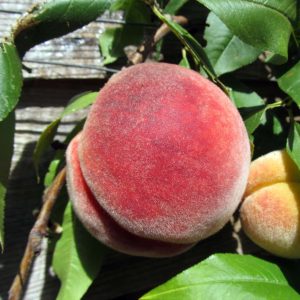
Red Haven Peach
Checking fitRated 5.00 out of 5
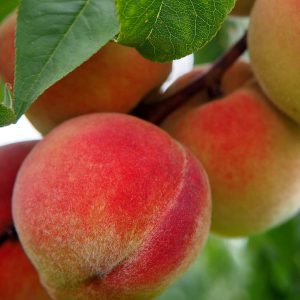
Contender Peach
Checking fit
Belle of Georgia Peach
Checking fit

Reviews
There are no reviews yet.