Caddo Blackberry
$11.95
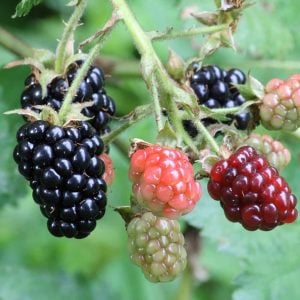
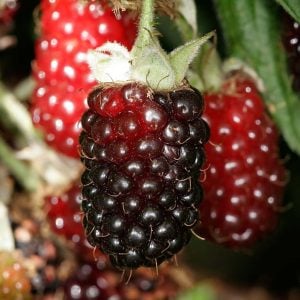
Caddo Blackberry (Rubus) is an erect, thornless blackberry released by the University of Arkansas in 2018, bearing glossy black fruit with sweet, mildly acidic flavor and desirable aromatic complexity on a compact 4-foot shrub. It grows in USDA hardiness zones 6-9 and AHS heat zones 6-9, needs 300-400 chill hours, and is self-fertile, fruiting reliably without a pollinator partner.
12-18″ Bare Root Plant
Propagation: Own-root
Can’t be shipped to: AK, FL, HI, SC
Out of stock
Out of stock — back next season
Spring 2027 inventory drops in June. Drop your email and we'll notify you the day this variety is back in stock.
You're on the list. Check your inbox for a confirmation link — click it to lock in your spot. We'll email you the day this variety is back in stock.
Caddo blackberry was released in 2018 by the University of Arkansas fruit breeding program under plant patent USPP27426, with John R. Clark as lead breeder. It originated from a hand-pollinated cross of APF-45 (Prime-Ark 45, released 2009) x Arkansas Selection 2108T (non-patented, unreleased genotype) made at the Clarksville, Arkansas experiment station. The choice of Prime-Ark 45 as the female parent is significant: APF-45 is a primocane-fruiting type with notably high flavor ratings, and transferring that flavor quality into a conventional floricane-fruiting erect thornless framework was a primary selection objective. Ark. 2108T contributed the thornless, erect cane architecture and productivity traits characteristic of the long-running UA thornless series. Caddo was selected for mid-early season ripening — earlier than Ouachita but with high fruit quality scores — extending the fresh-market window while maintaining the firm, shipping-quality berries the program targets. The cultivar is named for the Caddo Nation, continuing the University of Arkansas tradition of naming blackberry releases after Indigenous peoples of the region.
Caddo thrives in full sun with at least six to eight hours of direct light daily; shading reduces both cane vigor and fruit quality. Well-drained soil with a pH of 5.5–6.5 is ideal, and raised beds or amended rows improve drainage on heavier clay sites. At maturity the canes reach roughly 4 feet tall and benefit from a simple two-wire trellis set at 3 and 5 feet to keep fruiting laterals off the ground during the heavy June crop. Annual pruning is the central maintenance task: remove spent floricanes at the soil line immediately after harvest, then tip primocanes to 36–42 inches in midsummer to encourage lateral branching and the next year's fruiting wood. Growth rate is fast, so spacing plants 3–4 feet apart in the row controls crowding without sacrificing yield. Caddo's 350–450 chill-hour requirement is met across most of Zone 5–9, though growers in climates with mild winters should confirm local accumulation before planting. Consistent moisture during fruit development — roughly 1–1.5 inches per week — is the single biggest lever for berry size and sweetness.
USDA Hardiness Zone: 6-9
AHS Heat Zone: 6-9
Chill Hours: 300-400
Sun Requirements: Full Sun
Soil pH: 5.5-6.5
Soil Type: Sandy loam to clay loam; fertile, moderate water-holding capacity
Soil Drainage: Well-drained
Water Requirements: Medium
Drought Tolerance: Moderate
Heat Tolerance: High
Plant Spacing: 2-3 ft in-row; 6-8 ft between rows
Caddo is an erect, thornless blackberry with vigorous, self-supporting primocanes that remain manageable at approximately 4 feet tall without severe annual pruning. The thornless trait runs true on both primocanes and floricanes, making harvest and pruning entirely glove-optional — a practical advantage during the busy June picking window. Foliage is deciduous, deep green through the growing season, and the plant leafs out reliably in spring once chill-hour requirements are satisfied. Growth rate is fast; new primocane flushes reach full height by midsummer and require tipping to redirect energy into lateral fruiting wood. The root system is perennial and spreads by tip-rooting at a moderate rate, so a simple mowing or shallow cultivation barrier at the row edge keeps plants contained. White flowers appear in late spring, mildly fragrant and attractive to native bees and honey bees alike, before maturing into the early-ripening berry crop. Hardiness spans USDA Zones 5–9, with the canes showing good cold tolerance through typical temperate winters.
Mature Height: 4 ft tall
Mature Spread: 3-3.5 ft wide
Growth Habit: Erect, upright shrub; floricane-fruiting
Growth Rate: Fast
Foliage Type: Deciduous
Food Forest Layer: Shrub
Permaculture Role: Food production; wildlife habitat and forage; living/thorny hedge and barrier
Leaf Color: Green
Fall Foliage Color: Red to orange-purple
Thorns?: No
Attracts Wildlife: Pollinators (bees); songbirds and game birds; small mammals
Life Span: 15-20+ years with proper management
Caddo is fully self-fertile, setting a commercial crop from its own pollen without a second variety nearby. No companion planting is required for fruit production, which simplifies site planning for small spaces and single-row plantings. That said, bee activity during bloom — from honey bees, bumble bees, and native solitary bees — measurably improves fruit set, berry size, and overall yield by ensuring thorough pollination of every flower. Caddo's white blossoms open in late spring, typically mid-April through May depending on local temperatures, and the flowering window aligns well with peak native pollinator activity. Planting flowering cover crops or wildflower strips nearby sustains pollinator populations through the blackberry bloom period and benefits the broader garden ecosystem. Avoiding insecticide applications during open bloom protects both managed honey bee colonies and the wild native bees that provide the bulk of blackberry pollination in most home and small-farm settings.
Bloom Season: Very Early
Bloom Window: Late Apr - Early May
Pollination Requirements: Self-fertile
Pollination Mechanism: Self-fertile; insect-pollinated (bees improve fruit set and berry size)
Flower Color: White with light purple tips
Caddo berries ripen very early — June through mid-July in temperate climates — ahead of most other erect thornless blackberries and well before mid-season varieties like Ouachita or Apache begin coloring. Flavor is sweet with a mild, pleasant acidity and noticeable aromatic complexity that distinguishes Caddo from the flatter-tasting early berries common in older releases. Fruit is glossy black at peak ripeness and reasonably firm, holding up to gentle handling and short-distance transport better than many early-season blackberries. Berry size is good for an early-ripening variety, consistent with other University of Arkansas releases in the same maturity window. Culinary versatility is broad: the berries eat well fresh off the cane, freeze cleanly, and perform equally well in jams, jellies, pies, cobblers, smoothies, and wine. Ripe fruit must be harvested promptly — every two to three days during peak ripening — to capture peak flavor and minimize losses to bird pressure and fruit rots in humid-summer climates.
Ripening Season: Early
Harvest Window: Early Jun - Mid Jul
Fruit Size: 0.75-1 inch
Fruit Weight: 8 g average
Flavor: Sweet and mildly acidic with desirable aromatic complexity
Fruit Color: Glossy black
Fruit Texture: Firm
Bearing Habit: Floricane (second-year canes)
Years to Bear: 2 years
Yield: 11
Storage Life: 7-14 days refrigerated
Culinary Uses: Fresh eating, jams, jellies, pies, cobblers, smoothies, wine
Caddo's standout disease trait is very strong resistance to orange rust (Gymnoconia nitens), the systemic fungal disease that can permanently disfigure susceptible plants; infected canes cannot recover and must be destroyed, so Caddo's very strong resistance here is a genuine planting advantage in humid eastern growing regions. Resistance to rosette/double blossom (Cercosporella rubi) is moderate, reducing but not eliminating risk in areas where the disease is prevalent — remove and destroy any distorted witches'-broom growth at first appearance to slow spread. Anthracnose resistance (Elsinoe veneta) is moderate; prune for airflow and avoid overhead irrigation to keep purple-spotted cane lesions in check. Botrytis fruit rot (Botrytis cinerea) poses the greatest disease challenge at harvest: pick at peak ripeness rather than letting fruit linger on the cane, trellis canes to maximize air circulation, and switch to drip irrigation if overhead watering is current practice. Spotted wing drosophila (Drosophila suzukii) pressure intensifies as berries color; fine mesh netting (1 mm or smaller) deployed at first color, combined with harvesting every two to three days and prompt refrigeration, provides effective cultural control. For raspberry crown borer (Pennisetia marginata), inspect cane bases each spring and remove any crowns with tunneling damage entirely rather than trimming around the injury.
Orange Rust: Very Resistant
Rosette / Double Blossom: Moderately Susceptible
Anthracnose: Moderately Resistant
Cane Blight: Moderately Susceptible
Botrytis Fruit Rot / Gray Mold: Moderately Susceptible
Spotted Wing Drosophila: Moderately Susceptible
Raspberry Crown Borer: Moderately Susceptible
Brown Marmorated Stink Bug: Moderately Susceptible
Japanese Beetle: Moderately Susceptible
- Tip primocanes early: Pinch or cut primocanes to 36–42 inches in midsummer to force lateral branches — those laterals carry next year's fruiting buds and double available fruiting wood on mature plants.
- Harvest on schedule: Berries left on the cane past peak ripeness lose firmness fast and draw SWD adults — set a 2–3 day picking rhythm once fruit starts turning.
- Remove spent floricanes immediately: Cutting out old canes right after harvest removes overwintering inoculum for Botrytis and Cane Blight before the next season begins.
- Mulch the root zone: A 3–4 inch layer of wood chips or straw moderates soil temperature, conserves moisture during June heat, and suppresses the weeds that compete hardest during the early harvest window.
We ship in late winter or early spring based on your USDA hardiness zone.
We strive to ship orders on the scheduled dates listed in the table below. However, please note that the actual shipping date may be subject to change due to factors like weather conditions and order volume.
The specific date for shipping your order will be determined according to your zipcode at the time of checkout.
Our plants are shipped bare root, packed in moist sawdust, and securely wrapped in plastic to prevent the roots from drying out. We use USPS Ground Advantage for shipping, ensuring that your plants typically arrive within 2-5 days after packaging.
In case you're unable to plant the trees immediately upon arrival, we recommend soaking them in water for a few hours and temporarily heeling them in. Ideally, they should be planted within three days of receipt for optimal health.
See our full shipping policy and map here
| Zone | Ship Date |
|---|---|
| 11 - 8b | March 1st, 2027 |
| 8a - 7b | March 8th, 2027 |
| 7a | March 15th, 2027 |
| 6b | March 22nd, 2027 |
| 6a | March 29th, 2027 |
| 5b - 5a | April 12th, 2027 |
| 4b - 4a | April 26th, 2027 |
| 3b - 1a | May 3rd, 2027 |
Our 365-Day Plant Guarantee: We ensure that our plants are delivered to you alive and healthy. If your plant does not survive its first year, you're eligible for store credit under these conditions:
- Your location falls within the appropriate USDA hardiness zone for the plant variety (refer to our hardiness zone map).
- You maintain the roots' moisture and plant within three days of delivery, following the instructions in our Planting Guide.
If you're concerned about your plant's health, please consult our guide, How to Tell if Your Tree is Dead or Dormant. Remember, our plants are shipped in a dormant state and may leaf out at different times based on their species. To check for plant vital
Related products

Hull Blackberry
Checking fitRated 5.00 out of 5
Jersey Blueberry
Checking fit
Boysenberry
Checking fit
Kiowa Blackberry
Checking fit

Reviews
There are no reviews yet.